
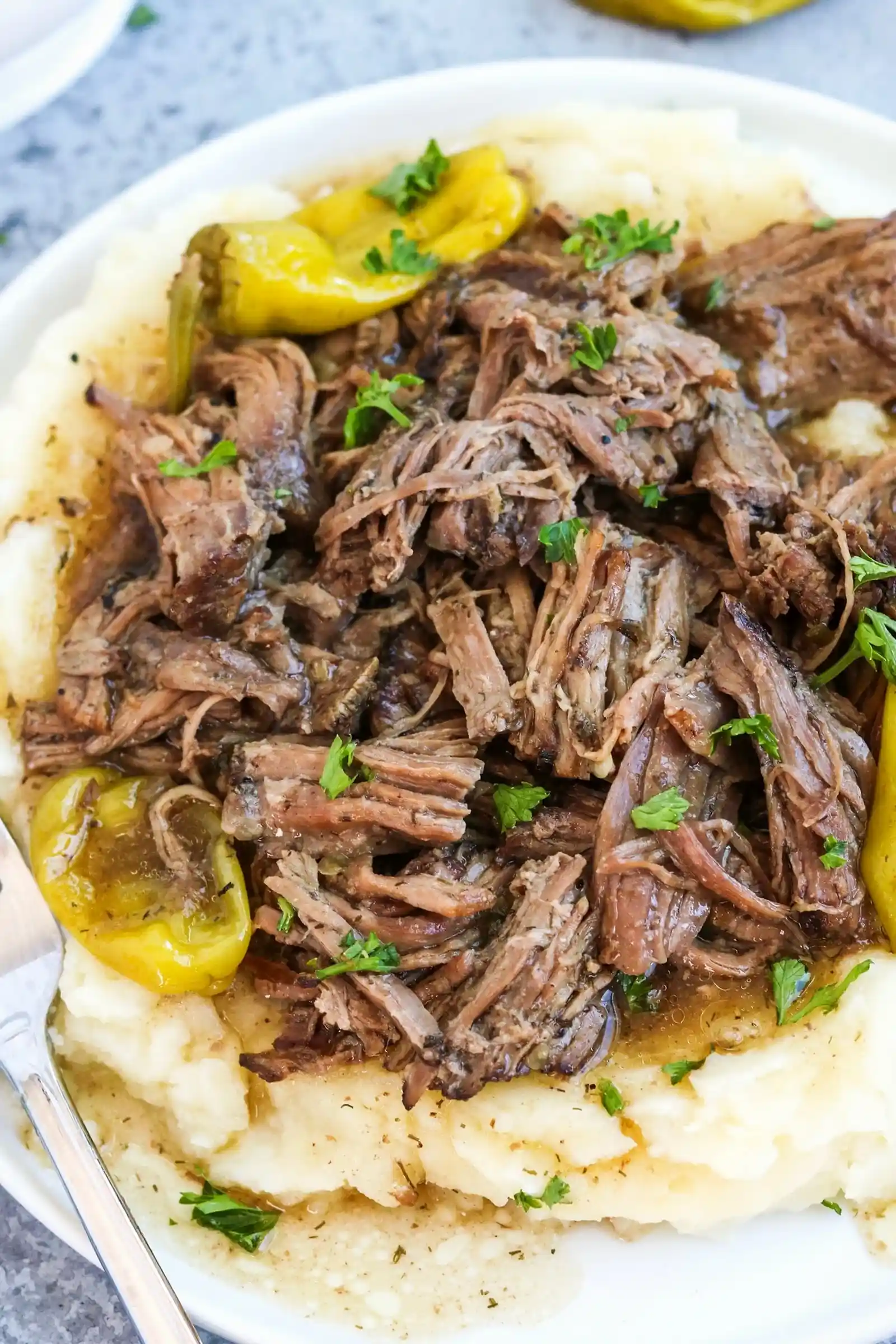
This slow cooker recipe creates a tender, savory pot roast using wholesome ingredients. It avoids processed packets by using a homemade blend of herbs and coconut aminos for deep flavor.
List of ingredients
- 3 lb chuck roast (can also use top round roast or a less fatty cut of meat, or 2 lbs of chicken breast)
- 1/2 cup beef broth (ensure it is paleo/Whole30 compliant)
- 1 tbsp coconut aminos
- 2 cloves minced garlic
- 1 tbsp dried parsley
- 1 tsp dried chives
- 1 tsp dried dill
- 2 tsp garlic powder
- 1 tsp onion powder
- 1 tsp dried onion flakes
- 1/2 tsp black pepper
- 1.5 tsp sea salt
- 3 tbsp ghee (or vegan butter for dairy allergies)
- 8 pepperocinis
- 1 cup juices from the slow cooker (for gravy)
- 1 tbsp arrowroot powder (for gravy)
- 2 tbsp water (for gravy)
step-by-step instructions
- Prepare the slow cooker: Place the chuck roast in the slow cooker.
- Add liquid and seasonings: Pour beef broth over the top of the meat. Sprinkle all the dried seasonings and salt and pepper on top of the beef.
- Add fat and peppers: Place the ghee on top of the meat in three separate spoonfuls. Arrange the pepperocini peppers on and around the beef.
- Cook: Set to low for 8-10 hours or high for 4-5 hours.
- Shred: Transfer the beef from the slow cooker to a cutting board and shred using two forks.
- Prepare gravy (optional): Heat 1 cup of the juices in a small saucepan over medium-high heat. Mix the water and arrowroot powder together in a small bowl to create a slurry.
- Thicken gravy: When the beef juices come to a boil, stir in the arrowroot slurry. Heat over medium-low and stir until the desired level of thickness is reached. Add salt and pepper to taste.
- Serve: Serve the beef over mashed potatoes or cauliflower mash and pour the gravy over top.
Meat Selection and Alternatives
Choosing the Best Chuck Roast
A chuck roast is ideal because it contains a high amount of connective tissue and collagen. During the long, slow cooking process, this collagen breaks down into gelatin, resulting in meat that is tender and moist. Look for a piece with good white marbling throughout the muscle.
Using Top Round for Leaner Beef
If you prefer a leaner option, top round roast works well but can dry out more quickly than chuck. To compensate, ensure the meat is fully submerged in the broth and seasonings. Avoid cooking it for the maximum time to prevent the fibers from becoming stringy.
Adapting the Recipe for Chicken Breast
You can substitute the beef with 2 lbs of chicken breast for a lighter version of this meal. Reduce the cooking time significantly to avoid overcooking; chicken breasts usually take 3-4 hours on high or 6 hours on low. Use chicken broth instead of beef broth to maintain flavor consistency.
Flavor Enhancements and Substitutions
Replacing Coconut Aminos
Coconut aminos provide a salty, slightly sweet flavor similar to soy sauce but without the soy. If you do not have coconut aminos, you can use tamari or liquid aminos. Be mindful that these alternatives may be saltier, so you might want to reduce the added sea salt.
Choosing Between Ghee and Vegan Butter
Ghee is clarified butter, which removes the milk solids and makes it suitable for dairy-free diets. For a completely plant-based option, use a high-quality vegan butter. Avoid margarine with artificial trans fats to keep the recipe healthy.
Customizing Pepperoncini Heat Levels
Pepperoncini peppers come in various heat levels, ranging from mild to hot. If you are sensitive to spice, choose the mild variety, as they provide the necessary tang without significant heat. For those who prefer a kick, hot pepperoncinis add a sharp contrast to the rich beef.
Substituting Arrowroot Powder
Arrowroot powder is used to thicken the gravy without adding gluten or cornstarch. You can substitute it with tapioca starch in a 1:1 ratio for a similar glossy finish. Avoid using wheat flour if you are adhering to paleo or gluten-free guidelines.
Alternative Cooking Methods
Using an Instant Pot for Faster Results
To use a pressure cooker, cut the beef into four even pieces to ensure it cooks through. Increase the beef broth to 1 cup to prevent the ‘Burn’ warning. Cook on high pressure for 60 minutes and allow for a natural or quick pressure release.
Searing the Meat for Extra Depth
Browning the meat before slow cooking adds a layer of complexity through the Maillard reaction. Use 1 tbsp of avocado or olive oil in a pan over medium-high heat and sear the beef for 5 minutes per side. If using an Instant Pot, use the saute function and remember to deglaze the pot with broth.
Converting to Oven Braising
For an oven-based approach, use a heavy Dutch oven with a tight-fitting lid. Preheat your oven to 300°F (150°C) and follow the same layering process as the slow cooker. Braise the meat for 3-4 hours or until it easily shreds with a fork.
Serving and Pairing Suggestions
Low-Carb Cauliflower Mash
Steam cauliflower florets until very tender, then blend them with a bit of ghee and salt. This provides a creamy, potato-like base that is compatible with Keto and Paleo diets. It absorbs the beef gravy and au jus perfectly.
Traditional Mashed Potatoes
For a classic comfort meal, serve the roast over creamy mashed Yukon Gold potatoes. Mash them with a touch of butter and warm milk or broth for smoothness. This pairing balances the acidity of the pepperoncinis with a mild, starchy base.
Creating French Dip Sandwiches
Transform leftovers into french dip sandwiches by slicing the beef thinly and placing it on a toasted baguette. Use the leftover au jus as a dipping sauce on the side. This is an excellent way to use the remaining meat and liquid from the roast.
Roasted Root Vegetable Sides
Pair this dish with roasted carrots, parsnips, or turnips for added nutrition. Toss the vegetables in olive oil and salt, then roast at 400°F until caramelized. The sweetness of the roasted roots complements the tangy flavor of the pot roast.
Storage and Meal Prep
Reheating Leftovers for Tenderness
To prevent the beef from drying out, reheat it in a skillet or pot with a splash of the remaining au jus. Use low to medium heat and cover the pan with a lid to trap the moisture. Avoid over-microwaving, which can make the meat rubbery.
Freezing the Cooked Beef
Store the shredded beef and juices in a freezer-safe airtight container for up to 4 months. It is recommended to remove the pepperoncinis before freezing, as their texture and flavor can degrade. Ensure the meat is fully covered in liquid to prevent freezer burn.
Thawing and Warming Frozen Roast
Thaw the frozen roast in the refrigerator overnight before heating. Once thawed, warm the beef slowly on the stovetop over medium-low heat. Adding a small amount of fresh beef broth can refresh the flavor and consistency of the sauce.
Troubleshooting and Common Questions
Why Is the Roast Still Tough After Cooking?
If the meat is tough, it likely hasn’t cooked long enough for the collagen to break down. Return it to the slow cooker for another 1-2 hours on low. Ensure you are using a cut with sufficient fat, as very lean cuts can become tough regardless of time.
How to Achieve a Thicker Gravy Consistency
If the gravy is too thin, mix a small amount of additional arrowroot powder with cold water to create more slurry. Stir this into the boiling juices and simmer for another 2-3 minutes. Be careful not to over-thicken, or the sauce may become gelatinous.
Can I Use a Store-Bought Ranch Packet?
You can use a packet if you are not following Paleo or Whole30 guidelines, but be aware of the ingredients. Most commercial packets contain cornstarch, sugar, and MSG. The homemade version provided in this recipe offers the same flavor using whole food ingredients.
What Is the Difference Between Au Jus and Gravy?
Au jus refers to the natural juices released by the meat during cooking, which are thin and light. Gravy is made by taking those same juices and adding a thickening agent like arrowroot. Both are flavorful, but gravy is better for coating mashed vegetables.
Is This Recipe Keto-Friendly?
Yes, this recipe is naturally low in carbohydrates and high in protein and healthy fats. To keep it Keto, avoid serving it with potatoes and opt for cauliflower mash or steamed greens instead. The coconut aminos and ghee are both compatible with a ketogenic diet.
Print
Healthy Mississippi Pot Roast with Beef Gravy Recipe
- Total Time: 8 hours 5 minutes
- Yield: 6 servings
- Diet: Paleo, Whole30, Keto, Gluten-free, Dairy-free
Description
A healthier version of the classic, flavorful Mississippi Pot Roast with chuck roast, homemade au jus and ranch seasonings, ghee, and pepperoncini peppers in the slow cooker.
Ingredients
- 3 lb chuck roast
- 1/2 cup beef broth
- 1 tbsp coconut aminos
- 2 cloves minced garlic
- 1 tbsp dried parsley
- 1 tsp dried chives
- 1 tsp dried dill
- 2 tsp garlic powder
- 1 tsp onion powder
- 1 tsp dried onion flakes
- 1/2 tsp black pepper
- 1.5 tsp sea salt
- 3 tbsp ghee
- 8 pepperocinis
- 1 cup juices from the slow cooker
- 1 tbsp arrowroot powder
- 2 tbsp water
Instructions
- Step: Place chuck roast in slow cooker.
- Step: Pour beef broth over top.
- Step: Sprinkle all seasonings on top of the meat.
- Step: Place the ghee on top of the meat in 3 spoonfuls.
- Step: Place the pepperocini peppers on and around the beef.
- Step: Cook on low for 8-10 hours (or high for 4-5 hours).
- Step: Transfer beef from the slow cooker to a cutting board and shred using two forks.
- Step: Heat 1 cup of the juices in a small saucepan over medium high heat.
- Step: Mix the water and arrowroot together in a small bowl to create a slurry.
- Step: When the beef juices come to a boil, stir in the slurry.
- Step: Heat over medium low and stir until desired level of thickness is reached.
- Step: Add salt and pepper to taste.
- Step: Serve the beef over mashed potatoes or cauliflower mash and pour gravy over top.
Notes
Instant Pot Method: Cut beef into 4 pieces, increase beef broth to 1 cup, and cook on high pressure for 60 minutes. Optional searing in oil for 5 minutes per side improves flavor.
- Prep Time: 5 minutes
- Cook Time: 8 hours
- Category: Dinner
- Method: Slow Cooking
- Cuisine: American
Nutrition
- Serving Size: 1 serving
- Calories: 499 kcal
- Sugar: 1 g
- Sodium: 902 mg
- Fat: 34 g
- Saturated Fat: 16 g
- Unsaturated Fat: 18 g
- Trans Fat: 2 g
- Carbohydrates: 5 g
- Fiber: 1 g
- Protein: 45 g
- Cholesterol: 176 mg