
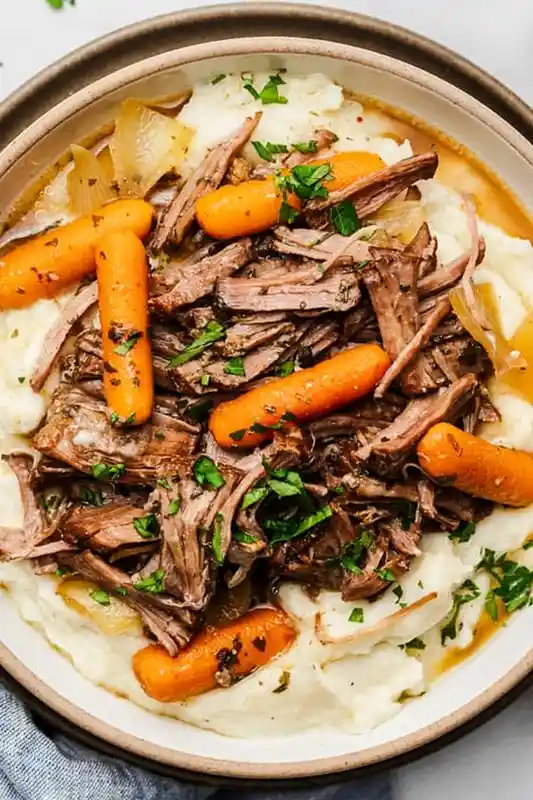
This slow cooker pot roast is a hearty meal that produces tender, shreddable beef. It is paired with carrots and onions in a savory garlic-herb gravy for a satisfying dinner.
List of ingredients
- 3 – 3½ pounds boneless beef chuck roast – provides the best texture for slow cooking.
- 2 tablespoons olive or avocado oil – used for searing the meat.
- 1 pound baby carrots – can be substituted with large carrots cut into 3-inch sticks.
- 1 medium white or yellow onion – chopped into large chunks.
- 2 cups beef stock or beef broth – creates the base for the gravy.
- 1 cup apple juice – adds a subtle sweetness and depth of flavor.
- 1 tablespoon tomato paste – adds concentrated tomato flavor and richness.
- 2 tablespoons minced garlic – provides a pungent, savory aromatic base.
- 2 tablespoons dried parsley – adds an earthy herb note.
- 2½ teaspoons salt – enhances all other flavors.
- 1 teaspoon black pepper – provides a mild spicy kick.
step-by-step instructions
- Sear the Beef: Heat oil in a skillet over high heat. Once hot, brown the pot roast on both sides for approximately 3-4 minutes per side to lock in flavor.
- Prepare the Slow Cooker: Place the browned beef in the bottom of a 6 or 7 quart slow cooker.
- Combine Ingredients: Add the chopped onion, carrots, optional potatoes, beef stock, apple juice, tomato paste, minced garlic, dried parsley, salt, and pepper. Stir the ingredients to ensure the beef is well coated.
- Slow Cook: Cover the pot and cook on the low heat setting for 7 to 8 hours.
- Shred and Finish: Use two forks to shred the finished beef and return it to the slow cooker. Taste the gravy and add extra salt or pepper if needed.
- Serve: Serve the roast over creamy mashed potatoes and garnish with fresh chopped parsley or thyme.
Meat Selection and Preparation
The Benefits of Boneless Beef Chuck Roast
Chuck roast comes from the shoulder area of the cow and is highly marbled with fat and connective tissue. This specific cut is ideal for slow cooking because the collagen breaks down into gelatin over several hours. This process results in the characteristic fork-tender texture that leaner cuts cannot achieve.
Avoiding Leaner Cuts of Beef
Using lean cuts like sirloin or eye of round in a slow cooker often leads to dry, tough meat. These cuts lack the necessary fat and connective tissue to withstand long cooking times. To ensure the beef remains juicy and tender, always prioritize marbled cuts for this recipe.
The Importance of Searing the Meat
Browning the beef in a hot skillet before adding it to the slow cooker creates a deeper flavor profile. This process, known as the Maillard reaction, develops a complex crust on the exterior of the meat. Skipping this step will result in a paler roast with less depth in the final gravy.
Choosing the Best Searing Oil
Use oils with a high smoke point, such as avocado oil or refined olive oil, for searing. These oils can withstand the high heat required to brown the meat without burning or smoking. This ensures a clean taste and prevents the oil from breaking down during the initial cooking phase.
Optimizing the Liquid Base
The Role of Apple Juice for Flavor
Apple juice introduces a hint of natural sweetness that balances the saltiness of the beef stock. It does not make the dish taste like apples but rather adds a complex layer to the gravy. This sweetness enhances the overall richness of the garlic and herb seasonings.
Using Pomegranate Juice as a Substitute
If apple juice is unavailable, pomegranate juice is an excellent alternative. It provides a similar level of sweetness and a slight tartness that cuts through the richness of the beef. This substitution maintains the depth of the sauce without altering the core savory profile.
Cranberry Juice as a Liquid Option
Cranberry juice can be used as a replacement for apple juice to add a brighter, more acidic note to the roast. Ensure you use a version with minimal added sugars to keep the flavor balanced. It pairs well with the carrots and onions in the pot.
Coconut Aminos for a Savory Twist
For a saltier, more umami-rich gravy, you can replace the apple juice with coconut aminos. This provides a soy-like depth of flavor while remaining a clean alternative. It works particularly well if you want a darker, more savory sauce.
Beef Stock versus Beef Broth
Beef stock is typically made by simmering bones for a longer period, resulting in a richer, more gelatinous liquid. Beef broth is made by simmering meat and is generally lighter. Either can be used in this recipe, but stock will provide a slightly thicker naturally occurring consistency to the gravy.
Vegetable Management and Pairings
Working with Baby Carrots
Baby carrots are convenient because they require no peeling or chopping and maintain their shape well. They are generally uniform in size, ensuring they cook evenly throughout the 8-hour process. They provide a sweet contrast to the savory beef.
Preparing Large Carrots for the Pot
If using large whole carrots, peel them and cut them into 3-inch sticks. This size prevents them from turning into mush during the long cooking period. Keeping the pieces chunky allows them to hold their structure while absorbing the flavors of the gravy.
Selecting the Best Onions
Both yellow and white onions are suitable for this pot roast. Yellow onions provide a slightly sweeter flavor when cooked slowly, while white onions offer a cleaner, sharper taste. Cutting them into large chunks prevents them from disappearing completely into the sauce.
Adding Potatoes Directly to the Slow Cooker
If you prefer a one-pot meal, you can add quartered gold potatoes to the slow cooker at the start. Gold potatoes are recommended because they hold their shape better than russets. They will absorb the beef juices and garlic, becoming tender and flavorful.
Timing and Temperature Guidelines
Why Low Heat is Essential
Cooking the roast on the low setting for 7 to 8 hours is critical for achieving a shreddable texture. The low temperature allows the connective tissues to melt slowly without tightening the muscle fibers. This results in meat that pulls apart easily with a fork.
Risks of Using the High Setting
Using the high setting for a shorter period often results in tougher, drier meat. The rapid increase in temperature can cause the proteins to contract too quickly, squeezing out the moisture. To avoid a rubbery texture, avoid the high heat option for this specific cut of beef.
Adjusting Time for Larger Roasts
If your beef roast is larger than 3.5 pounds, you may need to extend the cooking time by 1 to 2 hours. Check the meat for tenderness by attempting to shred a small section with a fork. If it resists, continue cooking on low until it gives way easily.
Identifying the Perfect Doneness
The roast is finished when the internal temperature is high enough that the meat separates effortlessly. You should not have to struggle to break the roast apart. Once the beef shreds easily, it is ready to be returned to the pot for final seasoning.
Serving and Presentation
Preparing Creamy Mashed Potatoes
Serving the pot roast over mashed potatoes is a classic combination that absorbs the herb gravy. Use Yukon Gold potatoes for a naturally buttery texture and mash them with a small amount of butter and milk. This provides a smooth base for the shredded beef.
Pairing with Garlic Green Beans
Fresh green beans sautéed with garlic make an excellent side dish for this meal. The brightness of the green beans cuts through the richness of the beef and gravy. Steam them lightly before sautéing to ensure they remain crisp-tender.
Adding Roasted Broccoli to the Plate
Roasted broccoli with a touch of lemon and salt adds a charred, earthy element to the meal. The bitterness of the broccoli complements the sweetness of the carrots in the roast. Roast them at 400°F for 15-20 minutes for the best results.
Serving with Sautéed Cabbage
Sautéed cabbage provides a light, slightly sweet side that pairs well with the garlic-herb profile. Slice the cabbage thinly and cook it in a pan with a small amount of oil and salt. This adds volume and nutrition to the plate without overpowering the main dish.
Storage and Reheating Advice
Refrigerating Leftover Pot Roast
Store any remaining beef, carrots, and gravy in an airtight container in the refrigerator. The meat will stay fresh and flavorful for up to 4 days. Ensure the meat is fully submerged in the gravy to prevent it from drying out during storage.
Freezing the Roast and Gravy
Pot roast freezes well if stored in a freezer-safe container or vacuum-sealed bag. It can be kept in the freezer for up to 3 months. Thaw the roast in the refrigerator overnight before reheating to maintain the best texture.
Best Practices for Microwave Reheating
When using a microwave, place the beef and a generous amount of gravy in a microwave-safe dish. Cover the dish with a damp paper towel to trap steam and prevent the meat from toughening. Heat in short intervals, stirring in between, until warmed through.
Reheating on the Stovetop
For the best quality, reheat the roast in a large skillet over medium-low heat. Add a splash of extra beef broth if the gravy has thickened too much during storage. Simmer gently until the beef is hot throughout.
Troubleshooting and FAQs
Why is my meat still tough?
If the meat is tough, it likely hasn’t cooked long enough for the collagen to break down. Continue cooking on the low setting for another hour. Ensure you are using a chuck roast, as leaner cuts will remain tough regardless of time.
How do I thicken the gravy without flour?
To thicken the sauce without using flour or cornstarch, you can simmer the gravy in a saucepan after removing the meat. Reducing the liquid by one-third through boiling will concentrate the flavors and naturally thicken the consistency.
What can I use if I don’t have tomato paste?
You can substitute tomato paste with two tablespoons of tomato puree or a small amount of ketchup. While the flavor will be slightly different, it still provides the necessary acidity and color. Tomato puree is the closest match in terms of consistency.
Can I use a different type of beef?
While chuck roast is preferred, you can use a brisket or a bottom round roast. Brisket requires a similar long, slow cook time to become tender. Bottom round is leaner, so it may be slightly drier than the chuck roast version.
How do I prevent the carrots from getting too soft?
If you prefer firmer carrots, add them to the slow cooker 3-4 hours before the end of the cooking time. This prevents them from breaking down completely while still allowing them to cook through. This is particularly helpful if using sliced rather than baby carrots.
Print
Tender Slow Cooker Garlic and Herb Beef Roast
- Total Time: 7 hours 10 minutes
- Yield: 8 servings
- Diet: Whole30, Gluten Free, Dairy Free, Paleo
Description
This easy slow cooker pot roast is classic comfort food. The beef is fall apart tender and cooks with carrots and onions.
Ingredients
- 3 – 3½ pounds boneless beef chuck roast
- 2 tablespoons olive or avocado oil
- 1 pound baby carrots
- 1 medium white or yellow onion, chopped in large chunks
- 2 cups beef stock or beef broth
- 1 cup apple juice
- 1 tablespoon tomato paste
- 2 tablespoons garlic, minced
- 2 tablespoons dried parsley
- 2½ teaspoons salt
- 1 teaspoon black pepper
Instructions
- Step 1: Add oil to a skillet and heat to high heat. Once oil is hot, place your pot roast in the skillet and brown on both sides. Approximately 3-4 minutes per side.
- Step 2: Place your browned beef in the bottom of your 6 or 7 qt slow cooker. Add onion, carrots, potatoes (optional), beef stock, apple juice, tomato paste, garlic, parsley, salt, and pepper. Stir. Cover and cook on low for 7 to 8 hours.
- Step 3: Use two forks to shred finished pot roast and add back to the slow cooker. Taste. Add extra salt or pepper if desired. Serve over mashed potatoes and top with fresh chopped parsley or thyme.
Notes
Nutrition information does not include potatoes. For best results, use a 6 or 7 qt slow cooker.
- Prep Time: 10 minutes
- Cook Time: 7 hours
- Category: Entree
- Method: Slow Cooker
- Cuisine: American
Nutrition
- Serving Size: 1 serving
- Calories: 391 kcal
- Sugar: 7 g
- Sodium: 1048 mg
- Fat: 23 g
- Saturated Fat: 9 g
- Unsaturated Fat: 14 g
- Trans Fat: 0 g
- Carbohydrates: 12 g
- Fiber: 2 g
- Protein: 35 g
- Cholesterol: 117 mg