
This nutrient-dense soup captures all the flavors of traditional stuffed peppers without the time-consuming prep work. It is a hearty, one-pot meal that fits perfectly into keto and Whole30 dietary plans.
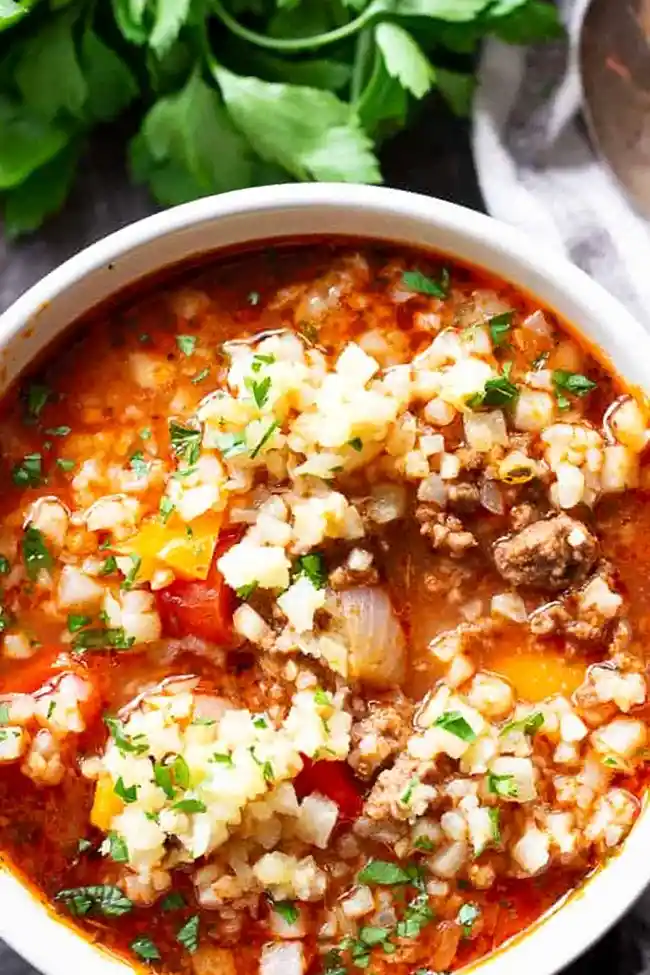
List of ingredients
- 1 lb grass fed ground beef (85% lean) – provides a rich base and healthy fats.
- 1 Tbsp Ghee – used for sautéing to add a buttery flavor with a high smoke point.
- 1 med onion (chopped) – adds aromatic sweetness and depth.
- 5 cloves garlic (minced) – enhances the savory profile of the broth.
- Sea salt – used for seasoning the beef and aromatics.
- 1 1/2 tsp Italian Seasoning – a blend of herbs for traditional flavor.
- 1 tsp paprika – adds a subtle earthiness and vibrant color.
- 3 bell peppers (chopped red, orange, and yellow) – adds sweetness and essential vitamins.
- 3 cups bone broth (beef or chicken) – provides a nutrient-rich liquid base.
- 15 oz can tomato sauce (no salt added) – creates the thick, tangy soup consistency.
- 3/4 tsp fine grain sea salt – used for final seasoning.
- 2 cups cauliflower rice – serves as a low-carb alternative to traditional rice.
- 1 Tbsp Ghee (for rice) – used to sauté the cauliflower for better taste.
- 1/4 tsp onion powder – adds a concentrated onion flavor to the rice.
- 1/4 tsp garlic powder – enhances the riced cauliflower.
- Minced parsley – used as a fresh garnish for color and taste.
step-by-step instructions
- Prepare and Brown: Prep all ingredients beforehand. Set the Instant Pot to ‘sauté’ mode, melt the ghee once hot, and brown the ground beef while breaking up any lumps.
- Aromatics and Spices: Once the beef is 90% browned, stir in the chopped onions and minced garlic with a pinch of sea salt. Add the Italian seasoning and paprika, cooking for about 30 seconds until the spices are fragrant.
- Combine Liquids: Add the chopped bell peppers and stir. Pour in the bone broth and tomato sauce, then stir in the final amount of sea salt.
- Pressure Cook: Cancel the sauté function. Secure the lid, set the vent to the sealed position, and pressure cook on high for 3 minutes.
- Release Pressure: Perform a quick release of the pressure immediately after the cooking cycle finishes to prevent the vegetables from overcooking.
- Prepare Cauliflower Rice: For the best flavor, sauté the cauliflower rice in ghee with onion and garlic powder until softened. Alternatively, you can steam the rice or stir the raw grains directly into the hot soup after the pressure release.
- Serve and Garnish: Ladle the hot soup into bowls, add the prepared cauliflower rice, and garnish with fresh minced parsley.
Optimizing Your Ingredient Selection
Selecting the Best Ground Beef Lean-to-Fat Ratio
Using 85% lean grass-fed beef provides the ideal balance of flavor and texture. If you use a leaner meat, the soup may lack depth, whereas a higher fat content can result in an oily layer on top of the broth.
Choosing Vibrant Bell Peppers for Flavor
Red, orange, and yellow peppers are sweeter and milder than green peppers. Using a colorful variety ensures the soup has a balanced sweetness and a visually appealing appearance.
Using High-Quality Bone Broth
Bone broth contains collagen and amino acids that add a richer mouthfeel than standard stock. Beef bone broth complements the meat, while chicken bone broth offers a slightly lighter profile.
Benefits of Ghee for Sautéing
Ghee is clarified butter, which means the milk solids are removed, giving it a much higher smoke point. This allows you to brown the beef and aromatics at higher temperatures without burning the fat.
Choosing Low-Sodium Tomato Sauce
Opting for tomato sauce with no added salt allows you to control the sodium levels of the final dish. You can adjust the saltiness at the end to suit your personal preference.
Mastering the Instant Pot Process
Leveraging the Sauté Function for Depth
Browning the meat and aromatics using the sauté function creates the Maillard reaction, which develops complex flavors. Skipping this step and just pressure cooking can result in a bland, boiled taste.
Preventing the Burn Notice
Tomato sauce is thick and can easily sink to the bottom and scorch. To avoid the ‘Burn’ error, ensure the sauce is well-stirred into the broth and not layered directly on the bottom of the pot.
The Importance of a Quick Release
A quick release is necessary for this recipe to keep the bell peppers from becoming mushy. Letting the pot naturally release the pressure would overcook the vegetables, losing their texture.
Understanding Total Cooking Time
While the pressure cook time is only 3 minutes, remember that the pot takes several minutes to come to pressure. Budget about 25 minutes in total from prep to serving.
Deglazing the Pot After Sautéing
After browning the beef and onions, use a small amount of broth to scrape the brown bits (fond) off the bottom. This integrates those concentrated flavors into the soup and helps prevent the burn notice.
Cauliflower Rice Preparation Methods
Sautéing for Maximum Flavor
Sautéing cauliflower rice in ghee with garlic and onion powder removes excess moisture and browns the grains. This method provides a nutty flavor and a texture more similar to traditional rice.
Steaming for a Lighter Texture
Steaming the cauliflower rice preserves its natural color and provides a softer, more tender bite. This is a great option for those who prefer a lower fat content in their side components.
The Stir-In Method for Convenience
Adding uncooked cauliflower rice to the soup immediately after the quick release uses the residual heat to soften the grains. This is the fastest method and requires no extra pans.
Homemade vs. Store-Bought Cauliflower Rice
Store-bought riced cauliflower is convenient, but homemade rice made with a food processor allows you to control the grain size. Coarser grains tend to hold up better in the soup.
Seasoning the Rice Separately
Adding onion and garlic powder directly to the rice ensures every grain is flavored. This prevents the rice from tasting bland when it is mixed into the savory tomato broth.
Customizing Flavors and Variations
Adjusting the Spice Level for Heat
To add a spicy kick, stir in a pinch of crushed red pepper flakes or a dash of cayenne pepper during the sauté step. This complements the sweetness of the bell peppers and the richness of the beef.
Adding More Vegetables for Bulk
You can add diced carrots or celery during the sauté phase to increase the vegetable content. These additions blend well with the Italian seasonings and add extra nutrients.
Using Different Herbs for a New Profile
While Italian seasoning is traditional, you can use a blend of oregano and basil for a more specific Mediterranean taste. Adding a teaspoon of dried thyme can also add an earthy dimension.
Enhancing the Umami Profile
A small amount of coconut aminos or a dash of Worcestershire sauce (ensure it is Whole30 compliant) can deepen the savory notes. This enhances the richness of the grass-fed beef.
Adding Fresh Greens at the End
Stirring in a handful of fresh spinach or kale after the pressure release adds color and vitamins. The residual heat will wilt the greens perfectly without overcooking them.
Ingredient Substitutions and Alternatives
Alternative Protein Options
Ground turkey or ground bison can be used as a substitute for ground beef. Bison is particularly lean and rich, while turkey offers a lighter flavor that pairs well with the tomato base.
Low-FODMAP Vegetable Adjustments
For those sensitive to alliums, replace the onion and garlic with the green tops of spring onions. Use garlic-infused oil instead of fresh garlic to maintain the flavor profile.
Dairy-Free Fat Alternatives
If you do not have ghee, avocado oil or olive oil are suitable replacements. Avocado oil is preferred for the initial browning due to its high smoke point.
Substituting Tomato Sauce
If tomato sauce is unavailable, you can use crushed tomatoes for a chunkier texture. If using crushed tomatoes, you may need to add an extra half cup of broth to maintain the soup consistency.
Replacing Bone Broth
While bone broth is recommended, standard beef or vegetable stock works well. Ensure the stock is free from added sugars and artificial preservatives to keep it keto-friendly.
Storage and Preservation Tips
Refrigeration Guidelines
Store the soup in an airtight glass container in the refrigerator for up to 4 days. Keep the cauliflower rice separate if possible to prevent it from absorbing too much liquid.
Freezing for Long-Term Use
This soup freezes exceptionally well for up to 3 months. Freeze the soup base separately from the cauliflower rice, as the rice can change texture when frozen and thawed.
Optimal Reheating Methods
The best way to reheat the soup is on a stovetop over medium heat until simmering. This prevents the soup from overcooking and allows you to adjust the thickness if it has thickened in the fridge.
Thawing Frozen Soup
Thaw frozen portions in the refrigerator overnight before reheating. Avoid thawing in the microwave to ensure the beef and vegetables heat evenly without becoming rubbery.
Managing Liquid Loss During Storage
Soups often thicken as they sit because the ingredients absorb liquid. Add a splash of water or broth when reheating to restore the original soup consistency.
Troubleshooting Common Issues
Fixing a Soup That Is Too Thin
If the soup is too watery, you can simmer it on the sauté setting for a few minutes after the pressure cook. This reduces the liquid and concentrates the flavors.
Reducing Excessive Saltiness
If the soup tastes too salty, add an extra half cup of unsalted broth or a diced potato during the cooking process. The potato will absorb some of the salt and can be removed before serving.
Correcting a Bland Flavor Profile
If the soup lacks punch, add a teaspoon of apple cider vinegar or a squeeze of lemon juice. A small amount of acidity brightens the flavors and balances the richness of the beef.
Dealing with Separated Fats
If a layer of fat forms on top of the soup, use a spoon to skim it off before serving. You can also chill the soup and lift the solidified fat layer from the surface.
Preventing Mushy Bell Peppers
If your peppers are too soft, ensure you are using the quick release method. Additionally, chopping the peppers into larger, uniform pieces prevents them from breaking down too quickly.
Frequently Asked Questions
Can I use frozen bell peppers instead of fresh?
Yes, you can use frozen peppers, but add them during the pressure cooking stage rather than the sauté stage. Be aware that frozen vegetables release more water, so you may need to reduce the broth slightly.
Is this recipe suitable for a Paleo diet?
Yes, this recipe is Paleo-friendly as it avoids grains, legumes, and dairy. The use of ghee and cauliflower rice makes it a compliant alternative to traditional stuffed peppers.
Can I make this in a slow cooker instead of an Instant Pot?
Yes, you can. Brown the meat and aromatics in a pan first, then combine all ingredients in the slow cooker and cook on low for 6-8 hours or high for 3-4 hours.
Do I have to add cauliflower rice to the soup?
No, the cauliflower rice is optional. You can serve the soup as a thick stew on its own or serve it over a different low-carb base like steamed cabbage.
Can I add cheese to this soup?
To keep it keto and Whole30, avoid cheese. However, if you are not following those specific diets, a sprinkle of parmesan or shredded mozzarella on top adds a great flavor.
Print
Instant Pot Stuffed Pepper Soup
- Total Time: 25 minutes
- Yield: 8 servings
- Diet: Keto, Whole30, Paleo, Gluten-Free, Dairy-Free
Description
This stuffed pepper soup is loaded with everything you’re craving! Italian spices, savory ground beef, garlic and onions, bell peppers, and cauliflower “rice” make this a hearty soup that’s also super healthy for you. Gluten-free, dairy-free, keto and Whole30 friendly.
Ingredients
- 1 lb grass fed ground beef
- 1 Tbsp ghee
- 1 medium onion, chopped
- 5 cloves garlic, minced
- Sea salt
- 1 1/2 tsp Italian seasoning
- 1 tsp paprika
- 3 bell peppers, chopped
- 3 cups bone broth
- 15 oz can tomato sauce (no salt added)
- 3/4 tsp fine grain sea salt
- 2 cups cauliflower rice
- 1 Tbsp ghee
- 1/4 tsp onion powder
- 1/4 tsp garlic powder
- Minced parsley for garnish
Instructions
- Step: Set your Instant Pot to sauté, melt the ghee, and brown the ground beef.
- Step: Add onions, garlic, sea salt, Italian seasoning, and paprika; cook for 30 seconds until fragrant.
- Step: Stir in bell peppers, bone broth, tomato sauce, and salt, then seal the lid.
- Step: Pressure cook on high for 3 minutes and quick release the pressure.
- Step: Sauté cauliflower rice in ghee with onion and garlic powder until softened.
- Step: Serve soup hot with cauliflower rice and garnish with parsley.
Notes
Store leftovers covered in the refrigerator for up to 4 days or freeze for later use.
- Prep Time: 10 minutes
- Cook Time: 15 minutes
- Category: Lunch/Dinner
- Method: Pressure Cooking
- Cuisine: Keto, Paleo, Whole30
Nutrition
- Serving Size: 1 serving
- Calories: 221 kcal
- Sugar: 5 g
- Sodium: 318 mg
- Fat: 12 g
- Saturated Fat: 5 g
- Unsaturated Fat: 7 g
- Trans Fat: 0 g
- Carbohydrates: 11 g
- Fiber: 3 g
- Protein: 16 g
- Cholesterol: 48 mg