
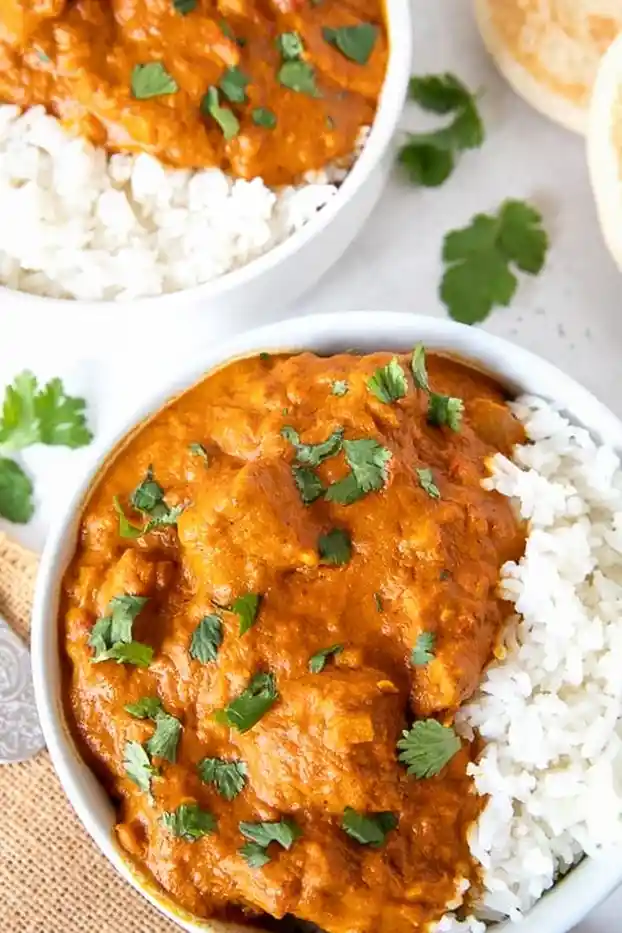
This slow cooker dairy-free butter chicken delivers a rich, creamy texture and authentic Indian flavor without using cream or butter. It is a convenient meal that requires minimal prep and yields tender chicken in a savory gravy.
List of ingredients
- 1.5 tbsp curry powder – provides the foundational aromatic base.
- 1 tbsp garam masala – adds warmth and depth to the sauce.
- 1 tsp turmeric – contributes an earthy flavor and golden color.
- 1.5 tsp chili powder – adds a mild to moderate spicy kick.
- 1 tsp salt – enhances all other spice notes.
- 1/2 tbsp coconut oil (or olive oil) – used for sautéing the aromatics.
- 1 onion, minced – adds sweetness and body to the gravy.
- 3 garlic cloves, minced – provides a pungent, savory aroma.
- 1 tsp fresh ginger, minced – offers a bright, zesty contrast (ground ginger is a backup option).
- 6 oz tomato paste (170 g) – thickens the sauce and adds concentrated acidity.
- 1 cinnamon stick – infuses the sauce with a subtle woody sweetness.
- 1 15-oz can full fat coconut milk – creates the creamy, dairy-free consistency.
- 1 15-oz can crushed tomatoes – provides the bulk of the sauce and tanginess.
- 2 lbs chicken breast, chopped into large chunks (or 6 boneless skinless chicken thighs) – the primary protein.
- 1/2 cup fresh cilantro leaves – used for garnish and a fresh finish.
step-by-step instructions
- Prepare the spice blend: Mix the curry powder, garam masala, turmeric, chili powder, and salt together in a small bowl and set aside for later use.
- Sauté the aromatics: Heat coconut oil in a non-stick skillet over medium heat and cook the minced onion until soft and translucent, which takes about 2-3 minutes.
- Create the flavor paste: Add the minced garlic, ginger, mixed spices, and tomato paste to the skillet, stirring constantly for about 30 seconds until the mixture is fragrant.
- Combine base liquids: Transfer the cooked paste to the slow cooker and stir in the full fat coconut milk and crushed tomatoes until the mixture is well combined.
- Add protein and cinnamon: Stir in the chicken chunks until every piece is fully coated in the sauce, then submerge the cinnamon stick into the liquid.
- Slow cook: Cover the slow cooker and cook on the low setting for 6 hours, or until the chicken is tender and cooked through.
- Final touch: Give the curry a good stir and serve over cauliflower rice or steamed white rice, garnished generously with fresh cilantro.
Selecting the Optimal Protein
Benefits of Using Chicken Thighs
Using boneless, skinless chicken thighs often results in a more tender and juicy final dish. Thighs contain more connective tissue and fat, which break down slowly over six hours, preventing the meat from drying out. This cut is highly recommended for long slow-cooker recipes.
Preparing Chicken Breasts
If you prefer chicken breasts, ensure you chop them into larger chunks to avoid overcooking. Because breasts are leaner, they can become stringy if cooked too long or cut too small. Large pieces maintain their moisture and provide a cleaner, leaner protein profile.
Maximizing Flavor Depth
The Role of Full Fat Coconut Milk
Always use full fat coconut milk rather than the light version to ensure a restaurant-style thickness. The higher fat content allows the sauce to emulsify and provides the rich mouthfeel usually associated with butter and cream. Light coconut milk often results in a watery gravy that lacks depth.
Using Fresh Ginger Over Powdered
Freshly minced ginger provides a sharp, bright, and peppery flavor that powdered ginger cannot replicate. While ground ginger is a functional substitute in a pinch, the volatile oils in fresh ginger are essential for an authentic Indian flavor profile. Grate the ginger just before adding it to the pan for maximum potency.
The Importance of Blooming Spices
Sautéing the spices and tomato paste in oil before adding them to the slow cooker is a process called blooming. This technique releases fat-soluble flavor compounds and removes the raw taste of the turmeric and chili powder. It creates a more complex and integrated flavor throughout the entire sauce.
Customizing the Sauce
Adjusting the Heat Level
The amount of chili powder can be adjusted based on your personal tolerance for spice. For a milder version, reduce the chili powder to a half teaspoon or use a mild paprika blend. To increase the heat, you can add a pinch of cayenne pepper or chopped fresh serrano chilies during the sautéing step.
Substituting Tomato Paste
If tomato paste is unavailable, you can use a highly concentrated tomato puree, though you may need to simmer the sauce longer to achieve the same thickness. Tomato paste is preferred because it adds a deep, savory richness and helps achieve the signature red color of butter chicken. Avoid using plain tomato sauce as it will thin the gravy too much.
Adding Extra Richness
For an even creamier texture, stir in two tablespoons of thick coconut cream at the very end of the cooking process. This adds a final layer of luxury to the sauce and gives it a professional sheen. This is a great way to mimic the effect of adding a knob of cold butter just before serving.
Serving and Pairing Suggestions
Using Cauliflower Rice for Low Carb
Cauliflower rice is an excellent low-carb alternative that absorbs the flavors of the gravy without adding heavy carbohydrates. To prepare it, pulse raw cauliflower in a food processor and sauté it briefly with a touch of oil and salt. It provides a light, nutty base that complements the richness of the coconut milk.
Traditional Rice Pairings
For a more traditional experience, serve the curry over steamed Basmati or Jasmine rice. The aromatic nature of Basmati rice pairs perfectly with the garam masala and cinnamon notes in the sauce. Ensure the rice is fluffy and separate to provide a textural contrast to the creamy chicken.
Preparing a Dairy-Free Raita
A cooling side dish can balance the spices of the butter chicken. Create a dairy-free raita by using a base of cashew cream mixed with grated cucumber, minced onion, and chopped mint. Squeezing the excess water out of the grated cucumber first prevents the raita from becoming too runny.
Garnishing with Fresh Herbs
Fresh cilantro is the classic choice for this dish, providing a citrusy, fresh contrast to the savory gravy. If you do not have cilantro, flat-leaf parsley is a suitable alternative, although it lacks the specific aromatic punch of cilantro. Always add the herbs fresh at the time of serving to preserve their color and flavor.
Storage and Maintenance
Refrigeration and Shelf Life
This curry stores exceptionally well in the refrigerator for three to four days when kept in an airtight container. In many cases, the flavor improves after a day as the spices continue to meld and penetrate the meat. Ensure the dish is cooled slightly before sealing it to prevent condensation.
Freezing for Future Meals
You can freeze this butter chicken for up to three months to make easy future dinners. Place the curry in freezer-safe bags or containers, leaving a small amount of space for expansion. Thaw the curry in the refrigerator overnight before reheating to maintain the best texture.
Best Reheating Methods
The best way to reheat this dish is on the stovetop over low heat, adding a splash of water or coconut milk if the sauce has thickened too much. Avoid overheating in the microwave, as this can cause the coconut milk to separate or the chicken to become rubbery. Stir gently to recombine the fats and liquids.
Advanced Meal Prep Advice
Pre-Mixing the Spice Blend
You can prepare large batches of the dry spice mix (curry powder, garam masala, turmeric, chili powder, and salt) and store them in a jar. This reduces the active prep time to just a few minutes on the day of cooking. Keep the blend in a cool, dark place to prevent the spices from losing their potency.
Batch Cooking for the Week
Because this recipe yields a generous amount of food, it is ideal for batch cooking. Divide the finished curry into individual portions for work lunches throughout the week. This prevents the need for daily cooking and ensures healthy, homemade meals are always available.
Prepping Aromatics in Advance
Mincing the onion, garlic, and ginger ahead of time can significantly speed up the evening routine. Store the minced aromatics in a small container with a drizzle of oil to keep them fresh. This allows you to move straight to the sautéing phase without any chopping delays.
Troubleshooting Common Issues
Fixing a Watery Sauce
If the sauce is too thin after six hours, leave the lid off the slow cooker and cook on high for an additional 30 to 60 minutes. This allows excess moisture to evaporate, concentrating the flavors and thickening the gravy. Alternatively, you can stir in a small amount of coconut cream to increase viscosity.
Preventing Dry Chicken
If you find your chicken breasts are drying out, try reducing the cook time by 30 minutes or using a slightly larger cut of meat. Always ensure the chicken is fully submerged in the liquid, as exposed meat will steam rather than braise. Using chicken thighs almost entirely eliminates this risk.
Balancing Overly Acidic Tomatoes
If the crushed tomatoes make the sauce too tangy, stir in a teaspoon of maple syrup or coconut sugar. The small amount of sweetness neutralizes the acidity of the tomatoes without making the dish taste sweet. Balance the flavors by tasting the sauce during the last 30 minutes of cooking.
Frequently Asked Questions
Can I use a pressure cooker instead of a slow cooker?
Yes, you can adapt this recipe for a pressure cooker by sautéing the aromatics using the sauté function and then pressure cooking on high for about 10-15 minutes. Be sure to use slightly less liquid, as pressure cookers do not allow for evaporation like slow cookers do.
Is this recipe completely gluten-free?
The ingredients themselves are naturally gluten-free, but you must check the labels on your store-bought spice mixes. Some curry powders or garam masalas use flour or gluten-containing fillers as anti-caking agents. Always choose certified gluten-free spices to be certain.
Can I substitute the coconut oil?
You can easily substitute coconut oil with olive oil, avocado oil, or any other neutral cooking oil. While coconut oil adds a very subtle sweetness that complements the coconut milk, olive oil works perfectly well and will not noticeably change the flavor profile of the dish.
What can I use if I don’t have a cinnamon stick?
If you don’t have a whole cinnamon stick, you can use a quarter teaspoon of ground cinnamon. Be careful not to use too much, as ground cinnamon is more potent and can easily overpower the other spices in the gravy. Add the ground cinnamon during the spice-mixing step.
Print
Slow Cooker Paleo Butter Chicken
- Total Time: 6 hours 20 minutes
- Yield: 4 servings
- Diet: Paleo, Dairy-Free
Description
Learn how to make a tasty, restaurant-style Paleo Slow Cooker Chicken at home and ditch the premade sauce for good. Juicy chunks of chicken in a flavorful creamy savory and dairy-free Indian gravy!
Ingredients
- 1.5 tbsp curry powder
- 1 tbsp garam masala
- 1 tsp turmeric
- 1.5 tsp chili powder
- 1 tsp salt
- 1/2 tbsp coconut oil (or olive oil)
- 1 onion (minced)
- 3 garlic cloves (minced)
- 1 tsp fresh ginger (minced)
- 6 oz tomato paste
- 1 cinnamon stick
- 1 15-oz can full fat coconut milk
- 1 15-oz can crushed tomatoes
- 2 lbs chicken breast (chopped into large chunks)
- 1/2 cup fresh cilantro leaves
Instructions
- Step: Mix curry powder, garam masala, turmeric, chili powder, and salt together in a small bowl. Set aside.
- Step: Heat coconut oil in a non-stick skillet over medium heat. Cook onion until soft and translucent, about 2-3 minutes, stirring often. Add garlic, ginger, spices and tomato paste to the skillet. Combine (this will make a thick paste) and cook until fragrant, about 30 seconds, stirring.
- Step: Transfer to the slow cooker. Pour coconut milk and crushed tomatoes. Stir until well combined. Add chicken chunks, stir again until all chicken is coated with sauce, and submerge cinnamon stick.
- Step: Cover and cook on low for 6 hours, or until the chicken is tender. Give it a good stir and serve over cauliflower rice or normal rice, with lots of fresh cilantro.
Notes
Do not use light coconut milk, it will water down the sauce. You can use powdered ginger but fresh tastes way better. You could stir in some coconut cream to make this extra rich. For a complete gluten-free paleo slow cooker butter chicken, read your spice seasoning labels to check for gluten.
- Prep Time: 15 minutes
- Cook Time: 6 hours 5 minutes
- Category: Main Course
- Method: Slow Cooker
- Cuisine: Indian
Nutrition
- Serving Size: 1 serving
- Calories: 602 kcal
- Sugar: 11 g
- Sodium: 1365 mg
- Fat: 33 g
- Saturated Fat: 24 g
- Unsaturated Fat: 9 g
- Trans Fat: 0 g
- Carbohydrates: 26 g
- Fiber: 6 g
- Protein: 55 g
- Cholesterol: 145 mg