
This Korean-style pot roast combines the comfort of a slow-cooked meal with the bold, savory-sweet flavors of traditional Korean cuisine. It is a practical one-pot meal that delivers tender beef and hearty vegetables in a rich glaze.
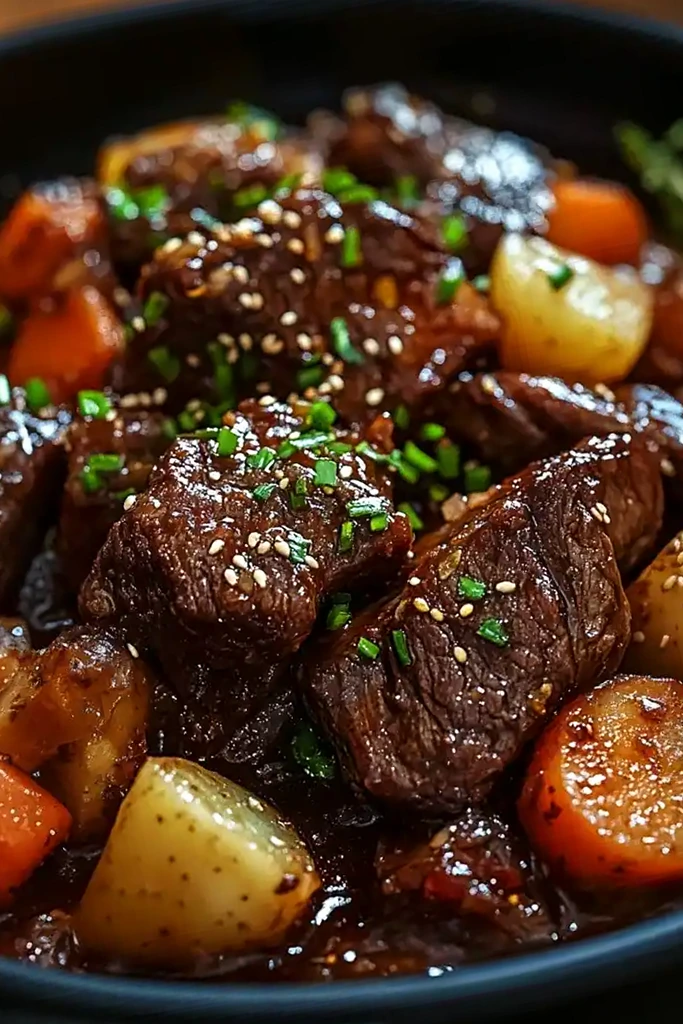
List of ingredients
- 3-4 lbs Chuck roast – chosen for its marbling to ensure tenderness.
- Salt and black pepper – used for basic seasoning before searing.
- 1/2 cup soy sauce – providing the primary savory and salty base.
- 2 tbsp gochujang – Korean chili paste for depth and mild heat.
- 3 tbsp sesame oil – adds a nutty aroma and richness.
- 3 cloves garlic, minced – for pungent aromatic flavor.
- 1-inch ginger, grated – adds a zesty, warm note to the sauce.
- 2 tbsp honey or brown sugar – balances the saltiness with sweetness.
- 1/2 cup Korean pear or apple, grated – contains enzymes that help tenderize the meat.
- 1 tbsp rice vinegar – provides a bright acidity to cut through the richness.
- 3 carrots, peeled and cut into chunks – adds sweetness and color.
- 2 potatoes, peeled and quartered – absorbs the sauce for a hearty side.
- 1 onion, sliced – creates a flavor base in the pot.
- 1 Korean radish, sliced (optional) – adds a traditional peppery crunch.
- Sliced green onions – used for a fresh garnish.
- Sesame seeds – used for a toasted finish.
step-by-step instructions
- Prepare the Beef: Pat the beef dry with paper towels and season all sides generously with salt and pepper. Heat a small amount of sesame oil in a large skillet over medium-high heat and sear the meat until a brown crust forms on all sides to lock in the juices.
- Make the Sauce: In a medium mixing bowl, whisk together the soy sauce, gochujang, sesame oil, minced garlic, grated ginger, honey (or brown sugar), and the grated Korean pear. Stir until the mixture is smooth and the honey is fully integrated.
- Assemble and Cook: Place the seared beef into a slow cooker, Dutch oven, or heavy-bottomed pot. Pour the prepared sauce over the meat until it is well-coated, then arrange the sliced onions, carrots, potatoes, and optional Korean radish around the roast. For slow cooker use, set to low for 8 hours or high for 4-5 hours; for stovetop use, cover and simmer on low for 3-4 hours, checking occasionally for liquid levels.
- Serve: Carefully transfer the cooked beef to a serving platter and arrange the tender vegetables around it. Spoon the remaining cooking sauce over the top of the meat and garnish with sliced green onions and toasted sesame seeds.
Pro Tips for Meat Tenderness
Sear the Beef Thoroughly
Searing the meat at a high temperature creates a caramelized crust through the Maillard reaction. This process adds a deep, complex flavor to the final sauce that cannot be achieved by slow cooking alone. Ensure the pan is hot before adding the roast to avoid steaming the meat.
Select the Right Cut of Beef
Chuck roast is the best choice because it contains connective tissue and intramuscular fat. During the long, slow cooking process, this collagen breaks down into gelatin, which makes the meat succulent and tender. Avoid lean cuts like sirloin, as they will become tough and dry over several hours.
Prepare the Meat Surface
Always pat the beef dry with paper towels before seasoning and searing. Excess moisture on the surface of the meat creates steam in the pan, which prevents the beef from browning properly. A dry surface ensures a quick sear and a better crust.
Customizing Your Flavor Profile
Adjusting the Heat Level
The spice in this recipe comes primarily from the gochujang paste. If you prefer a milder flavor, reduce the gochujang to one tablespoon. For those who enjoy more heat, add a teaspoon of gochugaru (Korean red pepper flakes) to the sauce mixture.
Balancing the Sweetness
Depending on the ripeness of the Korean pear or apple, you may need to adjust the honey. If the sauce tastes too sweet, add an extra teaspoon of soy sauce to increase the saltiness. If it needs more depth, use brown sugar instead of honey for a molasses-like undertone.
Enhancing the Acidity
Rice vinegar is used to brighten the heavy flavors of the beef and sesame oil. If the dish feels too rich or heavy, add an additional splash of rice vinegar just before serving. This acidity cuts through the fat and refreshes the palate.
Alternative Cooking Methods
Instant Pot Pressure Cooking
To use a pressure cooker, use the sauté function to sear the beef first. Add the sauce and vegetables, then seal the lid and cook on high pressure for 60 minutes. Allow for a natural pressure release to keep the meat from toughening up suddenly.
Slow Cooker Settings
Cooking on the low setting for 8 hours is ideal for the most tender results, as the slow breakdown of collagen is more effective. The high setting (4-5 hours) is a faster alternative but may result in slightly less tender meat depending on the roast’s size.
Dutch Oven Braising
Using a heavy-bottomed Dutch oven allows for better heat distribution and oven-braising. After searing and adding the liquid, place the covered pot in a 300°F (150°C) oven for 3-4 hours. This provides a consistent ambient heat that mimics a slow cooker.
Vegetable Preparation Tips
Timing the Vegetable Addition
When using a slow cooker on low for 8 hours, carrots and potatoes can become overly soft or mushy. To maintain a better texture, add the vegetables during the final 2-3 hours of cooking. This ensures they are cooked through but still hold their shape.
Using Korean Radish for Authenticity
Mu, or Korean radish, has a firmer texture and a more peppery taste than standard white radish. It holds up exceptionally well to long braising times without disintegrating. Slice it into thick rounds to ensure it doesn’t vanish into the sauce.
Choosing the Best Potatoes
Waxy potatoes, such as Yukon Gold or red potatoes, are recommended for this recipe. They hold their structure during the long simmer and won’t dissolve into the gravy. Avoid russet potatoes unless you want the starch to thicken the sauce naturally.
Serving and Pairing Suggestions
Pairing with Steamed White Rice
Short-grain steamed rice is the traditional accompaniment to this dish. The neutral flavor and sticky texture of the rice are perfect for absorbing the savory, thickened soy-gochujang sauce. Serve a generous scoop of rice next to the roast.
Adding Kimchi for Contrast
Serve a side of chilled, spicy kimchi to provide a sharp contrast to the rich, tender beef. The fermentation and acidity of the cabbage act as a palate cleanser. This balance prevents the meal from feeling too heavy.
Including Pickled Side Dishes
Quickly pickled cucumbers or carrots add a refreshing crunch and tanginess to the plate. These cold sides complement the warm, soft textures of the pot roast. Use rice vinegar and a pinch of sugar for a traditional Korean-style pickle.
Fusion Side Options
For a fusion approach, this roast pairs well with creamy mashed potatoes or toasted garlic bread. These sides complement the savory nature of the sauce while providing a different textural experience. A simple green salad with a ginger-soy dressing also works well.
Storage and Preservation
Refrigeration Guidelines
Store any remaining beef, vegetables, and sauce in an airtight glass or plastic container. Keep the beef submerged in the sauce to prevent it from drying out in the fridge. The dish will remain fresh and flavorful for up to 3 days.
Freezing the Roast and Sauce
Cooked pot roast can be frozen for up to 3 months in a freezer-safe container. Ensure the sauce is cooled completely before freezing to avoid ice crystals. The sauce acts as a protective layer that preserves the moisture of the meat.
Safe Thawing Methods
To maintain the best texture, thaw the frozen roast in the refrigerator overnight. Avoid thawing at room temperature to prevent bacterial growth. Once thawed, you can reheat the meat gently on the stove.
Reheating and Leftovers
Stovetop Reheating Technique
Place the leftover beef and vegetables in a saucepan over low heat. Add a small splash of beef broth or water to loosen the sauce, which may have thickened during refrigeration. Cover the pan and heat slowly to avoid scorching the honey in the sauce.
Microwave Reheating Tips
If using a microwave, place the portion in a microwave-safe dish and cover it with a damp paper towel. Heat in short intervals, stirring in between, to ensure even heating. This prevents the edges of the beef from becoming rubbery.
Repurposing Beef for Other Meals
Shred the remaining beef to use as a filling for tacos or Korean-style sliders. You can also place the shredded meat over a bowl of rice and steamed greens for a quick lunch. The concentrated flavor of the leftover meat makes it an excellent topping for baked potatoes.
Troubleshooting Common Issues
Fixing a Sauce That is Too Thin
If the sauce is too watery after cooking, remove the meat and vegetables from the pot. Simmer the sauce on high heat for 5-10 minutes to reduce and thicken it. Alternatively, whisk in a small cornstarch slurry (cornstarch mixed with water) and simmer until glossy.
Preventing the Beef from Drying Out
Ensure the beef remains partially submerged in the liquid throughout the cooking process. If the liquid level drops too low during stovetop cooking, add a bit of water or beef broth. Avoid cooking the roast past the recommended time, as even fatty cuts can eventually dry out.
Adjusting Overly Salty Sauce
If the soy sauce makes the dish too salty, add a tablespoon of honey or a bit more grated apple. The sweetness neutralizes the saltiness and restores the flavor balance. Adding a few more chunks of potato can also help absorb excess salt.
Frequently Asked Questions
Can I use a different cut of beef for this recipe?
Yes, you can use beef brisket or a round roast, though chuck roast is the top recommendation. Brisket provides a similar result but may require a slightly longer cooking time to reach the same level of tenderness. Round roast is leaner and may dry out more quickly.
Can I freeze leftovers?
Yes, you can freeze the cooked roast and the sauce in an airtight container for up to 3 months. It is best to freeze them together so the meat stays moist. Thaw in the refrigerator before reheating.
Can I cook this in an Instant Pot?
Yes, use the sauté function to sear the beef first, then add the sauce and vegetables. Cook on high pressure for 60 minutes and allow for a natural pressure release. This significantly reduces the cooking time while maintaining the flavor.
Print
Korean Style Pot Roast Recipe
- Total Time: 4 hours 15 minutes
- Yield: 6 servings
- Diet: General
Description
Korean Style Pot Roast is the perfect marriage of hearty comfort food and bold Korean flavors. This recipe features tender beef, a savory soy-based sauce, and hearty vegetables, making it a crowd-pleasing main course for any occasion.
Ingredients
- 3–4 lbs Chuck roast
- Salt and black pepper
- ½ cup soy sauce
- 2 tbsp gochujang (Korean chili paste)
- 3 tbsp sesame oil
- 3 cloves garlic, minced
- 1-inch ginger, grated
- 2 tbsp honey or brown sugar
- ½ cup Korean pear or apple, grated
- 1 tbsp rice vinegar
- 3 carrots, peeled and cut into chunks
- 2 potatoes, peeled and quartered
- 1 onion, sliced
- 1 Korean radish, sliced (optional)
- Sliced green onions
- Sesame seeds
Instructions
- Prepare the Beef: Pat the beef dry and season with salt and pepper on all sides. In a large skillet, heat a bit of sesame oil over medium-high heat. Sear the beef until browned on all sides.
- Make the Sauce: In a bowl, combine soy sauce, gochujang, sesame oil, garlic, ginger, honey, and grated Korean pear. Stir until smooth.
- Assemble and Cook: Place the seared beef into a slow cooker, Dutch oven, or heavy pot. Pour the sauce over the beef, ensuring it’s well-coated. Add the sliced onions, carrots, potatoes, and Korean radish around the beef. For slow cooker: Cook on low for 8 hours or high for 4-5 hours. For stovetop: Simmer on low heat for 3-4 hours, covered, checking occasionally to ensure it doesn’t dry out.
- Serve: Transfer the beef to a platter and arrange the vegetables around it. Spoon the sauce over the top for added flavor. Garnish with green onions and sesame seeds.
Notes
Adjust spice levels by reducing gochujang for less heat or adding Korean red pepper flakes for more. If Korean pear is unavailable, use a grated apple. Add vegetables halfway through cooking if you prefer them firmer.
- Prep Time: 15 minutes
- Cook Time: 4 hours
- Category: Main Course
- Method: Slow Cooking
- Cuisine: Korean
Nutrition
- Serving Size: 1 serving
- Calories: 425 kcal
- Sugar: 12 g
- Sodium: 1150 mg
- Fat: 22 g
- Saturated Fat: 8 g
- Unsaturated Fat: 14 g
- Trans Fat: 0 g
- Carbohydrates: 26 g
- Fiber: 4 g
- Protein: 34 g
- Cholesterol: 115 mg