
This hearty vegetable beef soup is a comforting one-pot meal that combines tender ground beef with a rich tomato-based broth. It is an efficient way to prepare a filling dinner that provides a balance of proteins and vegetables.
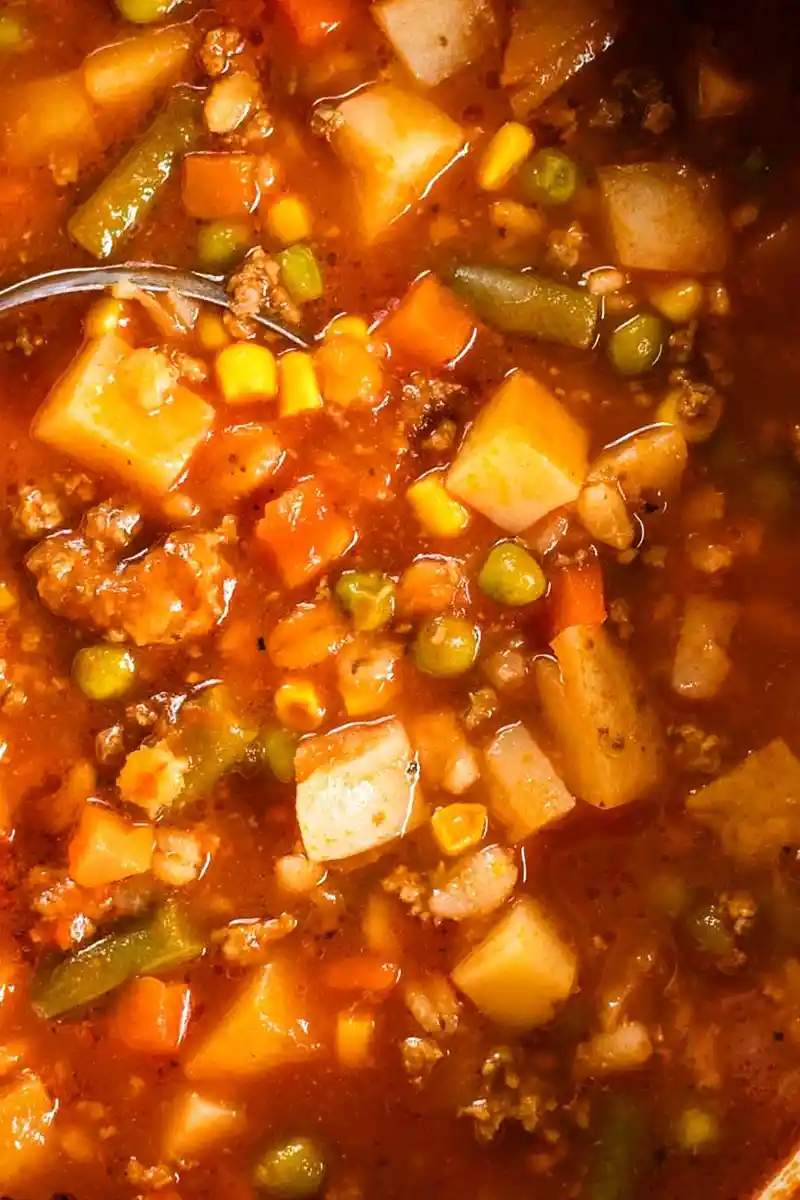
List of ingredients
- 1 lb ground beef – cooked and drained of excess fat for a cleaner flavor.
- 46 oz tomato juice – provides a rich, tangy base for the broth.
- 46 oz water – used to balance the thickness of the soup.
- 1 Tablespoon beef bouillon – or 3 bouillon cubes to enhance the savory depth.
- 16 oz frozen mixed vegetables – a convenient blend of peas, carrots, and corn.
- 4 cups potatoes – cubed into bite-sized pieces for texture.
- 1 teaspoon salt – enhances all the other flavors in the pot.
- 1 Tablespoon minced dry onion – adds a concentrated savory note.
- 1 Tablespoon sugar – balances the acidity of the tomato juice.
- 1/4 teaspoon pepper – provides a mild zesty heat.
- 1/4 teaspoon basil – adds a subtle herbal aroma.
- 2 bay leaves – imparts a deep earthy flavor during the simmer.
- 1/3 Cup barley – adds a chewy texture and helps thicken the soup.
- 1 teaspoon Worcestershire sauce – adds a complex umami finish to the beef.
step-by-step instructions
- Brown the beef: Cook the ground beef in a skillet over medium heat until completely browned. Drain the fat thoroughly to ensure the soup broth remains clear and not greasy.
- Combine ingredients: Use a 6-quart stockpot or larger to mix the cooked beef, tomato juice, water, bouillon, frozen vegetables, potatoes, and all seasonings. Stir the mixture well to ensure the bouillon and dry onion are evenly distributed.
- Simmer the soup: Bring the liquid to a gentle simmer over medium heat. Let the soup cook for at least one hour, allowing the barley to soften and the flavors to meld together.
- Remove aromatics: Carefully locate and remove the two bay leaves before serving. This prevents anyone from accidentally biting into a tough leaf.
- Serve: Ladle the hot soup into bowls. Serve immediately while warm for the best experience.
Cooking Tips for Maximum Flavor
Use a Heavy-Bottomed Stockpot
A heavy-bottomed pot ensures that heat is distributed evenly across the base. This prevents the ground beef or the thicker solids from scorching during the long simmering process. If you use a thin pot, you may notice hot spots that cause ingredients to stick to the bottom.
Maximize Beef Browning
Brown the ground beef thoroughly until it is deeply caramelized before adding it to the pot. This process, known as the Maillard reaction, creates a richer flavor profile in the final broth. Ensure you do not crowd the pan too much to avoid steaming the meat instead of searing it.
Maintain a Gentle Simmer
Keep the soup at a gentle simmer rather than a rolling boil. Boiling too vigorously can cause the potatoes to break apart and make the soup cloudy. A low simmer allows the barley to cook through without disintegrating the tender vegetables.
Adjust Liquid for Desired Thickness
The barley in this recipe naturally absorbs liquid as it cooks. If you prefer a thinner soup, you can add an extra cup of water or beef broth during the final twenty minutes. Conversely, simmering it slightly longer will result in a thicker, stew-like consistency.
Control Potato Texture
Cut your potatoes into uniform cubes of about half an inch. Uniform sizes ensure that all the potato pieces cook at the same rate. This prevents some pieces from becoming mushy while others remain hard in the center.
Ingredient Substitutions
Replacing Barley with Alternative Grains
If you cannot find barley, you can use pearled farro or brown rice for a similar chewy texture. If you need a gluten-free option, quinoa or white rice works well. Note that rice may absorb more liquid than barley, so you might need to increase the water slightly.
Substituting Fresh Vegetables for Frozen
You can replace the frozen mixed vegetables with freshly diced carrots, peas, and corn. If using fresh carrots, add them at the beginning of the simmer so they have enough time to soften. Fresh peas should be added in the last ten minutes of cooking to maintain their bright green color.
Using Beef Broth instead of Water
For an even deeper beefy flavor, replace the 46 oz of water with an equal amount of low-sodium beef broth. This adds more nutrients and complexity to the liquid base. Be careful with the salt levels if you choose this option, as broth often contains significant sodium.
Alternatives to Tomato Juice
If tomato juice is unavailable, use a combination of canned crushed tomatoes and extra water. You can also use tomato puree, though you may need to add a pinch more sugar to balance the concentrated acidity. This substitution provides a thicker, more rustic appearance to the soup.
Low-Sodium Bouillon Alternatives
To reduce the salt content, use a low-sodium beef bouillon or a homemade beef stock. You can also use a concentrated mushroom powder for an added layer of umami. Always taste the soup before adding the extra teaspoon of salt called for in the recipe.
Flavor Variations
Adding a Spicy Kick
For those who enjoy heat, add a quarter teaspoon of cayenne pepper or a pinch of red chili flakes. These additions provide a warm back-note that cuts through the richness of the beef. You can also stir in a small amount of hot sauce just before serving.
Incorporating Fresh Herbaceous Notes
While dried basil is used in the original recipe, adding fresh thyme or rosemary can elevate the flavor. Stir in a teaspoon of chopped fresh thyme during the last thirty minutes of simmering. Fresh parsley added at the very end provides a bright, clean contrast to the savory broth.
Including Extra Root Vegetables
Expand the vegetable profile by adding diced parsnips, rutabaga, or turnips. These root vegetables complement the potatoes and add a subtle sweetness to the dish. Add them at the same time as the potatoes to ensure they are tender by the end of the hour.
Creating a Creamier Broth
For a richer mouthfeel, stir in a small amount of heavy cream or a tablespoon of butter at the end of the cooking process. This mellows the acidity of the tomato juice and gives the soup a velvet-like texture. This variation is particularly comforting during very cold winter months.
Increasing Umami Depth
To deepen the savory profile, add a teaspoon of soy sauce or a dash of fish sauce along with the Worcestershire sauce. These ingredients contain high levels of glutamates that enhance the natural beef flavor. Use these sparingly so they do not overpower the other seasonings.
Serving Suggestions
Pairing with Crusty Bread
Serve this soup with a side of warm, crusty sourdough or a French baguette. The bread is ideal for soaking up the rich tomato broth and adding a contrasting crunch. Topping the bread with salted butter enhances the overall meal experience.
Adding Fresh Garnishes
Garnish each bowl with a sprinkle of freshly chopped green onions or curly parsley. These toppings provide a pop of color and a fresh, sharp taste that balances the cooked flavors. A dollop of sour cream on top can also add a tangy creaminess.
Serving with a Crisp Side Salad
A light garden salad with a lemon vinaigrette serves as an excellent accompaniment to this hearty soup. The acidity and freshness of the raw greens cut through the density of the beef and barley. This creates a balanced meal that doesn’t feel too heavy.
Complementing with Grated Cheese
Sprinkle a small amount of grated Parmesan or sharp Cheddar over the top of the soup. The saltiness of the cheese complements the beef and tomato base perfectly. The cheese melts slightly into the hot broth, adding an extra layer of indulgence.
Storage and Reheating Guide
Refrigeration Best Practices
Allow the soup to cool to room temperature before transferring it to an airtight container. This prevents condensation from building up, which can dilute the flavor. Store the soup in the refrigerator for up to four days.
Freezing the Soup for Later
This soup freezes exceptionally well and can be stored for up to three months. Use freezer-safe containers or heavy-duty freezer bags, leaving a small amount of space at the top for expansion. Portion the soup into individual servings for easier reheating later.
The Proper Thawing Process
To maintain the best texture, thaw frozen soup in the refrigerator for about 24 hours before reheating. Avoid thawing it on the counter to prevent bacteria growth. If you are in a rush, you can use the defrost setting on your microwave.
Stovetop Reheating Method
Reheat the soup in a saucepan over medium-low heat. Stir occasionally to ensure the barley and beef are heated evenly throughout. Add a splash of water or broth if the soup has thickened too much during storage.
Microwave Reheating Tips
Place the soup in a microwave-safe bowl and cover it with a lid or paper towel. Heat in 60-second intervals, stirring in between each session. This prevents the soup from bubbling over and ensures there are no cold spots in the middle.
Troubleshooting Common Issues
Fixing a Soup That Is Too Thick
If the barley has absorbed too much liquid and the soup resembles a stew, simply stir in some hot water or beef broth. Add the liquid a quarter cup at a time until you reach your desired consistency. Stir gently to avoid breaking the cooked potatoes.
Balancing Excess Acidity
If the tomato juice makes the soup taste too tart or acidic, add a small pinch more sugar. Sugar neutralizes the acid and rounds out the flavor profile. Always add sugar in very small increments and taste after each addition.
Preventing Overcooked Vegetables
If you find your vegetables are becoming too mushy, try adding the frozen blend during the last 30 minutes of simmering instead of at the beginning. This ensures they retain their shape and a slight bite. This is especially important for frozen peas and corn.
Correcting Bland or Under-Seasoned Broth
If the soup tastes flat, it likely needs more salt or a touch more bouillon. Start by adding a pinch of salt and stirring it in completely. If the flavor is still lacking, add a small amount of Worcestershire sauce to boost the umami levels.
Frequently Asked Questions
Can I use stew meat instead of ground beef?
Yes, you can use cubed stew meat, but you must increase the simmering time. Stew meat requires several hours of low heat to become tender, whereas ground beef is tender immediately. If using stew meat, sear the cubes first and simmer for 3-4 hours.
Is this soup suitable for a slow cooker?
This recipe adapts easily to a slow cooker for a set-it-and-forget-it meal. Brown the beef first, then add all ingredients to the crockpot. Cook on low for 6 to 8 hours or on high for 3 to 4 hours.
How long does this soup last in the fridge?
When stored in an airtight container, this soup remains fresh and safe to eat for up to four days. Ensure the container is sealed tightly to prevent the soup from absorbing other odors in the refrigerator.
Can I omit the sugar from the recipe?
You can omit the sugar, but you may notice the tomato juice tastes more acidic. The sugar is used primarily as a flavor balancer rather than a sweetener. If you prefer a more tart soup, leaving it out is perfectly fine.
What is the best type of barley to use?
Pearl barley is the best choice for this soup because it cooks relatively quickly and has a smooth texture. Hulled barley is a healthier alternative but requires much longer cooking times and may stay too chewy for this specific recipe.
Print
Hearty Old-Fashioned Vegetable Beef Soup
- Total Time: 75 minutes
- Yield: 20 cups
- Diet: General
Description
This vegetable beef soup is hearty and comforting, with a rich, savory broth that’s packed with ground beef, tender veggies, and flavorful seasonings. It’s an easy meal that’s perfect for a cozy family dinner.
Ingredients
- 1 lb ground beef, cooked and drained fat
- 46 oz tomato juice
- 46 oz water
- 1 Tablespoon beef bouillon
- 16 oz frozen mixed vegetables
- 4 cups potatoes, cubed
- 1 teaspoon salt
- 1 Tablespoon minced dry onion
- 1 Tablespoon sugar
- ¼ teaspoon pepper
- ¼ teaspoon basil
- 2 bay leaves
- ⅓ cup barley
- 1 teaspoon Worcestershire sauce
Instructions
- Step 1: Brown and cook the ground beef, then drain the fat.
- Step 2: In a 6-quart stockpot (or larger), combine all ingredients and bring to a simmer.
- Step 3: Simmer for at least one hour, then remove the bay leaves.
- Step 4: Serve warm.
Notes
Expert Tip: The longer you let the soup simmer, the more the flavors will come together; consider simmering for a few hours if time permits. For storage, keep in an airtight container in the refrigerator for up to 4 days or freeze for up to 3 months.
- Prep Time: 15 minutes
- Cook Time: 60 minutes
- Category: Dinner
- Method: Simmering
- Cuisine: American
Nutrition
- Serving Size: 1 cup
- Calories: 112 kcal
- Sugar: 3 g
- Sodium: 218 mg
- Fat: 3 g
- Saturated Fat: 1 g
- Unsaturated Fat: 1.2 g
- Trans Fat: 0.1 g
- Carbohydrates: 16 g
- Fiber: 3 g
- Protein: 7 g
- Cholesterol: 15 mg