
This slow cooker chicken stew is a wholesome, filling meal that is perfect for cold weather. It utilizes basic pantry staples and requires minimal preparation to create a comforting dinner. The result is a thick, nutrient-dense stew packed with tender meat and root vegetables.
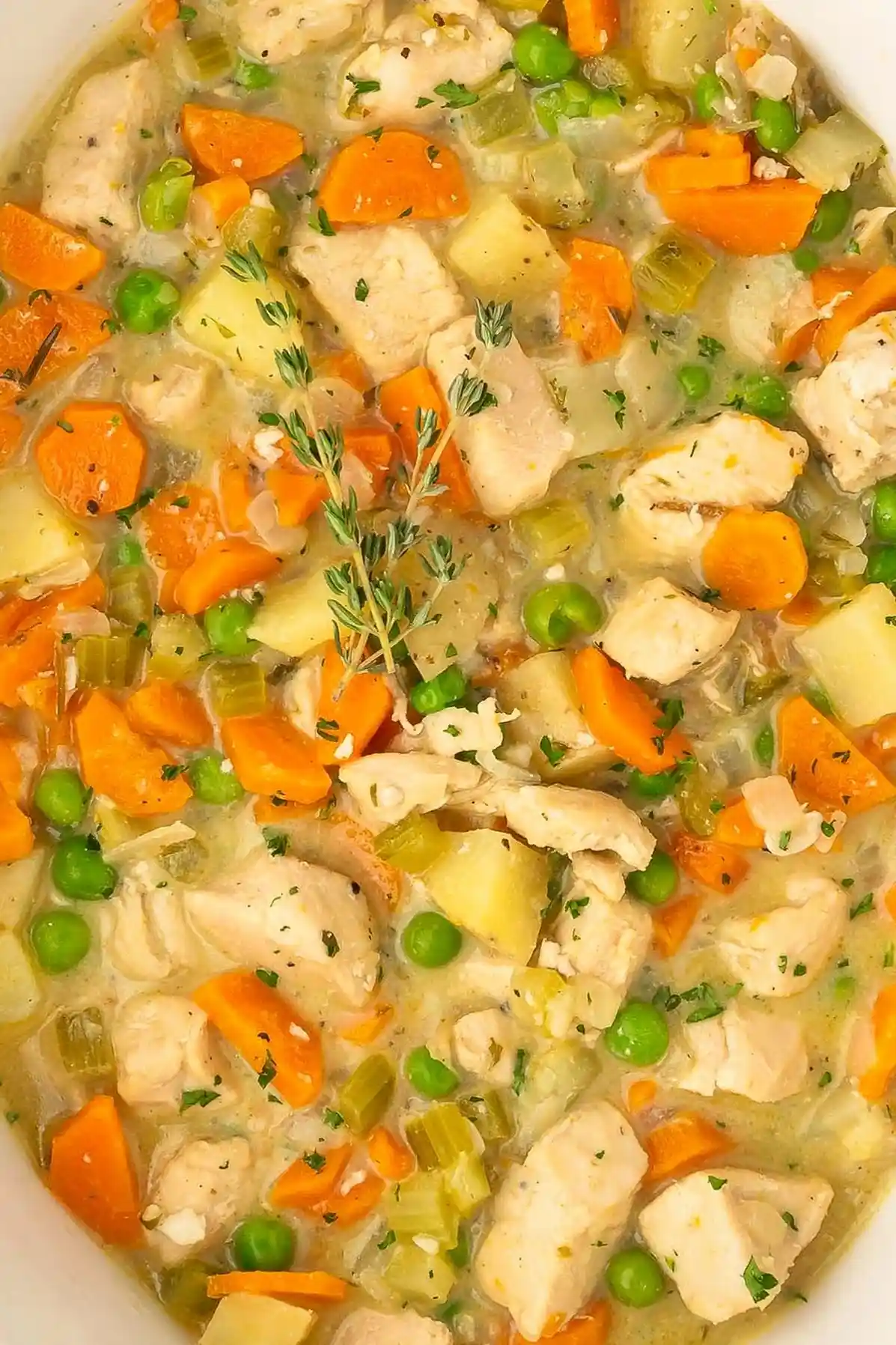
List of ingredients
- 1 ½ lbs boneless, skinless chicken breasts – cut into 1 inch cubes.
- 1 cup diced onion – provides a savory base.
- 1 tablespoon minced garlic – approximately 4 large cloves.
- 2 cups sliced carrots – cut into 1/4 inch thick coins.
- 2 cups cubed Yukon gold potatoes – cut into ½ inch cubes.
- 1 cup finely chopped celery – adds aromatic depth.
- 3 tablespoons all purpose flour – used for thickening (can substitute with gluten-free 1:1).
- ½ teaspoon black pepper – for a mild spicy kick.
- 2 teaspoons dried parsley – adds an earthy herb flavor.
- ½ teaspoon dried rosemary – adds woody notes.
- ½ teaspoon dried sage – provides a traditional autumn flavor.
- ½ teaspoon dried thyme – adds subtle citrusy tones.
- ½ teaspoon salt – to enhance overall seasoning.
- 1 bay leaf – adds a subtle floral depth.
- ½ cup low sodium chicken broth – provides moisture and flavor.
- 1 cup peas – stirred in at the end for color and nutrition.
step-by-step instructions
- Prepare Ingredients: Chop all vegetables as specified and cut the chicken breasts into uniform 1 inch cubes.
- Optional Browning: You may brown the chicken and vegetables in 1 tablespoon of olive oil before adding them to the slow cooker for extra flavor, though this is optional.
- Combine Ingredients: In the slow cooker insert, stir together the chicken, onion, garlic, potatoes, carrots, celery, flour, dried spices, and chicken broth.
- Slow Cook: Cover the slow cooker with the lid and cook on low for 6 hours or on high for 4 hours. Cooking on low is recommended for the most tender results.
- Final Addition: Once the cooking time is complete, stir in the thawed peas until they are warmed through.
- Finish and Serve: Remove and discard the bay leaf before serving the stew in bowls.
Vegetable Selection and Preparation
Yukon Gold Potato Texture
Yukon Gold potatoes are the ideal choice for this stew because they possess a naturally buttery flavor and a medium starch content. Unlike Russet potatoes, which tend to break down and make the stew mealy, Yukon Golds hold their shape during the long slow-cooking process. This ensures you have distinct, tender cubes of potato in every bite.
Optimal Carrot and Celery Cuts
Cutting your carrots into 1/4 inch coins and celery into small pieces ensures they cook at a similar rate to the chicken and potatoes. Uniform sizing prevents some vegetables from turning to mush while others remain raw. Consistent cuts also make the stew easier to scoop and eat.
Adding Peas at the Final Stage
Green peas should only be added during the last few minutes of cooking or just before serving. If cooked for the full six hours, the peas will lose their bright green color and become overly soft. Stirring in thawed peas keeps them vibrant and preserves their delicate texture.
Protein Choices and Preparation
Switching to Boneless Skinless Chicken Thighs
While breasts are the standard, you can substitute boneless, skinless chicken thighs for a richer flavor and more moisture. Thighs contain more fat, which makes them less likely to dry out during the long cooking cycle. If using thighs, trim excess fat but keep the meat in 1 inch cubes for consistency.
Substituting Beef for Chicken
This recipe can be adapted into a beef stew by replacing the chicken breasts with beef stew meat. Ensure the beef is cut into similarly sized cubes to maintain the cooking time. Because beef is tougher than chicken, you may find the 6-hour low setting is essential for achieving a tender result.
Pounding Chicken for Tenderness
To ensure the chicken breasts are extra tender, you can lightly pound them with a meat mallet before cubing them. This process breaks down some of the muscle fibers, allowing the meat to soften more effectively during the slow cooking process. It is a quick step that significantly improves the final mouthfeel.
Texture and Thickening Techniques
The Role of All Purpose Flour
All purpose flour acts as the primary thickening agent in this recipe, creating a hearty consistency without needing a separate roux. The flour coats the ingredients and integrates into the broth as it heats, slowly thickening the liquid. This creates the classic stew texture rather than a thin soup.
Using a 1:1 Gluten Free Flour Substitute
For those avoiding gluten, a 1:1 gluten-free flour blend works well as a direct replacement. These blends usually contain starches like potato or tapioca that mimic the thickening properties of wheat flour. Avoid using almond or coconut flour, as they do not thicken liquids in the same way and may alter the taste.
Adjusting Stew Thickness
If you prefer an even thicker stew, you can remove the lid of the crockpot during the last hour of cooking and switch the setting to high. This allows some of the excess liquid to evaporate, concentrating the flavors and thickening the sauce. Alternatively, a small cornstarch slurry can be stirred in at the end for an immediate thicken.
Flavor Development and Enhancement
Sautéing Aromatics Before Slow Cooking
While the recipe allows for a dump-and-go method, sautéing the onions and garlic in a pan first adds a deeper layer of flavor. This process, known as the Maillard reaction, caramelizes the sugars in the vegetables. This results in a more complex, savory base that enhances the overall taste of the broth.
Choosing the Right Chicken Broth
Using a low-sodium chicken broth allows you to control the salt levels more effectively. If you have bone broth on hand, it can be used interchangeably and may provide a slightly richer consistency and additional nutrients. Vegetable broth is also a suitable alternative if you want a lighter flavor profile.
Utilizing Dried Herb Blends
The combination of parsley, rosemary, sage, and thyme creates a classic savory profile associated with autumn stews. Dried herbs are preferred over fresh in a slow cooker because they hold their potency over several hours of heat. Ensure your herbs are fresh from the jar to avoid a dusty or bland taste.
Serving Recommendations
Balancing with a Fresh Side Salad
Because the stew is rich and hearty, pairing it with a fresh salad provides a necessary acidic balance. A salad with apple, walnuts, or blueberries adds a crisp texture and a hint of sweetness. This contrast prevents the meal from feeling too heavy.
Pairing with Roasted Vegetables
Serving the stew alongside roasted Brussels sprouts with Parmesan provides an extra serving of greens and a different texture. The charred edges of roasted vegetables complement the soft, slow-cooked nature of the stew. This makes the dinner feel more like a complete feast.
Serving with Crusty Breads or Crackers
A piece of warm, crusty bread or a few salty crackers is perfect for soaking up the thickened broth. Sourdough or a rustic baguette works best due to their ability to hold up against the liquid. This adds a satisfying crunch to the meal.
Preservation and Storage
Proper Refrigeration Methods
Store any leftover stew in airtight containers to keep the flavors fresh and prevent contamination. It is important to allow the stew to cool slightly before sealing the lid and placing it in the fridge. When stored properly, the stew will remain fresh for up to four days.
Freezing the Stew for Long Term
This chicken stew freezes exceptionally well and can be kept for 4 to 6 months. Use freezer-safe containers or heavy-duty freezer bags, leaving a small amount of space at the top for expansion. Ensure the stew is completely chilled before freezing to maintain the quality of the ingredients.
Managing Potato Texture After Freezing
Be aware that potatoes can undergo a texture change when frozen, sometimes becoming slightly grainy or soft. While most find this acceptable in a stew, you can minimize it by undercooking the potatoes slightly if you plan to freeze a large batch. Once reheated, the texture is generally close to the original.
Reheating Guidelines
Stovetop Reheating for Better Texture
For the best results, reheat your stew in a pot over medium-low heat on the stove. Stir occasionally to ensure the heat is distributed evenly and to prevent the bottom from scorching. Adding a splash of water or broth can help loosen the stew if it has thickened too much in the fridge.
Quick Microwave Reheating
If you are in a rush, the microwave is a convenient option. Place the stew in a microwave-safe bowl and cover it with a lid or damp paper towel to trap steam. Heat in short intervals, stirring between each, to avoid creating hot spots and overcooking the chicken.
Safe Defrosting Procedures
If the stew was frozen, the safest way to defrost it is in the refrigerator overnight. This slow thaw preserves the texture of the meat and vegetables. Alternatively, you can use the defrost setting on your microwave or place the sealed container in a bowl of cold water.
Troubleshooting Common Issues
Fixing a Watery Stew
If your stew is too thin after cooking, you can whisk in a small amount of cornstarch mixed with cold water. Simmer the stew for a few minutes to allow the slurry to activate and thicken the liquid. You can also leave the lid off for the final hour of cooking to let moisture escape.
Balancing Overly Salty Stew
If the stew tastes too salty, you can add a peeled, halved potato to the pot and simmer it for a short time to absorb some salt. Adding a splash of water or a bit of unsalted broth can also dilute the saltiness. A small squeeze of lemon juice can help mask excess salt with acidity.
Preventing Overcooked Vegetables
To prevent vegetables from becoming too mushy, ensure you are using the low heat setting for the full 6 hours rather than the high setting. If you find your vegetables consistently overcook, try cutting them into slightly larger chunks. This gives them more structure to withstand the heat.
Common Questions
Can this be made in an Instant Pot?
While it is possible to use a pressure cooker, the timing and liquid ratios differ significantly from a slow cooker. For the best results and texture, it is recommended to follow a dedicated Instant Pot chicken stew recipe rather than adapting this one.
Is it possible to make this salt-free?
Yes, you can easily make this recipe salt-free by omitting the added salt and using a no-salt-added chicken broth. The herbs, garlic, and onions provide plenty of flavor, making the stew delicious even without added sodium.
Should tomatoes be added to the mix?
While some stews include tomatoes, this specific version is designed to be better without them. Adding tomatoes can change the acidity and color of the broth, moving it away from the classic hearty chicken stew profile.
Print
Slow Cooker Hearty Chicken Stew
- Total Time: 6 hours 25 minutes
- Yield: 4 servings
- Diet: General
Description
The best Slow Cooker Chicken Stew Recipe! This crockpot chicken stew is a cozy, healthy dinner that is so easy to make!
Ingredients
- 1 ½ lbs boneless, skinless chicken breasts (cut in 1 inch cubes)
- 1 cup diced onion
- 1 tablespoon minced garlic
- 2 cups sliced carrots (cut in 1/4 inch thick coins)
- 2 cups cubed Yukon gold potatoes (cut in ½ inch cubes)
- 1 cup finely chopped celery
- 3 tablespoons all purpose flour
- ½ teaspoon black pepper
- 2 teaspoons dried parsley
- ½ teaspoon dried rosemary
- ½ teaspoon dried sage
- ½ teaspoon dried thyme
- ½ teaspoon salt
- 1 bay leaf
- ½ cup low sodium chicken broth
- 1 cup peas
Instructions
- Step: Chop all veggies and cut chicken into 1 inch cubes.
- Step: In slow cooker insert, stir together chicken, onion, garlic, potatoes, carrots, celery, flour, dried spices and chicken broth.
- Step: Cover the slow cooker and cook on low for 6 hours or high for 4 hours.
- Step: When ready to serve, stir in thawed peas.
- Step: Discard bay leaf and enjoy!
Notes
Pounding your chicken with a meat mallet can make it extra tender. Sautéing veggies beforehand can enhance the taste. For a gluten-free version, use a 1:1 gluten-free flour substitute.
- Prep Time: 25 minutes
- Cook Time: 6 hours
- Category: Main Course
- Method: Slow Cooking
- Cuisine: American
Nutrition
- Serving Size: 1.5 cups
- Calories: 384 kcal
- Sugar: 8 g
- Sodium: 563 mg
- Fat: 5 g
- Saturated Fat: 1 g
- Unsaturated Fat: 4 g
- Trans Fat: 0.02 g
- Carbohydrates: 42 g
- Fiber: 8 g
- Protein: 42 g
- Cholesterol: 109 mg