
This slow cooker beef stew offers a comforting and effortless way to prepare a nutrient-dense, hearty meal for your household. By utilizing gentle heat over several hours, the beef transforms into a tender, melt-in-your-mouth texture that pairs perfectly with earthy vegetables and a rich, savory broth. It is an ideal choice for busy schedules, as the majority of the work happens while the slow cooker operates independently, allowing you to enjoy a complete dinner with minimal cleanup.
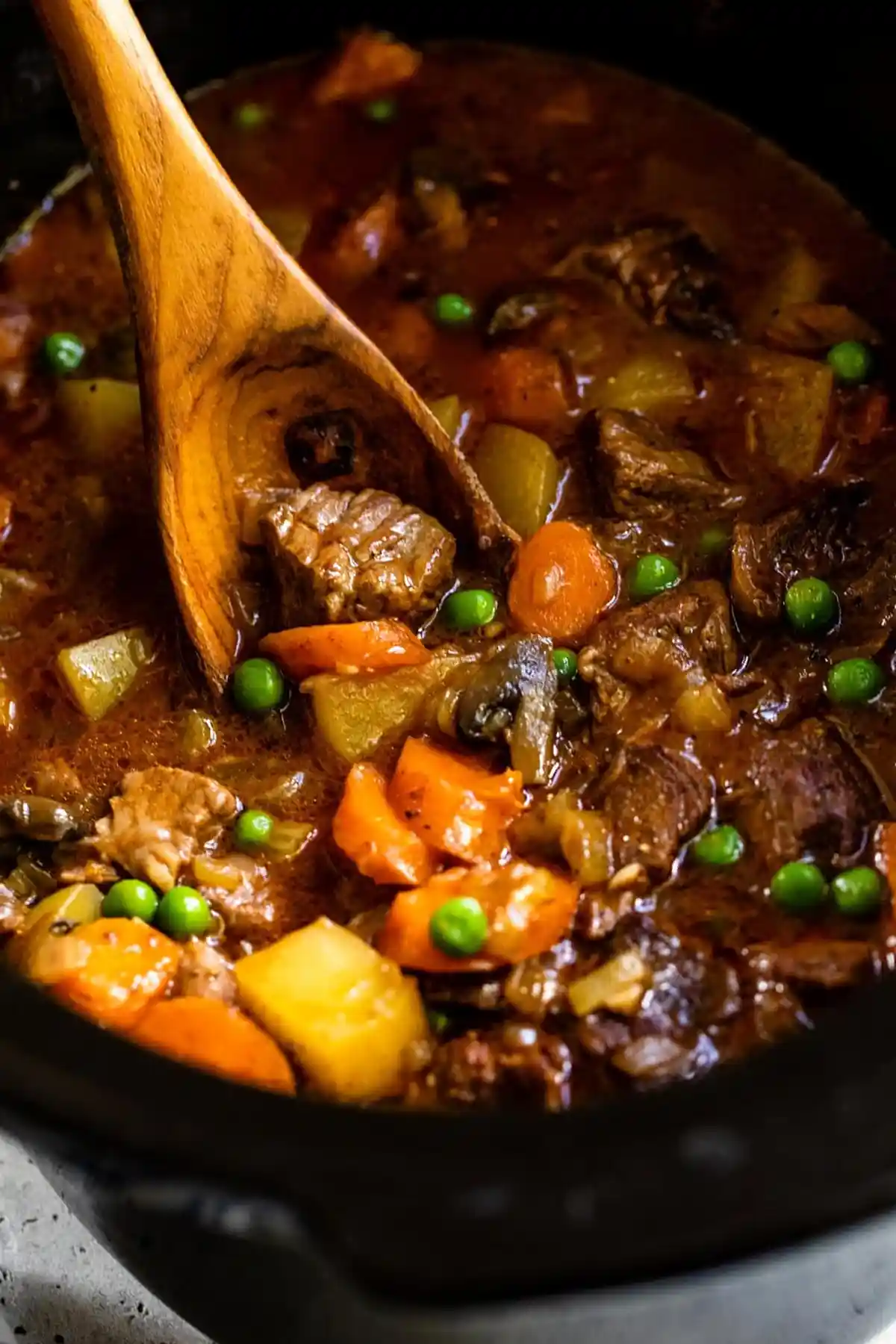
List of ingredients
- 2 cups low-sodium beef broth
- 3 1/2 tablespoons flour or gluten-free flour
- 3 tablespoons tomato paste
- Kosher salt and black pepper
- 2 1/2 pounds boneless chuck roast, trimmed and cubed
- 1 1/2 cups yukon gold potatoes, peeled and diced into 1 inch pieces
- 1 1/2 cups carrots, sliced 1/2 inch thick diagonal
- 1 cup chopped celery
- 1 medium onion, cut into 1/2 inch pieces
- 2 cloves garlic, minced
- 4 ounces white button mushrooms, quartered
- 3 sprigs fresh thyme
- 2 bay leaves
- 1/2 cup frozen peas, thawed
step-by-step instructions
- Step: Combine broth, flour, tomato paste, 1 1/4 teaspoons kosher salt and 1/4 teaspoon black pepper in a blender and blend until smooth.
- Step: Heat a large skillet oven over high heat, spray with oil and brown the beef on all sides in two batches. Transfer the beef to the slow cooker, then spray the skillet again.
- Step: Add the carrots, celery, onions and garlic and brown, stirring about 5 minutes. Transfer to the slow cooker and add the potatoes, mushrooms, thyme and bay leaves and pour the broth mixture on top.
- Step: Cover and cook low 8 hours, until the meat and vegetables are tender.
- Step: Discard the thyme and bay leaves, stir in the peas and let them sit 1 minute until heated through. Taste for salt and adjust as needed.
Practical cooking strategies
Searing for Depth of Flavor
While it is technically possible to skip the browning process, searing the beef is a vital step for achieving a complex, restaurant-quality flavor profile. The Maillard reaction occurs when the surface of the meat hits the hot pan, creating a crust that locks in juices and provides a savory foundation that simple simmering cannot replicate. Ensure your skillet is truly hot before adding the beef to prevent steaming, and do not crowd the pan, as this prevents the meat from developing that essential golden-brown color.
Managing Vegetable Texture
Potatoes and carrots can sometimes lose their structure during an eight-hour cook, so selecting the right varieties is key. Yukon Gold potatoes are preferred because they contain enough starch to hold their shape without falling apart, while keeping them cut into uniform one-inch pieces ensures they finish cooking at the same rate as the meat. Always keep your vegetable chunks substantial, as smaller pieces will turn into mush long before the beef has reached the desired level of tenderness.
Achieving the Proper Consistency
The flour in this recipe acts as a thickener that transforms the broth into a rich, velvety gravy as the stew cooks. If you find your stew is slightly thinner than you prefer upon opening the lid, you can whisk a small amount of cornstarch with cold water and stir it in for a final heat cycle. However, remember that the stew will continue to thicken slightly as it cools, so it is best to judge the final consistency after it has rested for a few minutes off the heat.
Refining your recipe
Flavor and Herb Substitutions
If you prefer a different profile, rosemary can be used in place of thyme for a piney, more intense herbal note that pairs beautifully with beef. For those who enjoy a bit of heat, adding a pinch of crushed red pepper flakes into the blender during the initial stage will infuse the entire stew with a subtle, warming kick. You can also swap out the white button mushrooms for cremini or shiitake mushrooms for a more robust, earthy flavor that stands up well to the long cooking time.
Vegetable Variations
Sweet potatoes are a fantastic alternative if you want to add a touch of natural sweetness to the stew, though they cook faster than Yukon Gold potatoes, so you may want to add them slightly later if you prefer them firm. Parsnips can also be substituted for a portion of the carrots, offering a slightly nuttier flavor that complements the richness of the chuck roast. If you are not a fan of celery, leeks can be sautéed in its place to provide a milder, more delicate onion-like essence that blends seamlessly into the gravy.
Storage and preparation advice
Proper Cooling and Refrigeration
Beef stew is a classic dish that often tastes even better the next day as the flavors have more time to meld together. To store safely, allow the stew to cool down to room temperature before portioning it into shallow, airtight containers to ensure it chills quickly in the refrigerator. Properly stored in this manner, the stew remains fresh and delicious for up to four days, making it an excellent candidate for planned leftovers throughout the work week.
Freezing for Future Meals
If you plan on freezing a portion of the stew, keep in mind that potatoes can sometimes change texture slightly upon thawing. If possible, consider slightly under-cooking the potatoes if you intend to freeze the entire batch immediately, as the reheating process will finish the cooking. Use heavy-duty freezer bags or glass containers, pressing out as much air as possible to prevent freezer burn, and keep it in the freezer for up to three months for the best results.
Efficient Reheating Techniques
When reheating from the refrigerator, place the stew in a saucepan over medium-low heat, adding a tiny splash of water or beef broth if the sauce has thickened too much overnight. Stirring frequently ensures that the heat is distributed evenly without burning the bottom of the pot. If using a microwave, cover the bowl with a microwave-safe lid to trap steam, which helps keep the beef moist and prevents the vegetables from drying out during the heating process.
Frequently Asked Questions
Why does the recipe call for adding peas at the very end?
Frozen peas are already cooked during the blanching process before they are frozen, so they only require gentle heating to become tender. Adding them at the very start would cause them to overcook and disintegrate into the sauce, losing their vibrant green color and fresh taste. Including them in the final minute ensures they retain a bright, sweet pop that balances the heavy, savory notes of the slow-cooked beef.
Can I replace the chuck roast with a leaner cut of meat?
While you can use a leaner cut like a round roast, it is generally discouraged for this specific cooking method because leaner meats lack the intramuscular fat that renders down during slow cooking. Chuck roast is the gold standard for stews because it is rich in collagen, which melts into a gelatinous texture that makes the meat feel tender and succulent. Leaner meats often become dry and stringy when exposed to the long, direct heat of a slow cooker.
Is it necessary to use a blender for the broth mixture?
Blending the broth with the flour and tomato paste is highly recommended because it prevents the flour from forming lumps, which can occur if you simply stir it into the liquid. By creating a perfectly smooth slurry, you guarantee that the final stew will have a consistent, silky texture without any pockets of raw or clumped flour. If you do not have a blender, whisk the flour and a small amount of broth together first until smooth, then incorporate the rest of the liquid.
How can I make the beef stew more nutrient-dense?
You can easily boost the nutritional profile by adding hearty greens like kale or spinach during the final few minutes of cooking. Simply remove the stems and chop the leaves coarsely, folding them into the hot stew until they have wilted, which adds extra fiber and vitamins without altering the core flavor profile. You might also consider adding extra root vegetables like rutabaga or turnips, which hold up perfectly in the slow cooker and provide a nice textural contrast to the soft potatoes and carrots.
What is the benefit of searing the meat in batches?
Searing in batches prevents the skillet from being overcrowded, which is the primary cause of meat steaming rather than browning. When the pan is too full, the temperature drops rapidly and the moisture released by the meat stays in the pan, boiling it in its own juices instead of developing a crust. By working in smaller quantities, you maintain the high heat necessary for the Maillard reaction, resulting in a deeper, more robust flavor that serves as the backbone of your entire dish.
Can I leave out the mushrooms if someone dislikes them?
The mushrooms are primarily included to add a savory, earthy depth, but they are not required for the mechanical success of the recipe. If you prefer to omit them, you can simply increase the quantity of carrots or potatoes to keep the volume of vegetables consistent. Alternatively, a teaspoon of soy sauce or a dash of Worcestershire sauce can be added to the broth to replicate that savory, umami quality that mushrooms provide without actually including the fungi themselves.
Print
Slow Cooker Beef Stew
- Total Time: PT510M
- Yield: 6 servings
- Diet: Gluten-Free Option
Description
This Crockpot Beef Stew recipe is the ultimate comfort food! It’s perfect for those crisp fall evenings or chilly winter days when you crave something hearty and satisfying.
Ingredients
- 2 cups low-sodium beef broth
- 3 1/2 tablespoons flour or gluten-free flour
- 3 tablespoons tomato paste
- Kosher salt and black pepper
- 2 1/2 pounds boneless chuck roast, trimmed and cubed
- 1 1/2 cups yukon gold potatoes, peeled and diced into 1 inch pieces
- 1 1/2 cups carrots, sliced 1/2 inch thick diagonal
- 1 cup chopped celery
- 1 medium onion, cut into 1/2 inch pieces
- 2 cloves garlic, minced
- 4 ounces white button mushrooms, quartered
- 3 sprigs fresh thyme
- 2 bay leaves
- 1/2 cup frozen peas, thawed
Instructions
- Step: Combine broth, flour, tomato paste, 1 1/4 teaspoons kosher salt and 1/4 teaspoon black pepper in a blender and blend until smooth.
- Step: Heat a large skillet oven over high heat, spray with oil and brown the beef on all sides in two batches. Transfer the beef to the slow cooker, then spray the skillet again.
- Step: Add the carrots, celery, onions and garlic and brown, stirring about 5 minutes. Transfer to the slow cooker and add the potatoes, mushrooms, thyme and bay leaves and pour the broth mixture on top.
- Step: Cover and cook low 8 hours, until the meat and vegetables are tender.
- Step: Discard the thyme and bay leaves, stir in the peas and let them sit 1 minute until heated through. Taste for salt and adjust as needed.
Notes
Makes about 8 cups. The author is Lora Marie Bennett.
- Prep Time: PT30M
- Cook Time: PT480M
- Category: Dinner
- Method: Slow Cooker
- Cuisine: American
Nutrition
- Serving Size: 1 1/3 cups
- Calories: 356 kcal
- Sugar: 7 g
- Sodium: 410 mg
- Fat: 10.5 g
- Saturated Fat: 5 g
- Unsaturated Fat: 5.5 g
- Trans Fat: 0 g
- Carbohydrates: 22.5 g
- Fiber: 3.5 g
- Protein: 44 g
- Cholesterol: 124.5 mg