
This comforting venison stew features fall-apart tender deer meat and a medley of garden vegetables. It is a nutritious, scratch-made meal that is naturally gluten-free and paleo-friendly.
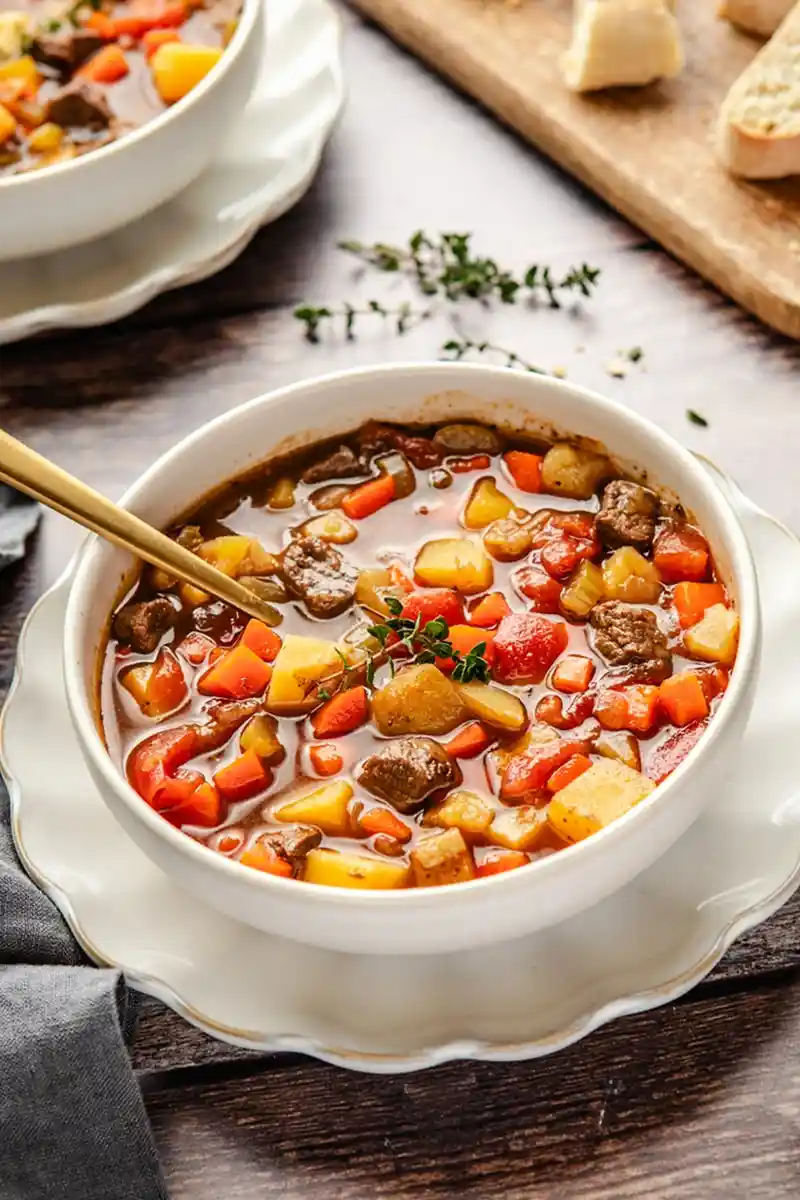
List of ingredients
- 1 lb. venison, diced with all sinew removed (leg meat recommended) – ensures a tender bite.
- 1 Tbsp. olive oil – used for searing the meat.
- 2 and 1/2 cups diced potatoes, skin left on (about 3 medium potatoes) – provides heartiness.
- 2 cups diced carrots – adds natural sweetness.
- 1 cup diced celery – provides a savory aromatic base.
- 1 large onion, diced – adds depth of flavor.
- 2 garlic cloves, minced – provides a pungent aromatic quality.
- 2 tsp. herbs de Provence – a fragrant French herb blend.
- 1 tsp. salt – enhances all the flavors.
- 3/4 tsp. black pepper – adds a subtle spicy kick.
- 1 15 oz. can diced tomatoes – creates a rich, acidic base.
- 4 cups unsalted beef stock or venison stock – the liquid foundation of the stew.
- 3-4 dashes Worcestershire sauce – adds a savory, umami finish.
step-by-step instructions
- Prepare the meat: Dice the venison into bite-sized chunks. Be sure to remove all silvery sinew tissue, as leaving this on makes the meat tough.
- Sear the venison: Add olive oil to a large pot or Dutch oven over medium-high heat. Sauté the venison for 5-7 minutes until the edges brown, then remove and set aside.
- Sauté the vegetables: Lower heat to medium. Add the potatoes, carrots, celery, and onion, cooking for 8-10 minutes until they begin to soften.
- Add aromatics and liquids: Stir in the garlic, herbs de Provence, salt, and pepper for one minute. Pour in the diced tomatoes, stock, and Worcestershire sauce.
- Combine and boil: Return the seared venison to the pot. Stir well and bring the entire mixture to a boil.
- Simmer: Once boiling, turn the heat to low and cover the pot with a lid. Simmer for 1-2 hours until the meat is completely tender.
- Serve: Dish out the stew while hot. It pairs exceptionally well with a side of crusty bread.
Strategies for Meat Tenderness
Removing the Silvery Sinew
Sinew is the tough, silvery connective tissue often found in leaner cuts of venison. When cooked, this tissue can shrink and become rubbery, making the meat feel tough. Trimming it away during the dicing phase ensures a consistent, tender texture in every bite.
Searing the Meat First
Searing the meat in a hot pan creates a caramelized crust through the Maillard reaction. This process does not just lock in juices but adds a deep, savory layer of flavor. Browning the meat before the long simmer is essential for a rich, professional-tasting stew.
The Low and Slow Braising Method
Braising is the process of cooking meat slowly in a liquid environment. This gentle heat breaks down the tough collagen found in leg meat, transforming it into tender protein. Simmering for at least one to two hours is the key to achieving a fork-tender result.
Ingredient Substitutions and Customizations
Using Alternative Game Meats
If you do not have venison, elk or moose meat are excellent substitutes that provide a similar rich profile. For those who prefer non-game options, beef chuck roast is a great alternative. Ensure you use a cut that requires slow cooking to maintain the integrity of the stew.
Replacing Herbs de Provence
Herbs de Provence is a specific French blend, but Italian seasoning is a suitable and accessible substitute. You can also create your own mix using dried thyme, rosemary, and oregano. These herbs complement the gamey flavor of the meat perfectly.
Choosing Different Broths
Unsalted beef or venison stock provides the most traditional flavor for this dish. However, vegetable broth can be used for a lighter version that still provides depth. Always choose unsalted options so you can control the seasoning precisely.
Potato Variety Options
Yukon Gold potatoes are ideal because they hold their shape well while adding a creamy texture. Russet potatoes are a good choice if you prefer a thicker stew, as they break down more during the simmer. Leave the skins on for extra nutrients and texture.
Alternative Cooking Methods
Slow Cooker Adaptation
To make this in a slow cooker, first sear the venison in a pan to develop flavor. Transfer the seared meat and all other ingredients into the crockpot. Cook on low for 8 hours or on high for 4-5 hours for maximum tenderness.
Instant Pot Conversion
Use the sauté function of the Instant Pot to brown the meat and soften the vegetables. Add the remaining liquids and herbs, then set the pot to pressure cook for a shorter duration. This method is ideal for those who need a hearty meal on a tighter schedule.
Oven-Braising Strategy
After bringing the stew to a boil on the stove, transfer the covered Dutch oven to a 300°F oven. The surrounding heat of the oven provides a more consistent temperature than a burner. This often results in a more evenly cooked stew with a deeper flavor profile.
Serving Suggestions and Pairings
Pairing with Crusty Breads
A warm, crusty sourdough loaf or a toasted baguette is the perfect accompaniment. The bread allows you to soak up the savory broth and balance the richness of the venison. Toasted garlic bread is another excellent option for extra flavor.
Fresh Side Dish Accompaniments
Since the stew is quite rich, a crisp side salad with a lemon-based vinaigrette provides a refreshing contrast. Steamed green beans or sautéed spinach also add a healthy, vibrant element to the meal. These sides help cleanse the palate between bites.
Adding Finishing Garnishes
Freshly chopped parsley or chives added just before serving provide a burst of color and freshness. A final crack of fresh black pepper can enhance the aromatic quality of the dish. These small additions make the presentation look professional and appetizing.
Storage and Preservation
Proper Refrigeration Guidelines
Store any leftovers in an airtight glass or plastic container in the refrigerator. This stew keeps well for up to one week, and the flavors often meld and improve after a day. Ensure the stew is cooled slightly before sealing the lid.
Freezing for Future Meals
This recipe is freezer-friendly and can be stored for several months. Place the stew in freezer-safe bags or containers, leaving a small amount of space for expansion. Be aware that potatoes may soften slightly more upon thawing.
Best Reheating Practices
Reheating on the stovetop over low heat is the best way to maintain the texture. Add a splash of beef broth or water if the stew has thickened too much during storage. A microwave is faster but may result in uneven heating of the meat.
Troubleshooting and FAQ
Why is my venison still tough?
The most common cause of tough venison is the presence of silvery sinew. If the meat is still chewy after two hours, it may need more simmering time to break down the connective tissues. Ensure the heat remains low to avoid toughening the meat further.
How do I reduce a gamey taste?
Start with high-quality meat that has been properly aged and field-dressed. Adding aromatic vegetables like carrots and onions helps mask strong gamey notes. A small amount of balsamic vinegar or Worcestershire sauce can also balance the flavor profile.
What can I use to thicken the stew?
If the stew is too thin, mix a tablespoon of cornstarch with a small amount of cold water to create a slurry. Stir this into the boiling stew and simmer for a few minutes. Alternatively, mash a few of the cooked potatoes directly into the broth.
Which venison cuts are best for stew?
Leg meat is the traditional choice because its toughness is solved by slow cooking. Shoulder and neck are also excellent options as they contain more fat, which adds richness. Avoid using backstrap for stew, as it is too lean and may overcook.
Can I add more vegetables to the recipe?
Yes, mushrooms, parsnips, and frozen peas are excellent additions that complement the flavors. Add mushrooms during the sauté phase with the other vegetables. Stir in frozen peas during the last five minutes of cooking to keep them bright and tender.
Print
Hearty Slow-Simmered Venison Stew
- Total Time: 1 hour 30 minutes
- Yield: 6-8 servings
- Diet: Gluten-free, Dairy-free, Paleo, Whole30
Description
This scratch-made venison stew recipe is easy to make and the deer meat is fall-apart tender. It’s packed with veggies and simple ingredients. Gluten free, dairy free, paleo, and Whole30 friendly.
Ingredients
- 1 lb. venison, diced with all sinew removed
- 1 Tbsp. olive oil
- 2 1/2 cups diced potatoes
- 2 cups diced carrots
- 1 cup diced celery
- 1 large onion, diced
- 2 garlic cloves, minced
- 2 tsp. herbs de Provence
- 1 tsp. salt
- 3/4 tsp. black pepper
- 1 15 oz. can diced tomatoes
- 4 cups unsalted beef stock or venison stock
- 4 dashes Worcestershire sauce
Instructions
- Step: Dice the venison into bite-sized chunks, being sure to remove any of the silvery sinew tissue.
- Step: Add the olive oil to a large pot or Dutch oven and heat over medium-high heat.
- Step: When the oil is hot, allow the venison to saute for 5-7 minutes or until the edges start to brown. Remove the venison from the pot and set aside.
- Step: Turn the heat down to medium and add the potatoes, carrots, celery and onion. Allow the vegetables to saute for about 8-10 minutes, or until they begin to soften.
- Step: Add the garlic, herbs de Provence, salt and pepper and cook for an additional minute before adding the tomatoes, broth and Worcestershire sauce. Then, add the venison back to the pot. Stir well and bring the stew to a boil.
- Step: Once a boil is reached, turn the heat to low, cover the pot with a lid, and allow the stew to simmer for 1-2 hours until the venison is tender.
- Step: Serve hot.
Notes
Beef, moose or elk can be used as substitutes. Use Italian seasoning if herbs de Provence are unavailable. For slow cooker: sauté venison first, then combine all ingredients and cook on high for 4-5 hours or low for 8 hours.
- Prep Time: 15 minutes
- Cook Time: 1 hour 15 minutes
- Category: Main Dish
- Method: Stovetop
- Cuisine: American
Nutrition
- Serving Size: 1 serving
- Calories: 222 kcal
- Sugar: 6 g
- Sodium: 850 mg
- Fat: 4 g
- Saturated Fat: 1 g
- Unsaturated Fat: 3 g
- Trans Fat: 0 g
- Carbohydrates: 18 g
- Fiber: 4 g
- Protein: 22 g
- Cholesterol: 45 mg