
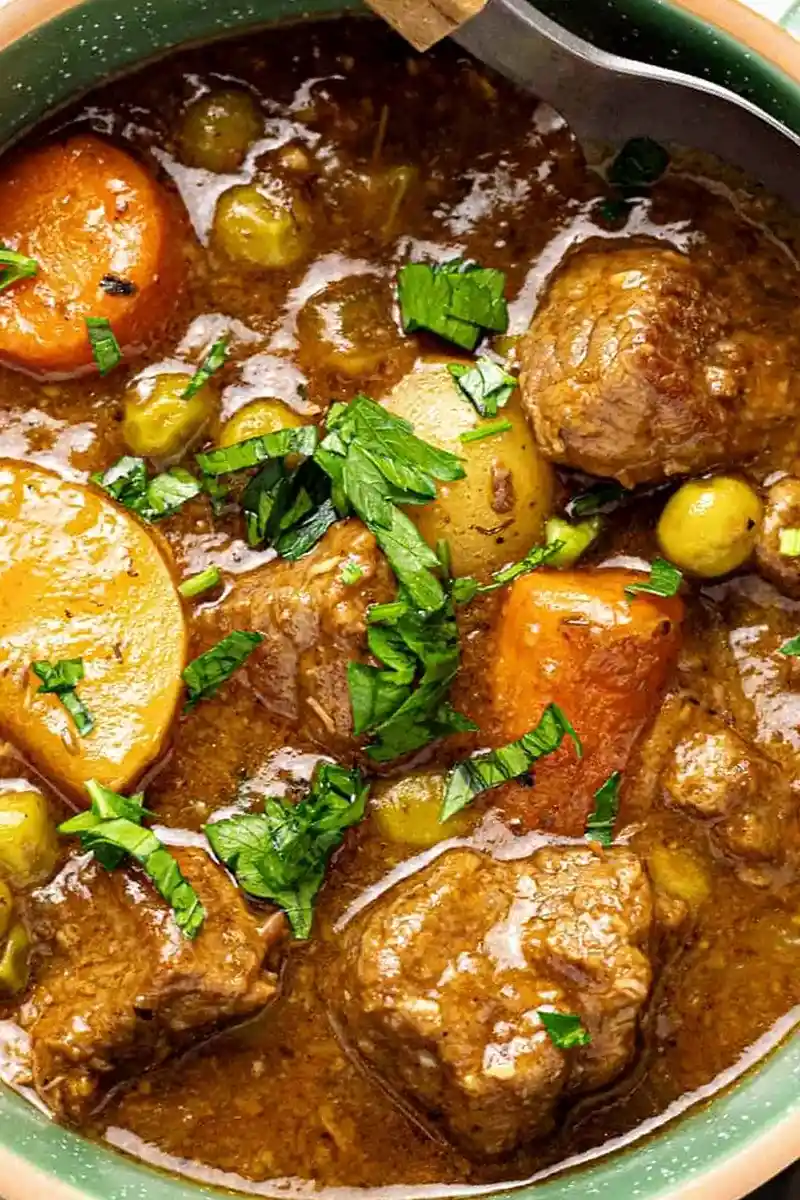
This slow cooker beef stew delivers tender beef and hearty root vegetables simmered in a rich, savory gravy. It is an ideal choice for busy weeknights when you want a comforting, hands-off dinner. The long cooking process ensures the meat becomes melt-in-your-mouth tender while the broth thickens naturally.
List of ingredients
- 2 tablespoons olive oil, divided – used for searing the meat and sautéing vegetables.
- 1/4 cup flour – used for dredging the beef to help thicken the stew.
- 1/2 teaspoon garlic powder – adds a concentrated savory base.
- 1/2 teaspoon celery salt – provides a classic aromatic depth.
- 2 pounds stew meat (chuck roast cut into 1-1.5″ cubes) – the best cut for slow cooking.
- 2 tablespoons butter – used for sautéing the aromatics.
- 1 yellow onion, diced – provides a sweet and savory foundation.
- 1 cup sliced celery – adds texture and earthy flavor.
- 6 cloves garlic, minced – gives a pungent, rich aromatic punch.
- 2 tablespoons tomato paste – adds umami and deepens the color of the broth.
- 2 teaspoons dried thyme – offers a woody, herbal note.
- 2 tablespoons Worcestershire sauce – adds a complex, salty depth.
- 1 tablespoon balsamic vinegar – provides a touch of acidity to balance the richness.
- 2 cups carrots chopped into 1″ pieces – adds sweetness and color.
- 1.5 pounds baby yellow potatoes, cut into 1-1.5″ pieces – holds shape well during slow cooking.
- 3 cups beef stock – the liquid base for the stew.
- 2 bay leaves – adds a subtle herbal fragrance.
- 3 tablespoons cornstarch – used for the final thickening slurry.
- 1 cup frozen peas – added at the end for brightness and color.
- Kosher salt – to season to taste.
- fresh cracked pepper – for a spicy, aromatic kick.
- fresh chopped parsley for garnish – adds a fresh, green finish.
step-by-step instructions
- Sear the Beef: Heat 1 tablespoon olive oil in a large saute pan or 5 quart braising pan over medium-high heat. Combine flour, garlic powder, celery salt, and a few large pinches of salt and pepper in a large shallow bowl, then dredge the beef cubes in the flour mixture. Add half the beef to the pan and sear it on all sides, then add the remaining tablespoon of olive oil and sear the second batch before transferring all beef to the slow cooker insert.
- Sauté Aromatics: Without wiping out the pan, add butter and melt over medium heat. Add the diced onion and sliced celery along with a couple pinches of salt and pepper, cooking and stirring occasionally for about 4 minutes.
- Add Flavor Concentrates: Add the minced garlic, tomato paste, and dried thyme to the pan. Cook, stirring frequently, for 1 minute to toast the spices and caramelize the paste.
- Deglaze the Pan: Pour in the Worcestershire sauce and balsamic vinegar, scraping all the browned bits from the bottom of the pan. This process incorporates the concentrated flavors into the sauce.
- Assemble the Slow Cooker: Add the onion mixture to the slow cooker along with the chopped carrots, cut potatoes, beef stock, bay leaves, and a few large pinches of salt and pepper. Gently stir the ingredients to combine.
- Slow Cook: Cook the stew on high for 4-5 hours or on low for 8-10 hours.
- Thicken and Finish: Combine 3 tablespoons cornstarch with 3 tablespoons cold water to create a slurry. Stir the slurry and the frozen peas into the stew and cook for 1 more hour on high.
- Final Touch: Once the potatoes are fork-tender and the beef falls apart easily, season to taste with salt and pepper. Garnish with fresh chopped parsley and serve.
Optimizing Beef Texture and Flavor
Selecting the Best Cut of Meat
While pre-cut stew meat is convenient, purchasing a whole chuck roast and cutting it yourself often yields better results. Chuck roast contains high amounts of connective tissue and collagen, which break down into gelatin during the slow cooking process. This results in much more tender beef and a naturally thicker sauce.
The Role of Searing the Beef
Searing the meat creates a brown crust through the Maillard reaction, which adds deep, complex flavors to the final dish. Skipping this step results in a greyish meat and a thinner, less flavorful broth. The flour dredge also creates a base for the thickening process and helps the beef brown more evenly.
Deglazing for Maximum Depth
The browned bits left in the pan after searing are known as fond, and they contain concentrated flavor. Using balsamic vinegar and Worcestershire sauce to deglaze lifts these particles and incorporates them into the stew. This step is crucial for achieving a professional, restaurant-quality richness in the gravy.
Vegetable Variations and Substitutions
Choosing the Right Potato Variety
Baby yellow potatoes or Yukon Golds are recommended because they hold their shape well during long cook times. Starchier potatoes like Russets tend to break down and dissolve, which can make the stew too thick or grainy. Ensure the pieces are cut uniformly to ensure they all cook at the same rate.
Alternative Root Vegetable Options
For a different flavor profile, you can replace some of the carrots with parsnips or turnips. Rutabaga also works well as a hearty addition that complements the beef. Keep the pieces roughly the same size as the potatoes to ensure consistent cooking.
Timing the Addition of Green Vegetables
Frozen peas should always be added toward the end of the cooking cycle. If they are cooked for several hours, they will lose their bright green color and become mushy. Adding them during the final thickening hour maintains their texture and visual appeal.
Perfecting the Stew’s Consistency
Creating a Lump-Free Cornstarch Slurry
Always mix cornstarch with cold water before adding it to the hot stew. Adding dry cornstarch directly to hot liquid will cause it to clump, creating white lumps of powder. Stir the slurry vigorously until smooth before pouring it into the slow cooker.
Adjusting the Thickness of the Gravy
If the stew is still too thin after the final hour, you can add an additional teaspoon of cornstarch mixed with water. Conversely, if it is too thick, stir in a small amount of beef stock or water to reach your desired consistency. The final texture should be thick enough to coat the back of a spoon.
Using Flour for Initial Thickening
Dredging the meat in flour at the beginning provides a double layer of thickening. The flour cooks during the searing process and then continues to release starches into the broth during the slow cook. This creates a more integrated thickness than using a slurry alone.
Serving and Pairing Suggestions
Best Bread Pairings for Dipping
A crusty sourdough or a toasted French baguette is perfect for scopping up the thick gravy. Spread a generous amount of salted butter on the bread to complement the savory beef. Garlic bread is another excellent option for those who want more pungent flavors.
Fresh Herb Garnishes
Fresh parsley is the traditional garnish because its brightness cuts through the richness of the beef. You can also use fresh thyme or chives to add a subtle herbal layer to the presentation. Adding herbs just before serving ensures the flavor remains vibrant.
Complementary Side Dishes
Since the stew is very filling, pair it with a light, acidic side dish. A simple green salad with a lemon vinaigrette or steamed green beans provides a refreshing contrast. This prevents the meal from feeling overly heavy.
Storage and Preservation Guidelines
Refrigerating Leftover Stew
Allow the stew to cool slightly before transferring it to an airtight container. Store it in the refrigerator for up to one week. The flavors often intensify and improve after a day or two in the fridge.
Freezing for Future Meals
This beef stew freezes exceptionally well for up to three months. Use freezer-safe bags and press out as much air as possible to prevent freezer burn. Be sure to cool the stew completely before freezing to avoid ice crystal formation.
Thawing Frozen Stew
The best way to thaw the stew is to place the container in the refrigerator overnight. This slow thawing process preserves the texture of the vegetables. Avoid thawing at room temperature to ensure food safety.
Effective Reheating Methods
Stovetop Reheating
Place the stew in a saucepan over medium-low heat. Add a splash of beef stock or water to loosen the gravy, as it will naturally thicken more during storage. Stir occasionally until the stew is heated through.
Microwave Reheating for Portions
Place a single serving in a microwave-safe bowl and cover it with a lid or damp paper towel. Heat in short intervals, stirring in between, to ensure the heat is distributed evenly. Avoid overheating, as this can make the beef tough.
Oven Reheating for Large Quantities
Transfer the stew to an oven-safe dish and cover it tightly with foil. Heat at 300 degrees Fahrenheit until the center is hot. This method is slower but prevents the edges from drying out.
Make-Ahead Preparation Tips
Prepping Ingredients in Advance
You can chop the onions, celery, and carrots up to two days before cooking. Store them in separate airtight containers in the refrigerator. This reduces the active prep time on the day you intend to start the slow cooker.
Strategizing Your Cook Time
Using the low setting for 8-10 hours is generally preferred for the most tender beef. This allows the collagen to break down slowly without boiling the meat. If you are short on time, the high setting is effective but may require a bit more liquid.
Planning for Workdays
Since this is a slow cooker meal, it is perfect for starting before you leave for work. Set the timer for the low setting and come home to a fully cooked meal. Just remember to add the cornstarch slurry and peas during the final hour if you are home to do so.
Troubleshooting Common Issues
Fixing Tough Beef
If the beef is still tough after the recommended time, it likely needs more time to break down. Continue cooking on low for another hour or two. Toughness in beef stew is usually a sign that the connective tissue hasn’t fully melted into gelatin.
Preventing Mushy Vegetables
To avoid mushy vegetables, ensure you cut the potatoes and carrots into large, uniform pieces. If you prefer very firm vegetables, you can sauté them briefly and add them halfway through the slow cooking process. This prevents them from overcooking during the initial 8 hours.
Correcting an Overly Salty Stew
If the stew tastes too salty, you can add a peeled, halved raw potato to the pot for the last hour of cooking. The potato helps absorb some of the excess salt. Alternatively, stirring in a teaspoon of sugar or a splash of water can balance the flavor.
Frequently Asked Questions
Can I use a different type of stock?
Yes, you can use vegetable stock or chicken stock if beef stock is unavailable. However, beef stock provides the most authentic and rich flavor for this specific dish.
Is the searing step absolutely necessary?
While the recipe will still work without searing, the flavor will be significantly diminished. Searing provides the browned depth that differentiates a rich stew from a simple beef soup.
Can I use a pressure cooker instead?
Yes, you can adapt this for a pressure cooker by reducing the liquid slightly. Cook on high pressure for about 35-45 minutes and then use a natural release before adding the slurry and peas.
Print
Hearty Slow Cooker Beef Stew
- Total Time: 4 hours 35 minutes
- Yield: 8 servings
- Diet: General
Description
My easy slow cooker beef stew is packed with flavor but super simple to throw together! Tender chunks of beef are slow cooked in a rich, hearty broth with carrots, peas, and potatoes. This beef stew is the perfect chilly weather recipe for those busy weeknights.
Ingredients
- 2 tablespoons olive oil, divided
- 1/4 cup flour
- 1/2 teaspoon garlic powder
- 1/2 teaspoon celery salt
- 2 pounds stew meat (chuck roast cut into 1-1.5″ cubes)
- 2 tablespoons butter
- 1 yellow onion, diced
- 1 cup sliced celery
- 6 cloves garlic, minced
- 2 tablespoons tomato paste
- 2 teaspoons dried thyme
- 2 tablespoons Worcestershire sauce
- 1 tablespoon balsamic vinegar
- 2 cups carrots chopped into 1” pieces
- 1.5 pounds baby yellow potatoes, cut into 1–1.5” pieces
- 3 cups beef stock
- 2 bay leaves
- 3 tablespoons cornstarch
- 1 cup frozen peas
- Kosher salt
- fresh cracked pepper
- fresh chopped parsley for garnish
Instructions
- Step: Heat 1 tablespoon olive oil in a large saute pan or 5 quart braising pan over medium-high heat.
- Step: Combine flour, garlic powder, celery salt, and a few large pinches of salt and pepper in a large shallow bowl. Dredge beef cubes in flour mixture.
- Step: Add half the beef to the pan and sear it on all sides. Add remaining tablespoon of olive oil to the pan and sear the second batch of beef. Transfer to the slow cooker insert.
- Step: Without wiping out the pan, add butter and melt over medium heat. Add onion and celery to the pan along with a couple pinches of salt and pepper. Cook, stirring occasionally for about 4 minutes.
- Step: Add garlic, tomato paste, and dried thyme to the pan. Cook, stirring frequently, for 1 minute.
- Step: Deglaze the pan with the Worcestershire sauce and balsamic vinegar, scraping all the yummy bits off the bottom of the pan.
- Step: Add the onion mixture to the slow cooker along with the carrots, potatoes, beef stock, bay leaves, and a few large pinches of salt and pepper. Gently stir to combine.
- Step: Cook on high for 4-5 hours or on low for 8-10 hours.
- Step: Combine 3 tablespoons cornstarch with 3 tablespoons cold water. Stir in the slurry along with the frozen peas and cook for 1 hour on high.
- Step: Season to taste with salt and pepper. Garnish with fresh parsley and enjoy!
Notes
Don’t skip the sear! Searing the meat and sauteeing the veggies adds many layers of flavor. Serve this stew with fresh bread and butter.
- Prep Time: 15 minutes
- Cook Time: 4 hours 20 minutes
- Category: Main Dish
- Method: Stove Top + Slow Cooker
- Cuisine: American
Nutrition
- Serving Size: 1 serving
- Calories: 450 kcal
- Sugar: 8 g
- Sodium: 820 mg
- Fat: 22 g
- Saturated Fat: 8 g
- Unsaturated Fat: 12 g
- Trans Fat: 0 g
- Carbohydrates: 34 g
- Fiber: 6 g
- Protein: 31 g
- Cholesterol: 95 mg