
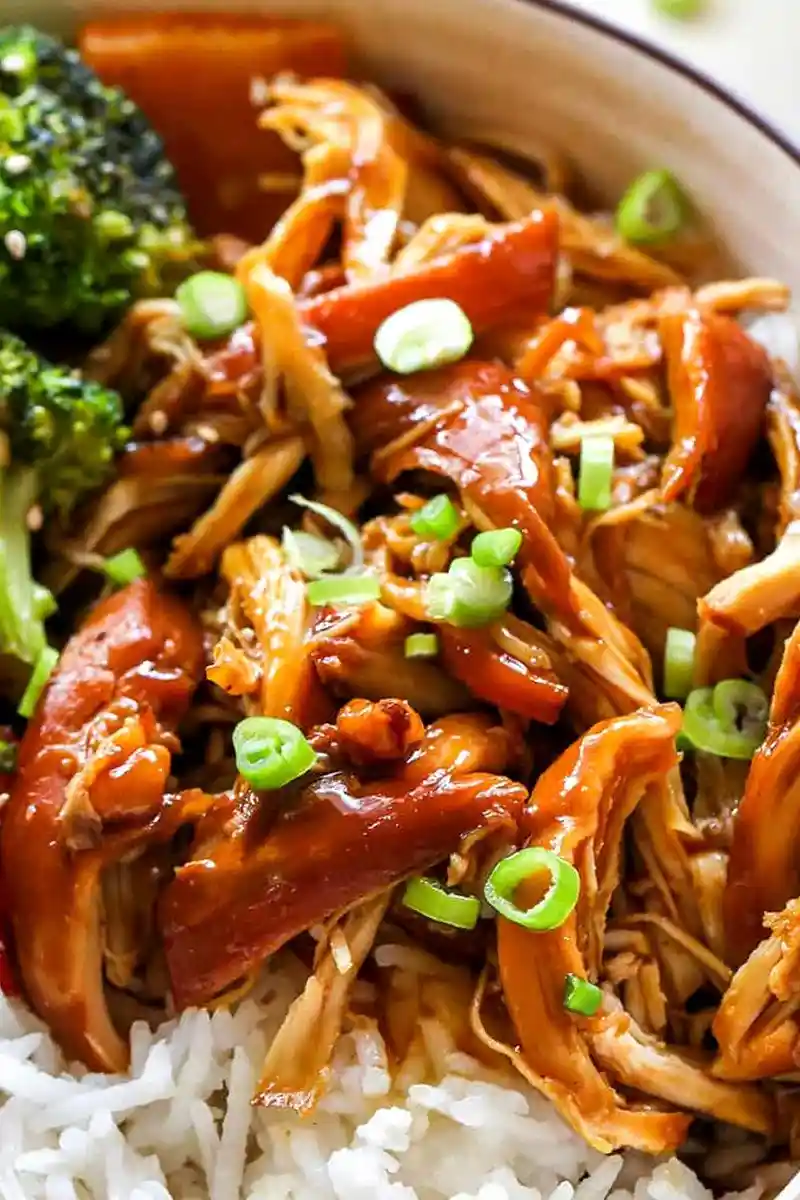
This slow cooker teriyaki chicken is a convenient meal option for those with busy schedules. It requires minimal preparation time and delivers a flavorful, protein-rich dish. Serve it with steamed rice and vegetables for a balanced dinner.
List of ingredients
- 2 pounds chicken breasts – boneless and skinless.
- 1/2 cup honey – used as the primary sweetener.
- 3/4 cup soy sauce – use low-sodium or gluten-free tamari for dietary needs.
- 2 Tablespoons rice vinegar – adds a necessary acidic balance.
- 1/4 cup non-alcoholic mirin substitute – a mixture of honey and water works well.
- 1/2 teaspoon powdered ginger – or use freshly minced ginger.
- 1/2 teaspoon garlic powder – or use freshly minced garlic.
- 1/2 teaspoon onion powder – or substitute with 1/2 cup finely diced onion.
- 1/4 teaspoon freshly ground black pepper – for basic seasoning.
- 1 teaspoon sesame oil – provides a toasted nutty aroma.
- 1 Tablespoon cornstarch – used for the final thickening process.
- 1 Tablespoon water – to create the cornstarch slurry.
step-by-step instructions
- Prepare the pot: Grease the inside container of a large slow cooker to prevent sticking.
- Combine sauce: Whisk the honey, soy sauce, rice vinegar, non-alcoholic mirin substitute, ginger, garlic powder, onion powder, black pepper, and sesame oil directly in the slow cooker. Do not add the cornstarch or water yet.
- Coat the chicken: Place the chicken breasts into the slow cooker and turn them to ensure they are fully coated in the sauce.
- Slow cook: Cook on the low setting for 6 hours or on the high setting for 3 hours. The chicken is done when it can be easily shredded with a fork. Turn the chicken once halfway through the cooking time if possible.
- Remove chicken: Carefully lift the chicken breasts out of the crockpot and place them in a medium serving dish. Keep all the remaining sauce in the pot.
- Shred: Use two forks to shred the chicken into bite-sized pieces. Cover the dish to keep the meat warm.
- Strain sauce: Place a fine mesh strainer over a 4-quart saucepan and pour the cooking liquid through the strainer to remove any solids.
- Create slurry: Mix the cornstarch and 1 tablespoon of water until smooth, then whisk it into the strained sauce in the saucepan.
- Thicken sauce: Bring the sauce to a boil over medium-high heat, stirring constantly, until the liquid reaches a thick, glossy consistency.
- Combine: Mix half of the thickened sauce into the shredded chicken and reserve the remaining half for drizzling.
- Serve: Plate the chicken with steamed rice, stir-fried vegetables, or over an Asian-style salad.
Optimal Protein Selection
Using Boneless Skinless Chicken Thighs
While breasts are traditional, boneless skinless chicken thighs are an excellent alternative. Thighs have a higher fat content, which prevents the meat from drying out during long slow-cooking cycles. This results in a more tender and juicy texture.
Incorporating Extra-Firm Tofu
For a plant-based version, use pressed extra-firm tofu cut into large cubes. Reduce the cooking time to 2-3 hours on low to prevent the tofu from becoming too soft. The tofu absorbs the teriyaki flavors effectively while maintaining a meaty structure.
Using Tempeh for Texture
Tempeh provides a nuttier flavor and a firmer bite than tofu. Slice the tempeh into thick strips and follow the same sauce proportions. Since tempeh is denser, it benefits from the slow-cooking process to soften its texture.
Sodium and Flavor Adjustments
Low-Sodium Soy Sauce Options
To reduce the salt content, replace regular soy sauce with a low-sodium version. This reduces the overall salt intake without significantly changing the savory profile of the dish. Adjust the salt slightly if the flavor feels too muted.
Coconut Aminos for Paleo Diets
Coconut aminos are a great soy-free and gluten-free alternative. They are naturally sweeter and lower in sodium than soy sauce. You may need to slightly reduce the amount of honey in the recipe when using aminos to maintain the flavor balance.
Adjusting the Sweetness Levels
If you prefer a less sweet sauce, reduce the honey to 1/3 cup. For a deeper, richer flavor, substitute honey with brown sugar or maple syrup. These alternatives provide a different type of sweetness that pairs well with ginger and garlic.
Thickening Agent Alternatives
Using Arrowroot Powder
Arrowroot powder is a great substitute for cornstarch, especially for those seeking a grain-free option. It creates a clearer, glossier sauce than cornstarch. Mix it with cold water in a 1:1 ratio before adding it to the boiling sauce.
Tapioca Starch for Texture
Tapioca starch provides a very thick, slightly chewy consistency to the sauce. It is particularly effective if you want the sauce to cling heavily to the shredded chicken. Use the same measurement as cornstarch and whisk in cold water first.
Reduction Method for Thickening
If you prefer to avoid starches entirely, simmer the sauce in a wide skillet for longer. This reduces the water content and concentrates the flavors through evaporation. This method takes more time but results in a more intense flavor profile.
Serving and Pairing Ideas
Classic Jasmine or Basmati Rice
Steamed jasmine rice provides a floral aroma that complements the sweet teriyaki sauce. Basmati rice is a great alternative for a fluffier texture. Both options absorb the extra sauce efficiently, making the meal more filling.
Stir-Fried Green Vegetables
Broccoli, snap peas, and carrots are ideal side dishes. Sauté them quickly in a wok with a touch of sesame oil and garlic. The crunch of the vegetables offsets the softness of the slow-cooked shredded chicken.
Asian-Style Quinoa Salad
For a healthier grain alternative, serve the chicken over a quinoa salad. Mix cooked quinoa with shredded cabbage, carrots, edamame, and a splash of rice vinegar. This adds a nutritional boost and a refreshing contrast to the rich sauce.
Storage and Preservation
Refrigeration Guidelines
Store the leftover chicken and sauce in an airtight glass container in the refrigerator. The meal will stay fresh for up to one week. Keep the sauce separate from the chicken if you prefer the meat to maintain its texture.
Freezing for Meal Prep
This recipe is ideal for freezing. Place portions of the shredded chicken and sauce into freezer-safe bags, removing as much air as possible. The chicken can be stored in the freezer for up to two months without loss of quality.
Safe Thawing Process
Thaw frozen teriyaki chicken in the refrigerator overnight. Avoid thawing at room temperature to prevent bacterial growth. Once thawed, the chicken can be reheated using any of the standard methods described below.
Reheating Methods
Stovetop Reheating
Place the chicken and sauce in a skillet over medium-low heat. Add a tablespoon of water or broth to loosen the sauce. Stir occasionally until the chicken is heated through and the sauce is bubbling.
Microwave Reheating
Transfer the chicken to a microwave-safe dish and cover it with a damp paper towel. Heat in 30-second intervals, stirring between each session. This prevents the chicken from overcooking and becoming rubbery.
Oven Reheating
Place the chicken in a baking dish and cover it tightly with foil to trap moisture. Heat at 325 degrees Fahrenheit for 15-20 minutes. This method is best for larger quantities of leftovers.
Troubleshooting Common Issues
Addressing Watery Sauce
If the sauce remains thin after adding cornstarch, continue to simmer it over medium-high heat. Ensure the sauce reaches a full boil, as cornstarch only activates at high temperatures. If it is still too thin, add another teaspoon of cornstarch slurry.
Preventing Dry Chicken
Avoid overcooking the chicken breasts, as they can become stringy if left too long on high. If using a slow cooker with a timer, set it precisely. Switching to chicken thighs can also eliminate this issue entirely.
Correcting Excess Saltiness
If the sauce tastes too salty, add a tablespoon of water or a teaspoon of honey. A small amount of extra rice vinegar can also help balance the salt. Adding more unsauced vegetables to the final dish will also dilute the salt perception.
Frequently Asked Questions
Is it better to cook chicken on high or low in a crockpot?
Cooking on low for a longer period generally results in more tender meat and better flavor infusion. High heat is faster but can occasionally make chicken breasts slightly tougher.
Can I put raw chicken in a slow cooker?
Yes, it is safe to cook raw chicken in a slow cooker as long as the internal temperature reaches 165 degrees Fahrenheit. The slow cooker eventually reaches temperatures high enough to kill harmful bacteria.
Do I need to sear the chicken first?
Searing is not required for this recipe, as the slow cooker provides ample time for flavor development. However, if you prefer a browned exterior, you can sear the breasts in a pan before adding them to the pot.
Can I use frozen chicken breasts?
It is not recommended to put frozen chicken directly into a slow cooker. Frozen meat can stay in the danger zone temperature for too long and may develop a rubbery texture. Always thaw chicken completely before starting.
How do I keep the chicken from sticking to the pot?
Greasing the slow cooker liner with a non-stick spray or a small amount of oil prevents sticking. Alternatively, using a slow cooker with a ceramic insert usually reduces the likelihood of sticking.
Print
Healthy Slow Cooker Teriyaki Chicken
- Total Time: 4 hours 10 minutes
- Yield: 8 servings
- Diet: General
Description
This crock pot Teriyaki Chicken recipe only takes 5 minutes to prepare. Slow cooker teriyaki chicken is a flavorful main dish, perfect for busy weeknights! Serve with stir fry vegetables and fried rice.
Ingredients
- 2 pounds chicken breasts
- ½ cup honey
- ¾ cup soy sauce
- 2 Tablespoons rice vinegar
- ¼ cup non-alcoholic mirin substitute
- ½ teaspoon powdered ginger
- ½ teaspoon garlic powder
- ½ teaspoon onion powder
- ¼ teaspoon freshly ground black pepper
- 1 teaspoon sesame oil
- 1 Tablespoon cornstarch
- 1 Tablespoon water
Instructions
- Step: Grease the container of a large slow cooker.
- Step: Add the sauce ingredients in the order listed into the prepared container of a slow cooker and whisk to combine. Do not add the cornstarch and water mixture.
- Step: Place chicken breasts into the slow cooker and turn to coat.
- Step: Cook on low for 6 hours or high for 3 hours or until chicken is easily shred with a fork. Turn once halfway through cooking if you can.
- Step: Remove chicken from the crockpot and place into a medium serving dish. Do not discard the sauce.
- Step: Shred the chicken with two forks. Cover and set aside.
- Step: Set a fine mesh strainer over 4-quart saucepan and carefully pour sauce through the strainer into the saucepan.
- Step: Mix cornstarch in water and add to the sauce, stir or whisk until fully incorporated.
- Step: Bring sauce to a boil over medium-high heat and cook, stirring constantly, until sauce is thickened.
- Step: Mix half of the sauce into the shredded chicken, and save half of the sauce for serving.
- Step: Serve with rice, stir-fried veggies or your favorite Asian salad!
Notes
Substitutions: Chicken thighs can replace breasts. Use gluten-free soy sauce for a gluten-free version. Granulated sugar or brown sugar can substitute for honey. Tapioca flour or arrowroot powder can substitute for cornstarch. Storage: Store in an airtight container in the refrigerator for up to 1 week, or in the freezer for up to 2 months.
- Prep Time: 10 minutes
- Cook Time: 4 hours
- Category: Main Course
- Method: Slow Cooking
- Cuisine: Asian
Nutrition
- Serving Size: 0.5 cup
- Calories: 228 kcal
- Sugar: 20 g
- Sodium: 1404 mg
- Fat: 3 g
- Saturated Fat: 1 g
- Unsaturated Fat: 2 g
- Trans Fat: 0 g
- Carbohydrates: 23 g
- Fiber: 1 g
- Protein: 26 g
- Cholesterol: 73 mg