
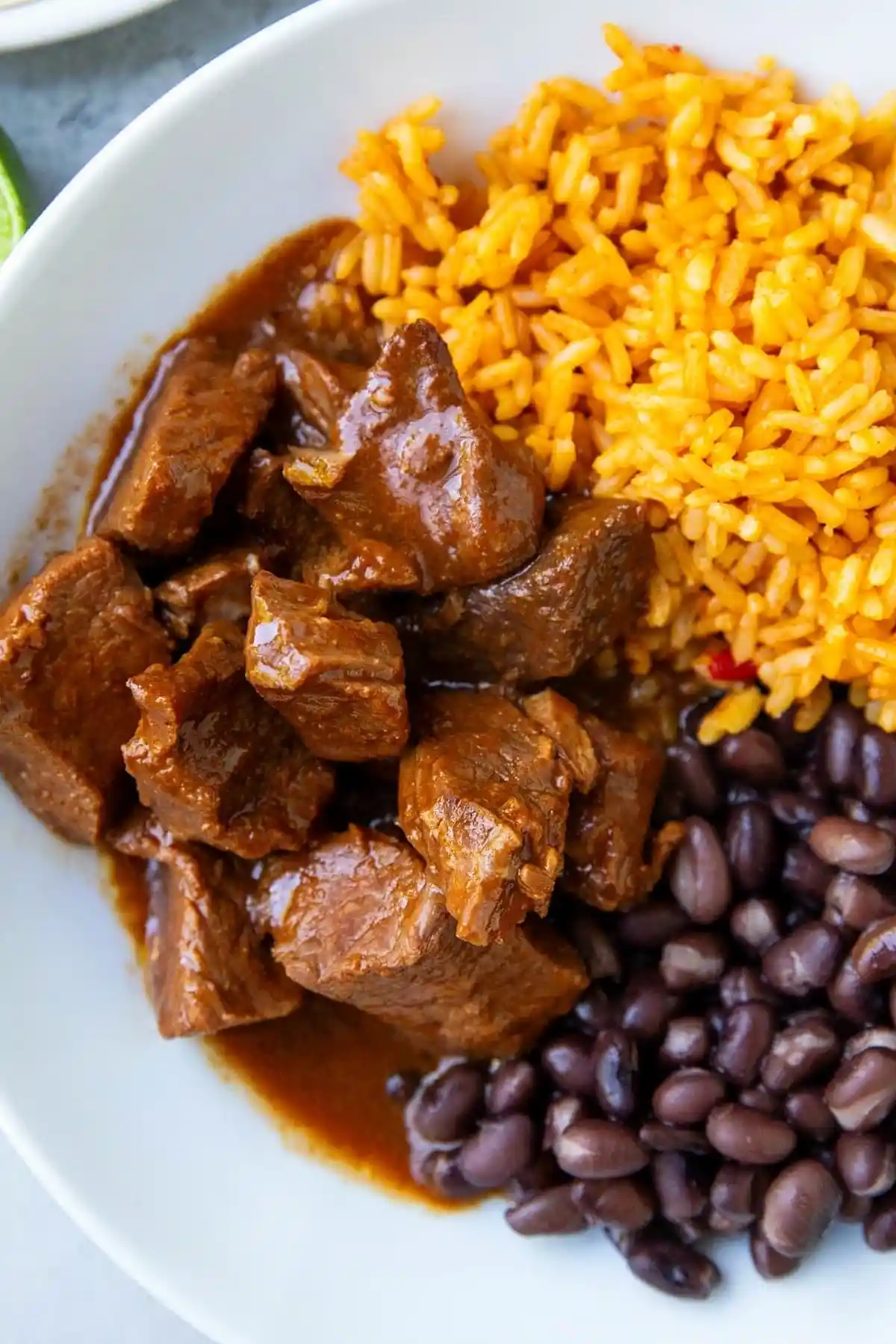
This Crock Pot Chile Colorado offers a restaurant-quality dining experience right in your own kitchen. By slowly simmering tender beef in a rich, mild red chile sauce, you achieve a deep and complex flavor profile that is both satisfying and authentic. It is the perfect hands-off meal for those who crave a hearty, savory dish that pairs perfectly with your favorite traditional sides.
List of ingredients
- 6 dried guajillo chiles
- 2 dried ancho chiles
- 2 dried arbol chiles
- 1 small yellow onion (diced)
- 4 cups beef broth
- 2 tsp dried oregano
- 1 tsp ground cumin
- 2 tsp garlic powder
- 1 tsp sea salt
- 2 Tbsp avocado oil
- 3 lbs beef stew meat
- ¼ cup gluten-free all-purpose flour
- 1 tsp sea salt
- ½ tsp black pepper
- 2 bay leaves
step-by-step instructions
- Make the Chile Colorado Sauce: Add all of the dried chilies and the beef broth to a large pot. Bring to a full boil then remove from heat. Allow the chiles to sit in the hot broth. Add the chopped onion to a high-powered blender along with the oregano, cumin, garlic powder, and sea salt. Once the reconstituted chilies are cool enough to handle, remove and discard stems and seeds, then transfer chiles with the broth to the blender. Blend until smooth.
- Brown the Meat: Combine beef, flour, sea salt, and pepper in a bowl. Toss until coated. Heat avocado oil in a large skillet over medium-high heat. Brown the beef in batches until golden brown on two sides. Transfer to a plate.
- Slow Cook the Meat: Transfer the browned meat to the crock pot. Pour the sauce through a fine-mesh strainer into the crock pot, stirring to extract liquid and discarding pulp. Add bay leaves and stir. Cover and cook on High for 4 hours or Low for 8 hours.
Essential Preparation Pointers
Achieving the Perfect Sear
When browning the beef, ensure the skillet is sufficiently hot before adding the meat. Working in batches prevents crowding the pan, which is crucial because overcrowding leads to steaming rather than searing. A deep golden crust on the beef provides a fundamental layer of savory depth that defines the final character of this dish.
Refining the Sauce Texture
Using a high-powered blender is recommended to ensure the dried chile skins are fully pulverized. If you do not have a high-speed unit, you should definitely use the fine-mesh strainer step as instructed to remove any gritty bits of skin. This process ensures the sauce remains velvety and smooth, which is the hallmark of a high-quality, professional-grade red chile sauce.
Customizing Your Ingredients
Selecting the Best Dried Chiles
Guajillo and ancho chiles are essential for the traditional flavor profile, as they provide sweetness and smokiness without overwhelming heat. If you find your local store is limited, you can often source these at international markets or online. Always look for chiles that are pliable and not completely brittle, as this indicates higher freshness and better oil content.
Thickener Adjustments
While gluten-free flour is effective for thickening the sauce, you can also use tapioca starch or arrowroot powder if you prefer a corn-free or grain-free alternative. These starches tend to provide a slightly glossier finish to the sauce. When adding these alternatives, make sure to whisk them thoroughly with the meat before searing to prevent any clumping once they hit the hot liquids.
Flavor Variations
Adjusting the Spice Levels
To reduce the heat further, remove the arbol chiles entirely, as they contain most of the pungency in this recipe. Conversely, if you prefer a much sharper flavor, you can add a fresh serrano pepper to the blender along with the other aromatics. This brings a bright, fresh heat that contrasts beautifully with the deep, dried-chile base.
Enhancing Earthiness
For those who love a complex sauce, consider adding a teaspoon of smoked paprika or a tiny pinch of cinnamon to the blender. These additions do not make the sauce sweet but rather enhance the natural smokiness of the ancho chiles. Just a small amount goes a long way in adding a layer of mystery to the final flavor profile.
Practical Serving Suggestions
Traditional Accompaniments
This dish is classically served with sides that can soak up the rich, red sauce. Spanish-style rice, warm corn tortillas, and simple pinto beans are the most traditional partners. Providing fresh lime wedges on the side is essential, as the burst of acidity from the fresh lime juice cuts through the richness of the beef and elevates the overall flavor.
Low-Carb Modifications
If you are looking to keep your meal lighter, serve the stew over a bed of roasted cauliflower or a riced-cauliflower mixture seasoned with cilantro and lime. The sauce is flavorful enough that it provides all the seasoning needed for the cauliflower. This allows you to enjoy the heartiness of the meat without needing starchy sides like rice or traditional tortillas.
Storage and Reheating Advice
Maintaining Freshness
This recipe is an excellent candidate for advance preparation because the sauce continues to develop deeper flavors after sitting for a day or two in the refrigerator. Store leftovers in an airtight glass container, which prevents the pungent chile oils from permeating the plastic. It will maintain its quality for up to seven days in the fridge.
Best Reheating Techniques
To reheat, use a saucepan on the stovetop over low heat, adding a tiny splash of water or beef broth if the sauce has thickened significantly during storage. Avoid using the microwave if possible, as the beef can become slightly chewy if overheated. Reheating slowly ensures the meat retains its succulent texture and the sauce remains perfectly smooth and glossy.
Common Kitchen Questions
Can this recipe be prepared in a pressure cooker?
Yes, you can adapt this for a pressure cooker by following the same browning and blending steps. Instead of the long slow-cook time, cook under high pressure for approximately 45 minutes, then allow for a natural pressure release. This will result in very tender beef in a fraction of the time, though the sauce may require a brief simmer afterward to reach the desired consistency.
Why is it necessary to strain the sauce?
Even when using a powerful blender, dried chile skins often remain as tiny, tough fragments that can disrupt the texture of the sauce. Straining removes these fibers, leaving you with a silky, elegant sauce that coats the meat perfectly. It is the final step that separates a home-cooked meal from one that tastes like it came from a dedicated kitchen.
Is the beef broth optional?
The beef broth is the primary liquid for hydrating the dried chiles and forming the sauce, so it should not be omitted. While you can substitute chicken broth, the depth of flavor is significantly improved by using a rich beef base. If you only have water, add an extra tablespoon of beef bouillon paste to ensure the savory profile remains bold enough to stand up to the chiles.
Can I freeze this stew for later?
Yes, this recipe freezes remarkably well due to the robust nature of the sauce and the long-cooked beef. Pour the finished, cooled stew into freezer-safe bags or containers, leaving a little room for expansion. It will stay high-quality in the freezer for up to three months, making it a perfect option for a quick, comforting meal on a busy weeknight.
Print
Crock Pot Chile Colorado
- Total Time: PT505M
- Yield: 6 to 8 servings
- Diet: Gluten-Free
Description
This restaurant-quality Chile Colorado recipe is easy to prepare and results in lusciously tender beef in the most amazing rich, mild red chile sauce. Serve it with rice, beans, and tortillas for an otherworldly dinner recipe!
Ingredients
- 6 dried guajillo chiles
- 2 dried ancho chiles
- 2 dried arbol chiles
- 1 small yellow onion (diced)
- 4 cups beef broth
- 2 tsp dried oregano
- 1 tsp ground cumin
- 2 tsp garlic powder
- 1 tsp sea salt
- 2 Tbsp avocado oil
- 3 lbs beef stew meat
- ¼ cup gluten-free all-purpose flour
- 1 tsp sea salt
- ½ tsp black pepper
- 2 bay leaves
Instructions
- Make the Chile Colorado Sauce: Add all of the dried chilies and the beef broth to a large pot. Bring to a full boil then remove from heat. Allow the chiles to sit in the hot broth. Add the chopped onion to a high-powered blender along with the oregano, cumin, garlic powder, and sea salt. Once the reconstituted chilies are cool enough to handle, remove and discard stems and seeds, then transfer chiles with the broth to the blender. Blend until smooth.
- Brown the Meat: Combine beef, flour, sea salt, and pepper in a bowl. Toss until coated. Heat avocado oil in a large skillet over medium-high heat. Brown the beef in batches until golden brown on two sides. Transfer to a plate.
- Slow Cook the Meat: Transfer the browned meat to the crock pot. Pour the sauce through a fine-mesh strainer into the crock pot, stirring to extract liquid and discarding pulp. Add bay leaves and stir. Cover and cook on High for 4 hours or Low for 8 hours.
Notes
Chiles de arbol are spicy, so omit them for a very mild sauce. The sauce can be strained again if desired for extra smoothness. Store leftovers in an airtight container in the refrigerator for up to 1 week.
- Prep Time: PT25M
- Cook Time: PT480M
- Category: Beef Main Dishes
- Method: Slow Cooking
- Cuisine: Mexican
Nutrition
- Serving Size: 1 serving
- Calories: 379 kcal
- Sugar: 1 g
- Sodium: 476 mg
- Fat: 14 g
- Saturated Fat: 5 g
- Unsaturated Fat: 8 g
- Trans Fat: 0 g
- Carbohydrates: 6 g
- Fiber: 1 g
- Protein: 58 g
- Cholesterol: 168 mg