
Experience a rich and aromatic dinner with this effortless slow cooker recipe. It combines tender chicken with a creamy coconut sauce and fresh herbs for a restaurant-quality meal at home.
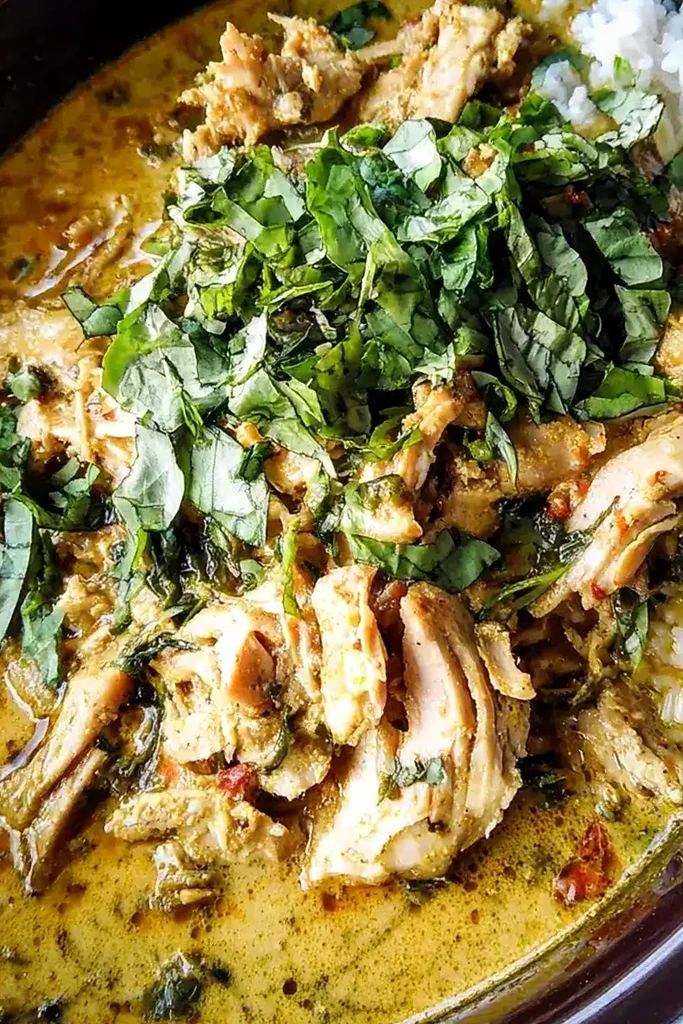
List of ingredients
- 2 lbs (about 900g) boneless, skinless chicken thighs, cut into 1-inch cubes – provides moisture and tenderness.
- 1 large yellow onion, finely chopped – adds a sweet, aromatic base.
- 4-6 cloves garlic, minced – essential for pungent flavor.
- 1 tablespoon fresh ginger, grated – adds a zesty, warm kick.
- 2 large bell peppers (one red, one yellow recommended), deseeded and sliced – for color and mild sweetness.
- 4-6 tablespoons Thai red curry paste – adjust based on your preferred heat level.
- 1 tablespoon vegetable or coconut oil – used for sautéing aromatics.
- 1/2 cup low-sodium chicken broth or water – creates the initial cooking liquid.
- 2 tablespoons fish sauce – provides a deep, savory umami saltiness.
- 1 tablespoon soy sauce or tamari – adds color and extra saltiness.
- 1 tablespoon brown sugar or coconut sugar – balances the heat and acidity.
- 1 (13.5 oz / 400ml) can full-fat, unsweetened coconut milk – for a creamy, luxurious finish.
- 1 cup fresh Thai basil leaves, packed – gives the dish its signature anise-like aroma.
- Juice of 1 large lime – adds necessary brightness and acidity.
step-by-step instructions
- Sauté the Aromatics: Heat oil in a large skillet over medium-high heat. Add chopped yellow onion and cook for 3-4 minutes until translucent.
- Add Pungent Flavors: Stir in the minced garlic and grated ginger. Sauté for one minute, being careful not to burn the garlic to avoid bitterness.
- Bloom the Curry Paste: Add the Thai red curry paste to the skillet. Stir constantly for 1-2 minutes to toast the spices and unlock their full aromatic potential.
- Transfer to Slow Cooker: Pour the sautéed mixture into a 6-quart or larger slow cooker. If skipping the sauté step, add raw ingredients now.
- Combine Main Ingredients: Add cubed chicken thighs, sliced bell peppers, chicken broth, fish sauce, soy sauce, and brown sugar. Stir thoroughly to coat the chicken and vegetables.
- Slow Cook: Secure the lid. Set to LOW for 4-6 hours or HIGH for 2-3 hours. The LOW setting is highly recommended for the most tender meat.
- Prepare for Finishing: About 15-20 minutes before you plan to serve, turn off the slow cooker.
- Cream the Sauce: Pour in the full-fat coconut milk and stir gently. The sauce will transform into a creamy, lighter orange-red color.
- Infuse Herbs and Acid: Stir in the fresh lime juice and packed Thai basil leaves until the basil begins to wilt.
- Final Heat: Replace the lid for 10-15 minutes. This allows the coconut milk to warm and the basil to infuse without boiling.
- Season and Serve: Taste the sauce. Add more fish sauce for salt, more lime for brightness, or a pinch of sugar for sweetness.
Essential Component Guide
Selecting Bone-less Chicken Thighs
When preparing slow cooker meals, the choice of meat is critical for the final texture. Boneless, skinless chicken thighs are the ideal choice for this curry because they possess a higher fat content than breast meat. This fat acts as a buffer against the long cooking times.
As the thighs simmer, the connective tissues slowly break down into gelatin. This process transforms the meat into a tender, succulent texture that absorbs the aromatic curry sauce deeply. Using thighs prevents the meat from becoming rubbery.
Managing Red Curry Paste Heat
Thai red curry paste is a concentrated blend of chilies, lemongrass, and galangal. Different brands vary significantly in spice levels. For those who prefer a milder dish, start with 4 tablespoons of a common commercial brand.
If you use authentic, high-potency pastes, be mindful that the heat can intensify during the slow cooking process. You can always stir in more paste at the end if you desire a spicier profile, but it is harder to reduce the heat once it is integrated.
Prioritizing Full-Fat Coconut Milk
The fat content in coconut milk is what creates the luxurious, silky mouthfeel of a traditional curry. Avoid using light coconut milk, as it lacks the stability and richness needed to balance the spicy curry paste. Light versions can often lead to a watery consistency.
Adding the coconut milk at the very end is a professional technique to prevent the sauce from splitting. When coconut milk is boiled for several hours, the fat can separate from the liquid, resulting in a grainy texture. Stirring it in just before serving keeps the emulsion smooth.
Incorporating Fish Sauce for Savory Depth
Fish sauce is the secret to achieving the complex “umami” flavor found in Thai cuisine. While it has a pungent aroma in the bottle, it transforms into a savory, salty depth once cooked into the sauce. It provides a layer of complexity that table salt cannot replicate.
If you are new to fish sauce, start with the recommended amount and taste. The fermentation process gives the curry a rounded saltiness that enhances the sweetness of the coconut milk and the acidity of the lime.
Thai Basil versus Italian Basil
Thai basil is a distinct variety with a spicy, anise-like flavor and purple stems. It is much more robust than Italian sweet basil and holds its flavor better in savory, spicy dishes. This specific aroma is what makes the curry taste authentic.
If Thai basil is unavailable, Italian basil is a functional substitute. However, it will provide a sweeter, more peppery profile. For the best results, always use fresh leaves rather than dried, as dried basil lacks the vibrant oils necessary for this finish.
Best Ways to Serve Your Curry
Pairing with Fragrant Jasmine Rice
Jasmine rice is the quintessential accompaniment for coconut curry. Its natural floral aroma and slightly sticky texture make it perfect for soaking up the creamy sauce. It provides a neutral base that allows the bold spices of the curry to shine.
To ensure the best results, rinse your jasmine rice under cold water until the water runs clear. This removes excess starch and prevents the rice from becoming overly gummy, resulting in distinct, fluffy grains.
Using Basmati or Brown Rice Alternatives
For a different texture, Basmati rice is an excellent alternative. It is longer and fluffier than Jasmine rice, offering a cleaner separation between grains. It works well if you prefer a lighter feel to your meal.
Brown rice or quinoa can be used for a heartier, higher-fiber option. These grains add a nutty flavor that complements the coconut milk. Because they have a firmer chew, they provide a nice contrast to the tender chicken thighs.
Complementing with Warm Naan Bread
Warm naan bread is ideal for those who want to scoop up every bit of the sauce. The buttery, chewy texture of the flatbread acts as a vessel for the chicken and vegetables. Garlic naan is especially recommended for adding an extra layer of savory flavor.
Briefly toast the naan in a pan or oven until it is soft and warm. This ensures the bread is pliable and can effectively soak up the rich coconut emulsion without breaking.
Adding Fresh Garnish for Contrast
To elevate the presentation and taste, set up a toppings bar. Fresh cilantro leaves add a bright, citrusy note that cuts through the richness of the coconut. Thinly sliced red chilies can be added for an extra kick of heat.
Roasted peanuts or cashews provide a necessary crunch that contrasts with the soft texture of the slow-cooked chicken. These additions make the meal feel more like a complete restaurant experience.
Cooking Modifications and Substitutions
Modifying the Heat Level
You can easily control the spice of this dish by adjusting the curry paste. For a very mild version, reduce the paste to 3 tablespoons and add an extra splash of coconut milk. This dilutes the capsaicin and creates a creamier, gentler sauce.
To increase the heat, add finely diced serrano or bird’s eye chilies during the sauté step. You can also stir in a pinch of red pepper flakes at the end for a sharp, immediate heat that lingers on the palate.
Including Root Vegetables
This curry is a great way to use up root vegetables. Diced potatoes, carrots, or sweet potatoes can be added at the beginning of the cooking process. These heartier vegetables require the full slow-cooking time to become tender.
When adding root vegetables, ensure they are cut into similar 1-inch pieces as the chicken. This ensures that everything cooks evenly and that the vegetables absorb the flavors of the curry base.
Using Tender Green Vegetables
Vegetables like broccoli, snap peas, or zucchini should not be added at the start, as they would become mushy. Instead, stir them in during the last 45 minutes of the cooking cycle.
Fresh spinach is another great addition. Stir it in at the very end along with the basil. The residual heat of the curry is enough to wilt the spinach without overcooking it, preserving its bright green color.
Adapting for Chicken Breasts
If you prefer to use chicken breasts, you must adjust the timing to avoid drying out the meat. Breasts lack the fat of thighs and can become stringy if cooked for 6 hours. Add cubed breast meat during the last 90 minutes of cooking on LOW.
This shorter window allows the meat to reach a safe internal temperature while remaining juicy. Ensure the pieces are cut into uniform cubes so they cook through at the same rate.
Making the Dish Gluten-Free
To make this recipe gluten-free, simply replace the soy sauce with tamari or coconut aminos. Tamari is a traditional Japanese soy sauce that is brewed without wheat, maintaining the same salty profile.
Coconut aminos are a soy-free alternative that is slightly sweeter than soy sauce. If you use aminos, you may want to slightly reduce the amount of brown sugar added to the base to maintain the flavor balance.
Storage and Reheating Advice
Refrigeration and Shelf Life
This curry stores exceptionally well and often tastes better the next day as the flavors continue to meld. Place leftovers in an airtight glass container and store them in the refrigerator for up to 4 days.
Ensure the curry has cooled slightly before sealing the lid to prevent excess condensation from forming inside the container. This helps maintain the consistency of the sauce upon reheating.
Freezing for Long-Term Storage
For long-term storage, this curry can be frozen for up to 3 months. However, for the best quality, freeze the curry *before* adding the fresh basil and lime juice. These fresh ingredients lose their vibrancy and flavor when frozen and thawed.
Use freezer-safe bags or containers, leaving a small amount of space at the top for expansion. When you are ready to eat, thaw the curry slowly in the refrigerator overnight.
Best Reheating Methods
The best way to reheat the curry is on the stovetop over medium-low heat. Stir gently as it warms to avoid breaking the coconut milk emulsion. If the sauce has thickened too much, add a tablespoon of water or coconut milk to loosen it.
If using a microwave, heat in short bursts and stir in between. Once the curry is hot, stir in fresh lime juice and fresh basil leaves to restore the bright, fresh flavors that were missing during storage.
Common Troubleshooting and FAQs
How to Thicken the Curry Sauce?
If you prefer a thicker sauce, create a cornstarch slurry. Whisk 2 tablespoons of cornstarch with 3 tablespoons of cold water until smooth, then stir it into the slow cooker after adding the coconut milk. Set the cooker to HIGH for 15-20 minutes to activate the thickening agent.
Why did my coconut milk separate?
Coconut milk separates or curdles when it is boiled for too long or exposed to high heat in the presence of acid. This is why the recipe instructs you to turn off the heat before stirring it in. Gently warming the milk prevents the fat from splitting.
Can I make this in an Instant Pot?
Yes. Use the Sauté function for the aromatics and paste. Add the chicken and other base ingredients, then seal and cook on High Pressure for 8 minutes. Allow a 10-minute natural release before stirring in the coconut milk, lime, and basil.
Can I make this on a stovetop?
Absolutely. Sauté the aromatics in a Dutch oven, add the chicken and base liquids, and simmer on low heat for 25-30 minutes. Turn off the heat and stir in the finishing ingredients as directed in the slow cooker version.
Print
Creamy Slow Cooker Thai Basil Chicken Curry
- Total Time: 6 hours 20 minutes
- Yield: 6-8 servings
- Diet: Dairy-Free
Description
A rich and aromatic slow cooker chicken curry featuring tender thighs, creamy coconut milk, and fresh Thai basil for a restaurant-quality dinner with minimal effort.
Ingredients
- 2 lbs boneless, skinless chicken thighs, cut into 1-inch cubes
- 1 large yellow onion, finely chopped
- 4–6 cloves garlic, minced
- 1 tablespoon fresh ginger, grated
- 2 large bell peppers, deseeded and sliced
- 4–6 tablespoons Thai red curry paste
- 1 tablespoon vegetable or coconut oil
- 1/2 cup low-sodium chicken broth or water
- 2 tablespoons fish sauce
- 1 tablespoon soy sauce or tamari
- 1 tablespoon brown sugar or coconut sugar
- 1 can (13.5 oz) full-fat, unsweetened coconut milk
- 1 cup fresh Thai basil leaves, packed
- Juice of 1 large lime
Instructions
- Sauté: Heat oil in a skillet over medium-high heat, sauté chopped onion until translucent, then add minced garlic and grated ginger for one minute.
- Bloom: Stir in Thai red curry paste and cook for 1-2 minutes until fragrant and slightly darkened.
- Combine: Transfer bloomed aromatics to a slow cooker and add chicken cubes, sliced bell peppers, chicken broth, fish sauce, soy sauce, and brown sugar.
- Slow Cook: Cover and cook on LOW for 4-6 hours or HIGH for 2-3 hours.
- Finish: Turn off the slow cooker and stir in full-fat coconut milk, lime juice, and fresh basil leaves.
- Infuse: Replace the lid for 10-15 minutes to allow the basil to wilt and the coconut milk to heat through.
Notes
For a thicker sauce, whisk 2 tablespoons cornstarch with 3 tablespoons cold water and stir into the curry on HIGH for 15-20 minutes. Use Thai basil for authenticity, but Italian basil is a suitable substitute.
- Prep Time: 20 minutes
- Cook Time: 6 hours
- Category: Dinner
- Method: Slow Cooking
- Cuisine: Thai
Nutrition
- Serving Size: 1 portion
- Calories: 500 kcal
- Sugar: 10 g
- Sodium: 850 mg
- Fat: 30 g
- Saturated Fat: 20 g
- Unsaturated Fat: 10 g
- Trans Fat: 0 g
- Carbohydrates: 20 g
- Fiber: 4 g
- Protein: 35 g
- Cholesterol: 110 mg