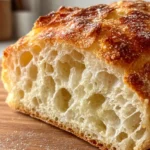
Description
This easy ciabatta bread recipe helps you bake bakery-quality bread at home, creating warm, crusty loaves with signature big bubbles and a soft, chewy texture. It uses a straightforward method that demystifies yeast and dough for beginner bakers.
Ingredients
- 3.5 cups (420g) all-purpose flour, (consider organic unbleached flour for best flavor; for gluten-free needs, a high-quality GF bread flour blend can be used, though bubble size may vary slightly)
- 2.25 teaspoons (7g) active dry yeast
- 1.75 cups (420ml) warm water, (ideally between 105-115°F or 40-46°C; filtered is best, but tap works great too)
- a small pinch sugar
- 2 teaspoons (10g) fine sea salt
- 2 tablespoons (30ml) extra virgin olive oil, (a good quality extra virgin olive oil makes a noticeable difference in flavor)
- 0.5 teaspoon garlic powder or 1 teaspoon dried rosemary, (optional, for an herby twist)
Instructions
- Activate Yeast: In a large mixing bowl, combine warm water, active dry yeast, and a small pinch of sugar. Let this mixture sit for 5-7 minutes until it becomes visibly foamy on top.
- Mix Dough: Add the all-purpose flour, fine sea salt, and extra virgin olive oil to the yeast mixture. Stir thoroughly with a sturdy wooden spoon or spatula until just combined. The dough will be very wet, sticky, and shaggy.
- First Rise: Cover the bowl tightly with plastic wrap or a damp kitchen towel. Let the dough rise in a warm spot until it has clearly doubled in size, feeling light and airy (90-120 minutes).
- Fold Dough: Moisten your hands lightly with water. Gently fold the dough onto itself, lifting a section and folding it to the center. Rotate the bowl and repeat until you have folded all four sides. Repeat this process three times, waiting 15 minutes between each fold. (If dough is too sticky, chill it for 10-15 minutes).
- Second Rise: After the final fold, let the covered dough rest for another hour in a warm spot. It should noticeably puff up again.
- Shape Loaves: Generously flour your work surface, (optionally using a blend of all-purpose and a little semolina flour for extra crispiness). Gently turn out the risen dough. Divide the dough into two roughly rectangular portions. Carefully stretch and shape each portion into a ciabatta loaf, avoiding excessive handling to keep the big bubbles intact.
- Final Proof: Transfer the shaped loaves onto baking sheets lined with parchment paper. Lightly cover them and let them proof for another 20-30 minutes. They will puff up slightly more, feeling very airy.
- Bake: Preheat your oven to 450°F (230°C) with a shallow pan of water on the bottom rack (this creates steam for a crisp crust). Bake the ciabatta loaves for 20-25 minutes, or until they are beautifully golden brown and crusty on the outside, and sound hollow when tapped on the bottom. (For an extra crisp crust, you can spritz the oven walls with water after putting the bread in, but be quick).
Notes
For best flavor, consider organic unbleached flour and good quality olive oil. Ensure warm water is 105-115°F to activate yeast effectively. The slow first rise is crucial for developing (big bubbles). If dough is sticky when folding, chill it briefly. Create steam in the oven for a crisp crust by using a water pan or spritzing walls.
- Prep Time: 31 minutes
- Cook Time: 23 minutes
- Category: Bread
- Method: Baking
- Cuisine: Italian
Nutrition
- Serving Size: 1 slice (approx 55g)
- Calories: 130 calories
- Sugar: 1 g
- Sodium: 250 mg
- Fat: 2 g
- Saturated Fat: 0 g
- Unsaturated Fat: 2 g
- Trans Fat: 0 g
- Carbohydrates: 24 g
- Fiber: 1 g
- Protein: 4 g
- Cholesterol: 0 mg