
This slow-cooker spaghetti-style soup transforms the classic pasta dish into a comforting, slow-simmered meal that develops deep, rich flavors over several hours. It offers all the familiar elements of a traditional beef and tomato sauce, yet simplified into a one-pot format that is perfect for busy weeknights or relaxed weekends. By relying on slow cooking, the vegetables soften perfectly and the lean beef becomes incredibly tender, resulting in a cohesive, flavorful bowl that is both satisfying and straightforward to prepare.
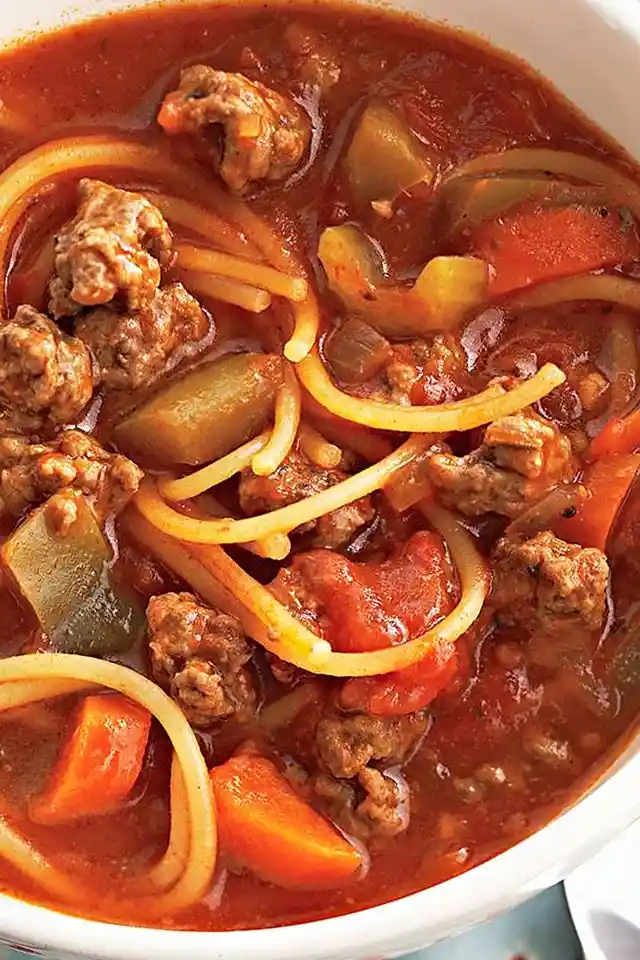
List of ingredients
- 1 pound lean ground beef
- 1 medium onion, chopped (1/2 cup)
- 1 medium green sweet pepper, chopped (1/2 cup)
- 1 stalk celery, chopped (1/2 cup)
- 1 medium carrot, chopped (1/2 cup)
- 2 cloves garlic, minced
- 1 (14.5 ounce) can no-salt-added diced tomatoes, undrained
- 1 (14 ounce) jar prepared spaghetti sauce
- 1 cup water
- 1 tablespoon quick-cooking tapioca, crushed
- 0.5 teaspoon dried Italian seasoning, crushed
- 0.25 teaspoon salt
- 0.25 teaspoon ground black pepper
- 0.125 teaspoon cayenne pepper
- 2 ounces dried spaghetti, broken into 2- to 3-inch pieces
step-by-step instructions
- Step: In a large skillet, cook ground beef, onion, sweet pepper, celery, carrot, and garlic over medium heat until meat is browned and vegetables are tender. Drain off fat.
- Step: Transfer meat mixture to a 3 1/2- or 4-quart slow cooker. Stir in tomatoes, spaghetti sauce, water, tapioca, Italian seasoning, salt, black pepper, and cayenne pepper.
- Step: Cover and cook on low-heat setting for 8 to 10 hours or on high-heat setting for 4 to 5 hours.
- Step: If using low-heat setting, turn to high-heat setting. Stir in spaghetti. Cover and cook for 15 to 20 minutes more or until pasta is tender.
Practical cooking methods
Ensuring even heat distribution
When cooking soups in a slow cooker, it is important to avoid overfilling the appliance, as this can affect how evenly the heat is distributed. A 3 1/2- to 4-quart slow cooker is perfectly sized for this recipe, allowing enough head space for the ingredients to simmer properly. If your cooker is significantly larger, you may find that the liquid evaporates faster, in which case adding a small amount of extra vegetable broth or water halfway through is a helpful adjustment.
Selecting the right ground meat
Using lean ground beef is vital for maintaining the desired nutritional profile of this dish while minimizing excessive greasiness in the broth. If only a higher fat content ground beef is available, be extra thorough during the browning and draining process to remove as much fat as possible. Excess fat can float on top of the finished soup, which can distract from the bright, tomato-forward flavors you are aiming to achieve.
Refining flavors and substitutions
Adjusting the vegetable profile
The vegetable combination of celery, carrot, and onion provides a classic mirepoix foundation that is standard for savory beef soups. If you want to experiment with different profiles, adding finely chopped zucchini or mushrooms can add a different textural element to the dish. Just be sure to dice these vegetables to a similar size as the carrots and onions to ensure they cook through within the allotted slow-cooker time frame.
Enhancing the herb blend
While the Italian seasoning is a great all-in-one herb, you can customize the flavor profile by adding fresh herbs right at the end of the cooking process. Freshly chopped parsley, basil, or oregano added just before serving can brighten up the flavors significantly. These fresh additions introduce a clean, fragrant aroma that contrasts well with the deep, slow-cooked savory notes of the beef and sauce base.
Serving and presentation
Pairing with crusty breads
Because this soup is essentially a deconstructed spaghetti dish, it pairs exceptionally well with crusty, toasted garlic bread. The textures are complementary; the crunch of the toasted bread provides a welcome contrast to the soft, tender pasta and vegetables in the soup. You can also serve it with a light side salad featuring fresh greens and a light vinaigrette to round out the meal and provide a crisp finish.
Portion control and bowl selection
Serving this soup in wide, shallow bowls allows the ingredients to be showcased clearly, making it easier to enjoy the pieces of pasta and vegetables in every spoonful. Because this recipe is quite substantial, a standard 8-ounce or 10-ounce portion is usually more than enough for a satisfying lunch or dinner. If you have guests, consider using slightly smaller bowls so diners can easily manage the heartiness of the beef and pasta mixture.
Managing leftovers and storage
Cooling and refrigeration
To store leftover soup safely, allow it to cool to room temperature before placing it into airtight containers. Refrigerating the soup promptly helps maintain the freshness of the vegetables and the integrity of the pasta. If the pasta seems to have absorbed too much liquid during refrigeration, do not be alarmed, as this is standard for starch-based soups; a splash of water during the reheating process will restore the proper consistency.
Freezing for long-term use
While this soup can be frozen, note that the texture of the cooked pasta may soften further upon thawing. For the best results if you plan on freezing in bulk, consider undercooking the pasta slightly or freezing the soup base separately from the pasta. You can then boil fresh pasta separately when you are ready to serve the soup, ensuring the final meal has the perfect texture even after being stored in the freezer for several weeks.
Troubleshooting and FAQs
How do I handle the pasta if it gets too soft?
If you find that the pasta has become too soft, it is likely due to the soup sitting on the keep-warm setting for too long. To avoid this, try to serve the soup immediately after the pasta reaches the desired tenderness. If you know you will be serving the soup over a longer period, cook the pasta in a separate pot of water and add it to each individual bowl before ladling the soup over it.
Why use tapioca in this recipe?
Quick-cooking tapioca acts as a stabilizer and a mild thickener, which is particularly useful in slow-cooker recipes. Because slow cookers do not allow for the same evaporation rate as stovetop boiling, adding a thickener helps ensure the tomato-based sauce maintains a consistent, slightly velvety texture rather than becoming thin or watery. It is a subtle but effective way to improve the mouthfeel of the soup.
Can I swap the type of pasta used?
Yes, you can substitute the spaghetti for other small pasta shapes like ditalini, small shells, or orecchiette. These shorter shapes are often easier to manage in a soup format than long noodles. Just remember that different pasta shapes may have slightly different cooking times, so check the pasta for tenderness after about 10 minutes of simmering in the slow cooker to avoid overcooking.
What is the best way to reheat the soup?
The most gentle way to reheat the soup is on the stovetop over low to medium heat, stirring occasionally to prevent sticking. If the soup has thickened significantly, add a small amount of water or low-sodium vegetable broth to loosen the texture. Avoid boiling the soup vigorously, as this can break down the tender vegetables and make the pasta mushy, which would compromise the quality of the dish.
How do I make the soup vegetarian-friendly?
To make a vegetarian version of this soup, you can replace the ground beef with hearty plant-based crumbles or extra vegetables such as diced zucchini and hearty white beans like cannellini. If you choose to go the vegetable route, ensure the beans are added during the last 30 minutes of cooking to prevent them from becoming too soft. Using a high-quality, flavorful vegetable broth in place of water will help maintain the depth of the flavor profile.
Print
Slow-Cooker Hearty Spaghetti-Style Beef Soup
- Total Time: 280 minutes
- Yield: 6 servings
- Diet: Nut-Free
Description
This easy slow-cooker soup has all the great flavors of your favorite dish of spaghetti with beef sauce, without a lot of fussy preparation.
Ingredients
- 1 pound lean ground beef
- 1 medium onion, chopped (1/2 cup)
- 1 medium green sweet pepper, chopped (1/2 cup)
- 1 stalk celery, chopped (1/2 cup)
- 1 medium carrot, chopped (1/2 cup)
- 2 cloves garlic, minced
- 1 (14.5 ounce) can no-salt-added diced tomatoes, undrained
- 1 (14 ounce) jar prepared spaghetti sauce
- 1 cup water
- 1 tablespoon quick-cooking tapioca, crushed
- 0.5 teaspoon dried Italian seasoning, crushed
- 0.25 teaspoon salt
- 0.25 teaspoon ground black pepper
- 0.125 teaspoon cayenne pepper
- 2 ounces dried spaghetti, broken into 2– to 3-inch pieces
Instructions
- Step: In a large skillet, cook ground beef, onion, sweet pepper, celery, carrot, and garlic over medium heat until meat is browned and vegetables are tender. Drain off fat.
- Step: Transfer meat mixture to a 3 1/2- or 4-quart slow cooker. Stir in tomatoes, spaghetti sauce, water, tapioca, Italian seasoning, salt, black pepper, and cayenne pepper.
- Step: Cover and cook on low-heat setting for 8 to 10 hours or on high-heat setting for 4 to 5 hours.
- Step: If using low-heat setting, turn to high-heat setting. Stir in spaghetti. Cover and cook for 15 to 20 minutes more or until pasta is tender.
Notes
For easy cleanup, line your slow cooker with a disposable slow cooker liner. Add ingredients as directed in the recipe. Once your dish is finished cooking, spoon the food out of your slow cooker and simply dispose of the liner. Do not lift or transport the disposable liner with food inside.
- Prep Time: 25 minutes
- Cook Time: 255 minutes
- Category: Soup
- Method: Slow Cooking
- Cuisine: American
Nutrition
- Serving Size: 1 cup
- Calories: 252 kcal
- Sugar: 12 g
- Sodium: 529 mg
- Fat: 8 g
- Saturated Fat: 3 g
- Unsaturated Fat: 5 g
- Trans Fat: 0 g
- Carbohydrates: 27 g
- Fiber: 5 g
- Protein: 19 g
- Cholesterol: 49 mg