
This wild game adaptation of a classic Southern favorite brings together the deep, earthy richness of venison with the tangy, savory punch of pepperoncini and herbs. By utilizing a high-heat sear followed by a long, slow braise, you transform tough, collagen-rich neck cuts into tender, succulent strands of meat. This recipe creates its own complex sauce, ensuring every bite is infused with a balanced profile of acid, heat, and savory depth.
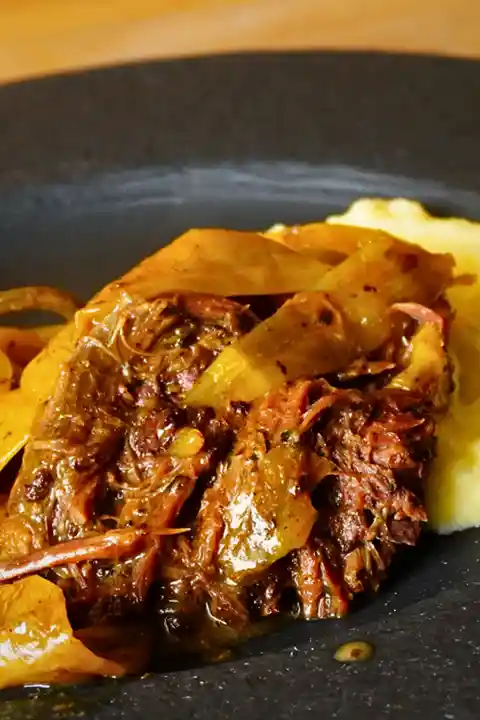
List of ingredients
- 1.4–2.3 kg venison neck, bone-in
- 280 g pepperoncini
- 120 ml pepperoncini juice
- 113 g butter
- 30 ml safflower oil
- 15 ml kosher salt
- 480 ml beef or venison stock
- 480 ml water
- 15 ml beef bouillon
- 15 ml cornstarch
- 5 ml onion powder
- 5 ml garlic powder
- 5 ml dried parsley
- 15 ml milk powder
- 10 ml dried parsley
- 10 ml onion powder
- 5 ml garlic powder
- 2.5 ml black pepper
- 15 ml fresh chives, finely chopped
- 15 ml lemon juice
- 1.25 ml celery seed (optional)
step-by-step instructions
- Step: Preheat oven to 450°F (230°C). Pat the venison neck dry and season all over with 1 tbsp kosher salt.
- Step: Heat a carbon steel or cast iron pan over high heat with 2 tbsp safflower oil. Sear the neck deeply on all accessible surfaces, about 3–4 minutes per side. Transfer the seared neck to a roasting tray.
- Step: Place the neck in the 450°F oven for 20–30 minutes to intensify browning, create roasted drippings, and build foundational flavor for the jus. Remove from oven. Reduce oven temperature to 300°F (150°C) for braising. Scrape all drippings and fond into a bowl for the Au Jus Mix.
- Step: Combine the Au Jus Mix ingredients: beef bouillon, cornstarch, onion powder, garlic powder, parsley, and all roasted drippings. In a separate bowl, mix the Ranch Mix dry ingredients: milk powder, parsley, onion powder, garlic powder, and black pepper. Set aside fresh chives and lemon juice for later steps.
- Step: Place the roasted neck into your 8 L Dutch oven. Add the Au Jus Mix, Ranch Mix dry portion, pepperoncini, pepperoncini juice, butter, and fresh chives. Add enough stock to reach 2½ cups total liquid in the pot.
- Step: Cover and cook at 300°F for 4–6 hours until meat pulls cleanly from the bone.
- Step: Remove the neck from the pot. Pull meat from the bone with forks, discard connective sheathes, and set meat aside.
- Step: Strain the braising liquid into a saucepan. Simmer 5–10 minutes to slightly reduce. Add 1 tbsp lemon juice to brighten and mimic buttermilk tang. Optional: Whisk in 1 tbsp cold butter to glossy-finish the sauce. Pour the finished jus over shredded venison or fold the meat back in.
Practical cooking methods
Mastering the high-heat sear
The initial sear is not merely about color but about initiating the Maillard reaction, which creates the deep flavor profile necessary for a long braise. Ensure your skillet is genuinely hot before the venison hits the pan to avoid steaming the meat, which can leave it grey and bland. By using a high-smoke-point oil like safflower, you can maintain high heat without the oil breaking down and creating acrid smoke.
Selecting the right cut
While the venison neck is specified for its exceptional collagen content, other tough cuts like the shank or shoulder will work equally well. These cuts contain dense connective tissues that break down into gelatin during the long braising process. Avoid lean muscle groups like the loin or round, as they lack the structural components required for a five-hour cook and will become dry or stringy.
Refining the flavor profile
Balancing acidity and richness
The combination of pepperoncini brine and lemon juice provides a critical acidic component that cuts through the natural gaminess of venison. If your braising liquid tastes too rich or heavy halfway through the cook, you can adjust by adding a splash more pepperoncini juice. The lemon juice added at the very end acts as a finishing brightener that elevates the entire dish.
Developing the ranch effect
Using milk powder allows you to achieve the creamy, luxurious consistency associated with ranch dressing without the risk of dairy curdling at high temperatures. It integrates seamlessly into the jus, binding the fat from the butter with the juices from the venison. This creates a rich sauce that clings to the shredded meat perfectly, ensuring every bite is coated in flavor.
Managing and storing the meal
Efficient reheating techniques
To reheat, place the shredded meat and sauce together in a covered dish and warm them slowly in a 300°F oven. Adding a tiny splash of water or stock can prevent the sauce from reducing too much while the meat warms through. Avoid using a microwave for large portions, as it tends to overcook the edges of the venison while leaving the center cool.
Freezing for long-term storage
This dish is an excellent candidate for freezing, as the flavors often improve after sitting for a day or two. Portion the shredded meat and sauce into airtight containers, ensuring they are fully submerged in liquid to prevent freezer burn. It will maintain its quality for up to three months if stored in a deep freeze kept at a consistent, low temperature.
Common preparation questions
Can I use a slow cooker?
Yes, you can adapt this to a slow cooker by following the exact same searing and roasting steps first. After transferring everything to the slow cooker, set it to the LOW setting and cook for 8 to 10 hours. The extended time on low heat is perfect for rendering the collagen in tougher game cuts.
Why does the sauce separate?
If you notice some fat separation, it is usually because the butter has not been fully emulsified with the braising liquid. Whisking in a small amount of cold butter at the very end, as mentioned in the instructions, helps to pull the sauce together into a cohesive, glossy finish. If it remains slightly separated, simply stir it vigorously just before serving.
How do I handle the connective tissue?
The connective tissue, or silverskin, on a venison neck is best handled once the meat is fully cooked and tender. During the shredding process, use two forks to pull the meat away from the white, stringy tissue, which should be discarded. You will find that once the collagen has melted, the meat separates easily, leaving the tough bits behind for easy removal.
What should I serve as sides?
The rich, flavorful jus pairs exceptionally well with starches that can absorb the liquid. Creamy mashed potatoes are the traditional choice, but roasted baby potatoes, buttered egg noodles, or even a side of wild rice will complement the savory profile. For a lighter side, a simple vinegar-based coleslaw provides a refreshing contrast to the hearty, warm notes of the roast.
Print
Mississippi-Style Venison Pot Roast
- Total Time: PT5H30M
- Yield: 6 servings
- Diet: High Protein
Description
This wild game twist on Mississippi pot roast combines the classic tangy-rich flavor profile with the deep, savory character of venison. The key to success is the hard sear and blast roast before braising—this creates layers of roasted drippings that transform the jus from good to exceptional.
Ingredients
- 1.4–2.3 kg venison neck, bone-in
- 280 g pepperoncini
- 120 ml pepperoncini juice
- 113 g butter
- 30 ml safflower oil
- 15 ml kosher salt
- 480 ml beef or venison stock
- 480 ml water
- 15 ml beef bouillon
- 15 ml cornstarch
- 5 ml onion powder
- 5 ml garlic powder
- 5 ml dried parsley
- 15 ml milk powder
- 10 ml dried parsley
- 10 ml onion powder
- 5 ml garlic powder
- 2.5 ml black pepper
- 15 ml fresh chives, finely chopped
- 15 ml lemon juice
- 1.25 ml celery seed (optional)
Instructions
- Step: Preheat oven to 450°F (230°C). Pat the venison neck dry and season all over with 1 tbsp kosher salt.
- Step: Heat a carbon steel or cast iron pan over high heat with 2 tbsp safflower oil. Sear the neck deeply on all accessible surfaces, about 3–4 minutes per side. Transfer the seared neck to a roasting tray.
- Step: Place the neck in the 450°F oven for 20–30 minutes to intensify browning, create roasted drippings, and build foundational flavor for the jus. Remove from oven. Reduce oven temperature to 300°F (150°C) for braising. Scrape all drippings and fond into a bowl for the Au Jus Mix.
- Step: Combine the Au Jus Mix ingredients: beef bouillon, cornstarch, onion powder, garlic powder, parsley, and all roasted drippings. In a separate bowl, mix the Ranch Mix dry ingredients: milk powder, parsley, onion powder, garlic powder, and black pepper. Set aside fresh chives and lemon juice for later steps.
- Step: Place the roasted neck into your 8 L Dutch oven. Add the Au Jus Mix, Ranch Mix dry portion, pepperoncini, pepperoncini juice, butter, and fresh chives. Add enough stock to reach 2½ cups total liquid in the pot.
- Step: Cover and cook at 300°F for 4–6 hours until meat pulls cleanly from the bone.
- Step: Remove the neck from the pot. Pull meat from the bone with forks, discard connective sheathes, and set meat aside.
- Step: Strain the braising liquid into a saucepan. Simmer 5–10 minutes to slightly reduce. Add 1 tbsp lemon juice to brighten and mimic buttermilk tang. Optional: Whisk in 1 tbsp cold butter to glossy-finish the sauce. Pour the finished jus over shredded venison or fold the meat back in.
Notes
Author: Lora Marie Bennett. The lemon juice at the end brightens the sauce and mimics the buttermilk tang of traditional ranch dressing. Serve with roasted baby potatoes, mashed potatoes, buttered noodles, wild rice, or crusty bread.
- Prep Time: PT30M
- Cook Time: PT5H
- Category: Main Course
- Method: Braising
- Cuisine: American
Nutrition
- Serving Size: 1 serving
- Calories: 480 kcal
- Sugar: 3 g
- Sodium: 850 mg
- Fat: 28 g
- Saturated Fat: 12 g
- Unsaturated Fat: 14 g
- Trans Fat: 0 g
- Carbohydrates: 12 g
- Fiber: 2 g
- Protein: 45 g
- Cholesterol: 165 mg