
This hearty slow-cooker soup combines the classic flavors of spaghetti and meat sauce into a convenient, one-pot meal. It is an efficient way to prepare a comforting dinner with minimal active cooking time and simple cleanup.
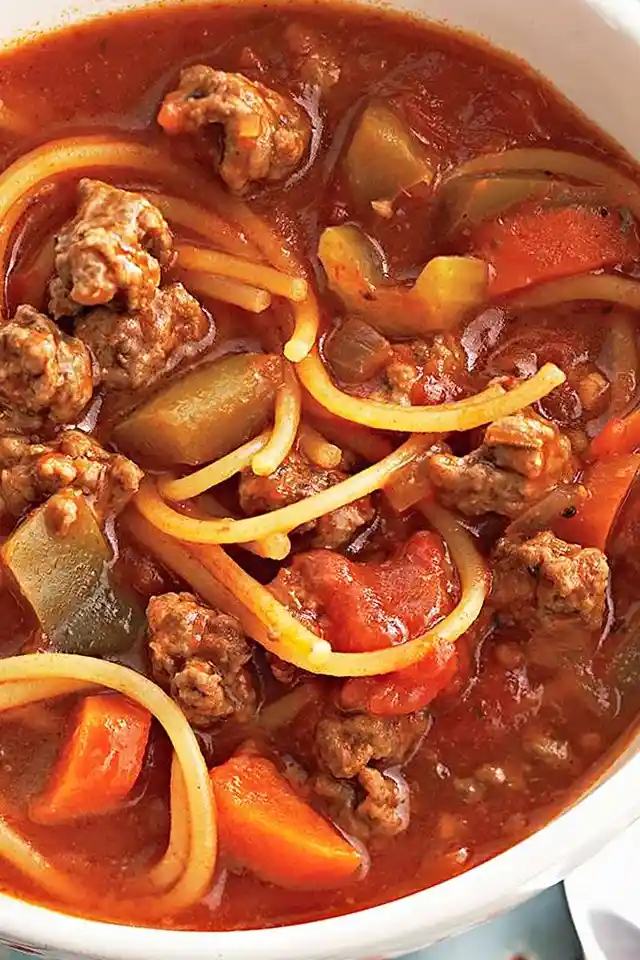
List of ingredients
- 1 pound lean ground beef – browned and drained for a clean flavor.
- 1 medium onion, chopped (1/2 cup) – provides a savory aromatic base.
- 1 medium green sweet pepper, chopped (1/2 cup) – adds a mild, sweet crunch.
- 1 stalk celery, chopped (1/2 cup) – contributes fiber and earthy notes.
- 1 medium carrot, chopped (1/2 cup) – adds natural sweetness and color.
- 2 cloves garlic, minced – essential for a pungent, aromatic profile.
- 1 (14.5 ounce) can no-salt-added diced tomatoes, undrained – provides texture and acidity.
- 1 (14 ounce) jar prepared spaghetti sauce – the primary flavor base.
- 1 cup water – adjusts the consistency to a soup texture.
- 1 tablespoon quick-cooking tapioca, crushed – acts as a subtle thickening agent.
- 0.5 teaspoon dried Italian seasoning, crushed – blends oregano, basil, and thyme.
- 0.25 teaspoon salt – enhances all other flavors.
- 0.25 teaspoon ground black pepper – adds a mild spicy heat.
- 0.125 teaspoon cayenne pepper – provides a subtle, warm kick.
- 2 ounces dried spaghetti, broken into 2- to 3-inch pieces – ensures easy spooning.
step-by-step instructions
- Sauté Aromatics and Meat: Use a large skillet to cook the ground beef, chopped onion, sweet pepper, celery, carrot, and minced garlic over medium heat. Continue cooking until the meat is fully browned and the vegetables have become tender.
- Drain Fat: Carefully drain off any excess fat from the skillet to prevent the soup from becoming greasy.
- Combine in Slow Cooker: Transfer the browned meat and vegetable mixture into a 3 1/2- or 4-quart slow cooker.
- Add Liquids and Seasoning: Stir in the undrained diced tomatoes, prepared spaghetti sauce, water, crushed tapioca, Italian seasoning, salt, black pepper, and cayenne pepper until well combined.
- Slow Cook: Cover the slow cooker with its lid. Cook on the low-heat setting for 8 to 10 hours, or on the high-heat setting for 4 to 5 hours.
- Add Pasta: If you used the low-heat setting, switch the device to the high-heat setting. Stir in the broken spaghetti pieces.
- Final Simmer: Cover and cook for an additional 15 to 20 minutes, or until the pasta is tender and cooked through.
Meat and Vegetable Preparation Tips
Selecting the Best Lean Ground Beef
Choosing a lean ground beef, such as 90% lean or higher, reduces the amount of rendered fat that pools on top of the soup. This ensures a cleaner taste and a lighter nutritional profile. If using a higher fat percentage, be extra diligent during the draining process after sautéing.
For the best texture, brown the meat in small batches if your skillet is small. Overcrowding the pan can cause the meat to steam rather than sear, which prevents the development of deep, savory flavors through the Maillard reaction.
Optimizing Vegetable Chop Size
Consistency in chopping is key for even cooking. Aim for vegetables to be cut into uniform 1/4-inch pieces. This ensures that the carrots and celery soften at the same rate as the onions and peppers.
Using a food processor for the mirepoix (onion, carrot, celery) can save time. However, ensure you do not over-process them into a paste, as distinct vegetable pieces provide a better mouthfeel in a chunky soup.
Maximizing Sauté Flavor
Cooking the vegetables with the meat allows the aromatic compounds in the garlic and onion to bloom. This creates a more complex base than simply throwing raw vegetables into the slow cooker.
Allow the vegetables to soften completely before adding them to the slow cooker. This removes the raw edge from the carrots and celery, resulting in a more integrated flavor profile in the final dish.
Slow Cooker Optimization
Using Disposable Slow Cooker Liners
Lining the ceramic crock with a disposable liner significantly simplifies the cleanup process. These liners prevent the sauce from sticking to the sides and bottom, which can happen with tomato-based recipes.
When using a liner, ensure it fits snugly against the walls of the pot. Never attempt to lift the liner while it is full of hot soup, as the weight can cause the plastic to tear or the contents to spill.
Adjusting for Different Slow Cooker Models
Not all slow cookers operate at the same temperature. Digital models often have more precise heat controls than manual dials. If your slow cooker runs hot, check the liquid level halfway through the cooking process.
If the soup appears too thick, stir in an extra 1/4 cup of water or low-sodium beef broth. This prevents the sauce from scorching or becoming overly reduced during the long cooking cycle.
Managing Liquid Levels
Tomato-based soups can thicken considerably over 8 to 10 hours. The addition of water in the initial stage is crucial to maintain a soup-like consistency rather than a thick stew.
Avoid opening the lid frequently during the slow-cooking process. Each time the lid is lifted, significant heat and moisture escape, which can add 15 to 30 minutes to the total cooking time.
Ingredient Substitutions
Low-Carb Pasta Alternatives
For a lower carbohydrate version, replace dried spaghetti with zucchini noodles or spaghetti squash. These alternatives should not be cooked for 20 minutes; instead, stir them in 5 minutes before serving.
Alternatively, use chickpea or lentil pasta for added protein. Note that these pastas release more starch than wheat pasta, which may naturally thicken the soup further.
Alternative Protein Options
Ground turkey or ground chicken can be used as a substitute for beef. These meats are generally leaner, so you may need to add a tablespoon of olive oil to the skillet for sautéing the vegetables.
For a plant-based version, use a crumbled tempeh or a pea-protein-based meat substitute. Ensure the substitute is browned well in the skillet to mimic the savory depth of beef.
Customizing the Sauce Base
If you do not have a jar of prepared spaghetti sauce, you can make a quick substitute using tomato puree, a pinch of sugar, and extra Italian seasoning. Ensure the puree is not too thick to maintain the soup consistency.
For a richer flavor, use a marinara sauce with added garlic and basil. Check the sodium content of your chosen sauce, as pre-made versions vary widely in salt levels.
Thickening Agent Swaps
If quick-cooking tapioca is unavailable, cornstarch or a slurry of flour and water can be used. Mix one tablespoon of cornstarch with two tablespoons of cold water before stirring it in.
Another option is to blend a small portion of the cooked vegetables and stir them back into the pot. This creates a natural thickness without adding extra starches to the recipe.
Flavor Variations
Adding Creaminess to the Broth
To transform this into a creamy spaghetti soup, stir in 1/2 cup of heavy cream or full-fat coconut milk at the very end. This mellows the acidity of the tomatoes and adds a velvety texture.
Alternatively, stir in two tablespoons of cream cheese or mascarpone. This adds a slight tang and richness that complements the Italian herbs.
Increasing the Heat Level
If you prefer a spicier soup, increase the cayenne pepper to 1/4 or 1/2 teaspoon. You can also add red pepper flakes during the sautéing process to infuse the oil with heat.
For a different kind of heat, add a finely diced jalapeño along with the green sweet pepper. This provides a fresh, sharp spice that cuts through the richness of the beef.
Incorporating Fresh Herbs
While dried Italian seasoning is convenient, stirring in fresh chopped parsley or basil just before serving enhances the brightness of the dish. Fresh herbs should always be added at the end to preserve their color and flavor.
A sprig of fresh rosemary can be added to the slow cooker during the long cook time. Remove the woody stem before adding the pasta to ensure a smooth texture.
Serving and Pairing Suggestions
Garnishing for Presentation
Freshly grated Parmesan or Pecorino Romano cheese is the ideal topping for this soup. The salty, sharp flavor of the cheese balances the sweetness of the carrots and tomatoes.
A dollop of ricotta cheese in the center of the bowl adds a creamy contrast and a professional presentation. A sprinkle of fresh cracked black pepper on top adds a final aromatic touch.
Complementary Side Dishes
Serve this soup with toasted garlic bread or a crusty Italian baguette. The bread is perfect for soaking up the tomato-based broth and adding a crunchy texture to the meal.
A simple side salad with a lemon-olive oil vinaigrette provides a refreshing contrast to the heavy, savory nature of the soup. Focus on bitter greens like arugula or radicchio to cleanse the palate.
Portioning and Serving
Use wide, shallow bowls to allow the soup to cool slightly before eating. This prevents burning and allows the flavors to be more apparent on the tongue.
Ensure each bowl gets a fair distribution of the broken spaghetti and meat chunks. Stir the pot well before ladling to avoid having all the pasta settle at the bottom.
Storage and Reheating Guide
Cooling and Refrigeration
Allow the soup to cool to room temperature before transferring it to airtight containers. Placing hot soup directly into the refrigerator can raise the internal temperature of the fridge, risking other foods.
Store the soup in the refrigerator for up to 4 days. Keep the containers sealed tightly to prevent the soup from absorbing other odors from the refrigerator.
Freezing the Soup Base
If you plan to freeze the soup, it is highly recommended to omit the pasta during the initial cook. Pasta tends to become mushy and absorb too much liquid when frozen and thawed.
Freeze the meat and vegetable base in freezer-safe bags or containers for up to 3 months. When ready to eat, thaw the base and simmer it on the stove, adding fresh pasta during the last few minutes.
Best Reheating Methods
Reheating on the stovetop over medium-low heat is the best method. This allows you to add a splash of water or broth if the soup has thickened too much in the fridge.
If using a microwave, heat the soup in short intervals, stirring in between. This ensures even heating and prevents the pasta from overcooking in hot spots.
Troubleshooting Common Issues
Preventing Mushy Pasta
The most common issue with pasta soups is overcooked noodles. Always add the spaghetti during the final 15-20 minutes of cooking, rather than at the beginning.
If you are making a large batch for meal prep, cook the pasta separately. Add a portion of cooked pasta to each bowl and pour the hot soup over it to maintain the perfect al dente texture.
Adjusting Soup Thickness
If the soup is too thin, simmer it with the lid off for the final 30 minutes of cooking. This allows some of the water to evaporate, concentrating the flavors and thickening the sauce.
If the soup is too thick, stir in small amounts of beef broth or water until the desired consistency is reached. Avoid adding too much at once, as this can dilute the seasoning.
Balancing Tomato Acidity
If the soup tastes too acidic due to the tomatoes, stir in a pinch of granulated sugar or a teaspoon of honey. This neutralizes the acid without making the soup taste sweet.
Adding a small amount of butter or cream can also mask excessive acidity. The fats coat the palate and soften the sharp edges of the tomato sauce.
Frequently Asked Questions
Can I add the pasta at the beginning?
No, adding pasta at the start of a long slow-cooking cycle will result in the noodles disintegrating. They will absorb all the liquid and turn into a mushy paste.
How do I prevent the beef from being greasy?
The most effective way is to brown the beef in a skillet and drain the fat thoroughly before transferring it to the slow cooker. Using 90% lean beef also minimizes grease.
Is this recipe suitable for a pressure cooker?
Yes, you can adapt this for a pressure cooker. Sauté the meat and vegetables using the sauté function, then pressure cook the base for 10-15 minutes. Add the pasta at the end and cook on high pressure for 2-5 minutes.
Can I use a different type of pasta?
Yes, you can use macaroni, rotini, or ditalini. Just ensure you adjust the cooking time based on the pasta’s thickness and follow the same rule of adding it at the end.
Do I have to brown the meat first?
While you can add raw meat to a slow cooker, browning it first adds a deep, caramelized flavor and allows you to remove excess fat, which improves the overall quality of the soup.
Print
Hearty Slow Cooker Spaghetti Soup
- Total Time: 4 hours 40 minutes
- Yield: 6 servings
- Diet: Low-Calorie
Description
This easy slow-cooker soup has all the great flavors of your favorite dish of spaghetti with beef sauce, without a lot of fussy preparation.
Ingredients
- 1 pound lean ground beef
- 1 medium onion, chopped (1/2 cup)
- 1 medium green sweet pepper, chopped (1/2 cup)
- 1 stalk celery, chopped (1/2 cup)
- 1 medium carrot, chopped (1/2 cup)
- 2 cloves garlic, minced
- 1 (14.5 ounce) can no-salt-added diced tomatoes, undrained
- 1 (14 ounce) jar prepared spaghetti sauce
- 1 cup water
- 1 tablespoon quick-cooking tapioca, crushed
- 0.5 teaspoon dried Italian seasoning, crushed
- 0.25 teaspoon salt
- 0.25 teaspoon ground black pepper
- 0.125 teaspoon cayenne pepper
- 2 ounces dried spaghetti, broken into 2– to 3-inch pieces
Instructions
- Step: In a large skillet, cook ground beef, onion, sweet pepper, celery, carrot, and garlic over medium heat until meat is browned and vegetables are tender. Drain off fat. Transfer meat mixture to a 3 1/2- or 4-quart slow cooker.
- Step: Stir in tomatoes, spaghetti sauce, water, tapioca, Italian seasoning, salt, black pepper, and cayenne pepper.
- Step: Cover and cook on low-heat setting for 8 to 10 hours or on high-heat setting for 4 to 5 hours.
- Step: If using low-heat setting, turn to high-heat setting. Stir in spaghetti. Cover and cook for 15 to 20 minutes more or until pasta is tender.
Notes
For easy cleanup, line your slow cooker with a disposable slow cooker liner. Add ingredients as directed in recipe. Once your dish is finished cooking, spoon the food out of your slow cooker and simply dispose of the liner.
- Prep Time: 25 minutes
- Cook Time: 4 hours 15 minutes
- Category: Soup
- Method: Slow Cooker
- Cuisine: American
Nutrition
- Serving Size: 1 cup
- Calories: 252 kcal
- Sugar: 12 g
- Sodium: 529 mg
- Fat: 8 g
- Saturated Fat: 3 g
- Unsaturated Fat: 5 g
- Trans Fat: 0 g
- Carbohydrates: 27 g
- Fiber: 5 g
- Protein: 19 g
- Cholesterol: 49 mg