
This tender beef and bell pepper dish is designed for the slow cooker to ensure maximum tenderness and deep flavor penetration. It combines a rich, umami-heavy sauce with fresh vegetables for a complete, comforting meal that requires minimal active effort.
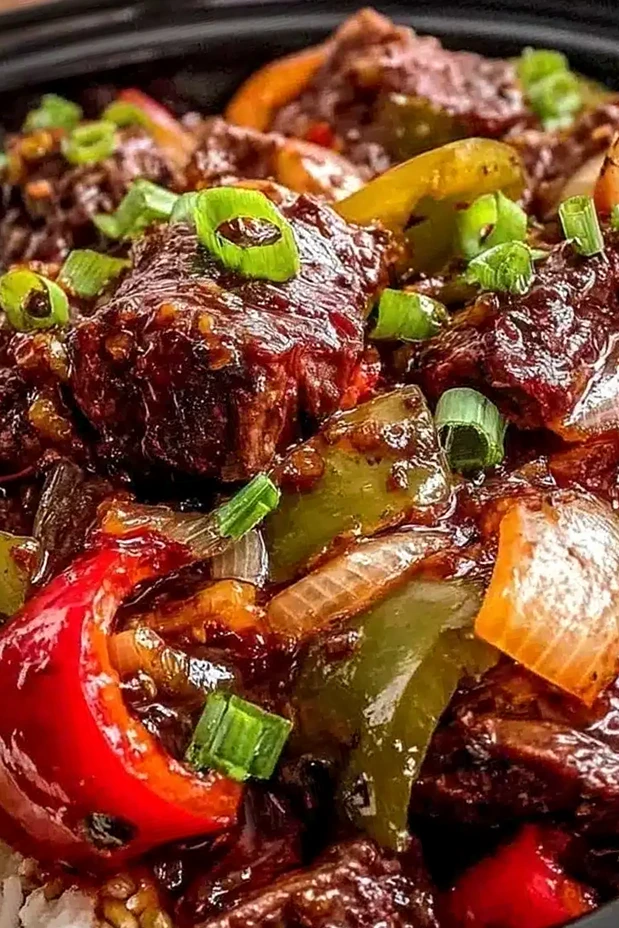
List of ingredients
- 2 lbs flank steak or sirloin, sliced into thin strips – provides the hearty protein base.
- 2 large bell peppers (1 red, 1 green), cut into strips – adds color and a sweet, tangy flavor.
- 1 medium onion, sliced – creates a savory aromatic foundation.
- 3 cloves garlic, minced – delivers sharp, pungent depth.
- 1-inch piece ginger, grated or 1 tsp ground ginger – adds a warm, spicy brightness.
- 1/3 cup low-sodium soy sauce – provides saltiness and a rich brown color.
- 1 cup beef broth – adds volume and depth to the savory sauce.
- 2 tbsp Worcestershire sauce – enhances the meaty umami profile.
- 2 tbsp brown sugar – balances the salt with a hint of sweetness.
- 2 tbsp tomato paste – thickens the sauce and adds a subtle tang.
- 2 tbsp cornstarch, mixed with 2 tbsp water – used as a slurry to thicken the final glaze.
- 1/2 tsp black pepper – provides a mild, earthy heat.
- 1 tbsp olive oil (optional, for browning beef) – helps sear the meat for extra flavor.
- Optional garnishes: sliced scallions, sesame seeds, chopped parsley – adds visual appeal and fresh contrast.
step-by-step instructions
- Prepare the beef: Slice the beef into thin strips, approximately 1/2 inch wide. Pat them dry with paper towels to ensure they sear properly if browning.
- Brown the meat (optional): Heat olive oil in a skillet over medium-high heat. Brown the beef strips in small batches for 1-2 minutes per side to lock in flavor.
- Layer the vegetables: Place the sliced onions and bell peppers at the bottom of the slow cooker. Top them with the prepared beef strips to ensure the meat stays juicy.
- Whisk the sauce: In a mixing bowl, combine the soy sauce, beef broth, Worcestershire sauce, brown sugar, tomato paste, minced garlic, and grated ginger. Pour this mixture evenly over the beef and vegetables.
- Season the dish: Sprinkle black pepper over the top. You may also add crushed red pepper flakes or a steak seasoning blend for extra zing.
- Slow cook: Cover the slow cooker and cook on LOW for 6 hours or HIGH for 3-4 hours. The beef should be tender and the peppers slightly soft.
- Thicken the sauce: Whisk cornstarch and water into a smooth slurry. Stir it into the slow cooker, cover, and cook for an additional 15-20 minutes until the sauce is glossy.
- Final adjustment: Taste the sauce and add a pinch more salt or pepper if needed. Stir the contents gently to avoid breaking the pepper strips.
- Serve: Spoon the steak and peppers over rice, mashed potatoes, or cauliflower rice. Garnish with scallions, sesame seeds, or parsley before serving.
Advanced Meat Preparation Techniques
Slicing Against the Grain for Tenderness
To ensure the beef is melt-in-your-mouth tender, identify the muscle fibers running through the steak. Slice across these fibers rather than parallel to them. This shortens the fibers, making the meat much easier to chew after the long cooking process.
The Benefit of Patting Meat Dry
Removing surface moisture with paper towels before browning is essential. Excess water creates steam in the pan, which prevents the Maillard reaction from occurring. Drying the meat ensures a proper brown crust, which adds a complex layer of flavor to the finished sauce.
Choosing Between Flank and Sirloin
Flank steak is traditionally used for its lean profile and ability to absorb sauces, though it requires slower cooking to break down. Sirloin is naturally more tender and cooks faster, but it may not hold up as well during very long cooking times. Both are excellent choices depending on your preferred texture.
Optimizing the Sauce Profile
Balancing Umami and Sweetness
The combination of soy sauce, Worcestershire, and tomato paste creates a powerful umami base. The brown sugar is added not to make the dish sweet, but to cut through the saltiness and create a balanced flavor profile. Adjust the sugar amount slightly if you prefer a more savory, less sweet glaze.
The Role of the Cornstarch Slurry
Cornstarch must be mixed with cold water before being added to the pot to prevent clumping. Once heated, the starch granules swell and trap liquid, transforming a thin broth into a thick, glossy glaze. This coating is what allows the sauce to cling to the meat and vegetables instead of pooling at the bottom.
Enhancing Aromatics with Fresh Ginger
While ground ginger is a convenient substitute, fresh grated ginger provides a more vibrant, citrusy heat. Fresh ginger contains oils that are more volatile and aromatic, which helps cut through the richness of the beef. For the best results, peel the ginger with a spoon before grating.
Customizing for Dietary Requirements
Substituting Soy Sauce for Gluten-Free Needs
For those avoiding gluten, replace the low-sodium soy sauce with tamari or coconut aminos. Tamari offers a taste very similar to traditional soy sauce, while coconut aminos provide a slightly sweeter, lower-sodium alternative. Always check the label of your Worcestershire sauce to ensure it is also gluten-free.
Adapting for Low-Carb or Keto Lifestyles
To make this recipe keto-friendly, omit the brown sugar and use a sugar-free sweetener or a small amount of honey if allowed. Serve the steak over cauliflower rice instead of white rice. This maintains the savory flavor profile while significantly reducing the total carbohydrate count per serving.
Using Vegetable Broth for Variations
If you are adapting this recipe for different proteins like mushrooms or tofu, replace the beef broth with a high-quality vegetable broth. This maintains the liquid volume and savory depth without adding animal-derived flavors. Vegetable broth often complements the sweetness of the bell peppers very well.
Managing Slow Cooker Logistics
Low vs High Temperature Settings
The LOW setting is generally preferred for tougher cuts of meat as it allows collagen to break down slowly into gelatin, resulting in a more tender texture. The HIGH setting is faster but can occasionally cause lean meats to tighten up and become dry. If using HIGH, check the beef at the 3-hour mark to prevent overcooking.
Preventing Mushy Vegetables
Bell peppers can become overly soft if cooked for the full 6 hours. If you prefer a bit of crunch and more vibrant color, add the peppers during the last 2 hours of the LOW cooking cycle. This ensures they are cooked through but still retain their structural integrity.
Avoiding Overcrowding the Pot
Filling a slow cooker to the absolute brim can interfere with heat circulation and lead to uneven cooking. For best results, leave about an inch of space at the top of the ceramic insert. This allows the steam to circulate and the sauce to reduce and thicken more effectively.
Serving and Pairing Strategies
Selecting the Ideal Grain Base
Fluffy white jasmine or basmati rice is the classic choice as it absorbs the savory sauce perfectly. For a nuttier flavor, brown rice or quinoa are excellent alternatives. If you want a heartier meal, serving the steak over creamy mashed potatoes creates a rich, comforting contrast.
Complementary Side Dish Ideas
Pair this rich dish with a side of steamed broccoli or sautéed snap peas to add freshness and nutrition. A crisp cucumber salad with rice vinegar and sesame oil provides a refreshing acidity that cleanses the palate between bites of the savory beef.
Garnishing for Texture and Taste
Freshly sliced scallions add a sharp, oniony bite that contrasts with the slow-cooked flavors. Toasted sesame seeds contribute a nutty crunch and a professional look. Chopped parsley provides a burst of herbal freshness that brightens the overall presentation of the dish.
Storage and Reheating Advice
Refrigeration Guidelines
Store leftover pepper steak in an airtight glass or plastic container once it has cooled to room temperature. It will stay fresh and safe to eat for up to four days in the refrigerator. The flavors often meld further overnight, making the leftovers taste even more savory the next day.
Freezing for Future Meals
This recipe freezes remarkably well for up to three months. Place the cooled steak and sauce in freezer-safe bags, squeezing out as much air as possible to prevent freezer burn. Thaw the meal in the refrigerator overnight before reheating to maintain the best texture.
Proper Reheating Methods
To reheat, place the steak in a skillet over medium-low heat or in a microwave-safe dish. If the sauce has thickened too much during storage, add a tablespoon of beef broth or water to loosen it. Avoid overheating the beef, as this can make the strips tough and rubbery.
Troubleshooting Common Issues
Fixing a Runny Sauce
If the sauce remains thin after adding the slurry, you can let the slow cooker run on HIGH with the lid slightly ajar for another 15 minutes. This allows excess moisture to evaporate. Alternatively, mix another teaspoon of cornstarch with water and stir it in for a final thickening phase.
Addressing Overly Salty Results
Since soy sauce and beef broth both contain sodium, the dish can sometimes become too salty. To balance this, stir in a small amount of unsalted beef broth or a teaspoon of apple cider vinegar. The acidity of the vinegar helps neutralize the perception of salt on the tongue.
Correcting Tough Meat Texture
If the beef is still chewy after the cooking time, it likely needs more time to break down the connective tissues. Return the lid and cook on LOW for another hour. Ensure that the meat was sliced against the grain, as slicing with the grain will result in chewiness regardless of cooking time.
Frequently Asked Questions
Can I use a different cut of beef for this slow cooker pepper steak?
Yes, while flank steak is traditional, sirloin, round steak, or even chuck roast can be used. Chuck roast is tougher but becomes very tender with slow cooking, while sirloin is leaner and cooks more quickly.
Do I need to brown the beef before slow cooking?
Browning is optional but highly recommended for the best flavor. Searing the meat creates a caramelized crust that adds a deeper, more complex taste to the overall sauce, though the dish is still delicious without this step.
Can I add other vegetables to the recipe?
Absolutely. Sliced carrots, mushrooms, or zucchini are great additions. Add carrots early on since they take longer to cook, but add zucchini or mushrooms in the last hour to prevent them from becoming too soft.
Is this recipe freezer-friendly?
Yes, the pepper steak freezes very well. Store it in airtight containers for up to three months, and thaw it slowly in the refrigerator before reheating on the stove or in the microwave.
How do I thicken the sauce if it is still runny?
Mix an additional tablespoon of cornstarch with a tablespoon of cold water to create a new slurry. Stir this into the simmering sauce and cook for another 15 minutes until the desired consistency is reached.
Print
Savory Slow Cooker Pepper Steak
- Total Time: 6 hours 15 minutes
- Yield: 6 servings
- Diet: General
Description
This hearty crockpot pepper steak features tender strips of beef, vibrant bell peppers, and a rich, savory sauce. It’s an easy, comforting dinner perfect for busy weeknights or family gatherings.
Ingredients
- 2 lbs flank steak or sirloin, sliced into thin strips
- 2 large bell peppers (1 red, 1 green), cut into strips
- 1 medium onion, sliced
- 3 cloves garlic, minced
- 1-inch piece ginger, grated or 1 tsp ground ginger
- 1/3 cup low-sodium soy sauce
- 1 cup beef broth
- 2 tbsp Worcestershire sauce
- 2 tbsp brown sugar
- 2 tbsp tomato paste
- 2 tbsp cornstarch, mixed with 2 tbsp water
- 1/2 tsp black pepper
- 1 tbsp olive oil
- sliced scallions, sesame seeds, and chopped parsley for garnish
Instructions
- Step: Slice the beef into thin strips, about 1/2 inch wide and pat dry with paper towels.
- Step: Heat olive oil in a skillet over medium-high and brown beef strips in batches for 1-2 minutes per side.
- Step: Layer sliced onions and bell peppers at the bottom of the slow cooker, then top with beef strips.
- Step: Whisk together soy sauce, beef broth, Worcestershire sauce, brown sugar, tomato paste, garlic, and ginger, then pour over beef and vegetables.
- Step: Sprinkle black pepper over everything.
- Step: Cover and cook on LOW for 6 hours or HIGH for 3-4 hours, until beef is tender and peppers are just soft.
- Step: Mix cornstarch with water until smooth, stir into the slow cooker, cover, and cook for another 15-20 minutes to thicken the sauce.
- Step: Taste and adjust seasoning if needed, then stir gently.
- Step: Serve over rice, mashed potatoes, or cauliflower rice and garnish with scallions, sesame seeds, or parsley.
Notes
For gluten-free, use tamari or coconut aminos and check Worcestershire labels. Add bell peppers halfway for more crunch. Browning beef adds flavor but is optional. Double sauce for extra saucy steak. Recipe is freezer-friendly and great for meal prep.
- Prep Time: 15 minutes
- Cook Time: 6 hours
- Category: Main Course
- Method: Slow Cooking
- Cuisine: American
Nutrition
- Serving Size: About 1 cup (250 g)
- Calories: 310 kcal
- Sugar: 7 g
- Sodium: 780 mg
- Fat: 14 g
- Saturated Fat: 5 g
- Unsaturated Fat: 9 g
- Trans Fat: 0 g
- Carbohydrates: 16 g
- Fiber: 2 g
- Protein: 28 g
- Cholesterol: 85 mg