
This slow cooker meal combines lean chicken breasts with fresh garden vegetables and aromatic basil pesto. It is a convenient set-and-forget dinner that provides a balanced meal with minimal active prep time.
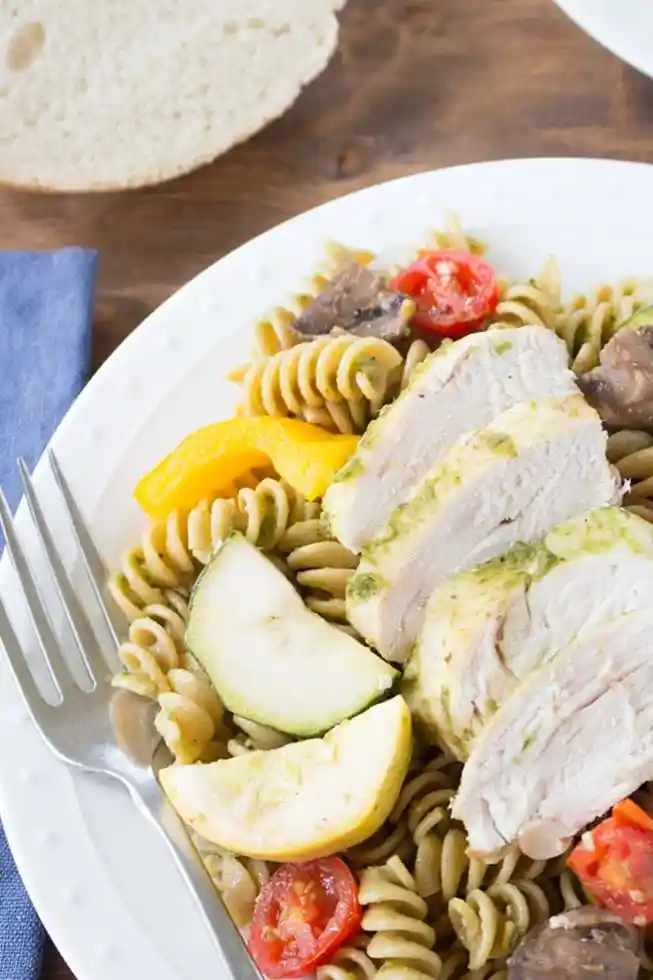
List of ingredients
- 1 tsp olive oil – used to grease the interior of the slow cooker for easier cleanup.
- 4 chicken breasts (thawed) – the main protein source.
- 1/2 tsp salt – adjusted to taste.
- 1/4 tsp black pepper – for basic seasoning.
- 1 tbsp Italian seasoning (dried) – adds a blend of traditional herbs.
- 1/2 to 3/4 cup basil pesto – used to coat the chicken during cooking.
- 1.5 cups zucchini – cut into 1/2 inch slices.
- 1 cup yellow squash – cut into 1/2 inch slices.
- 1 cup grape tomatoes – halved.
- 1 cup red onion – about one small onion, cut into 1 inch slices.
- 1 green pepper – cut into 1 inch slices.
- 1 yellow pepper – cut into 1 inch slices.
- 8 ounces white mushrooms – quartered.
- 1 lb whole wheat rotini – the base pasta for the dish.
- 4 tbsp to 1/2 cup pesto – used for the final toss with pasta and vegetables.
- Grated parmesan cheese – used for garnish and added saltiness.
step-by-step instructions
- Prepare the Cooker: Rub the inside of a 3- to 4-quart slow cooker with olive oil to prevent sticking and make cleanup easier.
- Season the Chicken: Place the thawed chicken breasts in the bottom of the slow cooker. Sprinkle both sides of each breast with salt, black pepper, and dried Italian seasoning.
- Apply Pesto: Place 1 tablespoon of basil pesto on one side of each chicken breast and spread it evenly using the back of a spoon to coat the surface.
- Layer the Onions: Place the sliced red onions directly on top of the seasoned chicken breasts to create a protective layer.
- Add Remaining Vegetables: Layer the zucchini, yellow squash, grape tomatoes, green pepper, yellow pepper, and quartered mushrooms on top of the onions. Slice these vegetables thickly to ensure they do not break down too quickly.
- Slow Cook: Set the slow cooker to low for 6-7 hours or to high for 3-4 hours. If you prefer al dente vegetables, wait to add the vegetables until one hour before serving.
- Boil the Pasta: Cook the whole wheat rotini in a pot on the stovetop according to the package directions, then drain the water.
- Check Chicken Temperature: Verify that the chicken is fully cooked with no visible pink. The internal temperature must reach 165 degrees Fahrenheit (75 degrees Celsius).
- Prepare Chicken for Serving: Switch the slow cooker to the warm setting or turn it off. Remove the chicken breasts and slice them into 1/2 inch thick pieces.
- Combine Pasta and Vegetables: Drain any excess liquid from the slow cooker and discard it. Add the cooked rotini to the slow cooker with the vegetables and toss in the remaining 4 tablespoons to 1/2 cup of pesto and grated parmesan cheese.
- Final Assembly: Serve the sliced chicken breasts on a bed of the pesto pasta and vegetable mixture. Garnish with extra pesto and parmesan cheese if desired.
Optimizing Slow Cooker Settings
Adjusting Cook Times for Different Models
Slow cookers vary by brand and age, which can affect cooking speeds. Always monitor your chicken’s internal temperature during the first time you make this recipe to find the ideal timing for your specific appliance.
Low versus High Heat Settings
Using the low setting for 6-7 hours generally results in more tender chicken. The high setting for 3-4 hours is faster but may slightly alter the texture of the vegetables if they are added at the start.
Managing Temperature for Vegetable Texture
The bottom of the slow cooker is the hottest area, which is why chicken is placed first. Placing the most delicate vegetables on top prevents them from overcooking and turning into mush over several hours.
Vegetable Preparation and Slicing Techniques
Slicing Dimensions for Slow Cooking
Cut the zucchini and yellow squash into 1/2 inch slices to maintain their shape. Using thicker cuts prevents the vegetables from disintegrating during the long simmering process.
Preparing Peppers and Onions
Slicing peppers and red onions into 1 inch pieces ensures they remain distinct in the final dish. These heartier vegetables can withstand the heat longer than the squash or tomatoes.
Handling Grape Tomatoes
Halving grape tomatoes allows them to release a small amount of juice that flavors the chicken without making the entire dish too watery. Keep them on the top layer to avoid complete breakdown.
Pesto Selection and Flavor Enhancements
Choosing Between Store-Bought and Homemade Pesto
High-quality store-bought pesto is convenient and provides a consistent flavor profile. If making your own, ensure it has a high concentration of basil and olive oil to maintain the sauce’s emulsion.
Balancing Salt Levels in Pesto
Since pesto and parmesan cheese both contain salt, be cautious when adding extra salt to the chicken. Taste the final mixture before adding additional seasoning to avoid over-salting the pasta.
Preserving the Bright Color of Basil
Basil can lose its vibrant green color when cooked for long periods. Adding the final portion of fresh pesto at the end of the process restores the bright color and fresh herbal taste.
Pasta Substitutions and Alternatives
Using Gluten-Free Pasta Options
You can replace whole wheat rotini with brown rice pasta or corn-based rotini. Be sure to cook gluten-free pasta slightly under the package directions, as it can become mushy when tossed with hot vegetables.
Incorporating Chickpea or Lentil Pasta
Chickpea or lentil pasta increases the protein content of the meal. These pastas have a heartier texture and pair well with the thick consistency of the basil pesto.
Choosing Different Pasta Shapes
While rotini is ideal for holding onto the pesto, fusilli or penne also work well. Avoid very thin pastas like spaghetti, as they may not support the weight of the chunky vegetables.
Customizing the Flavor Profile
Adding Fresh Garlic for Depth
For a more pungent garlic flavor, mince three cloves of fresh garlic and spread them on the chicken before adding the pesto. This adds a layer of aromatic depth that dried seasonings cannot provide.
Incorporating Citrus for Brightness
Squeezing fresh lemon juice over the sliced chicken before serving brightens the richness of the pesto. A small amount of lemon zest tossed with the pasta also adds a fresh, citrusy note.
Adding Heat with Red Pepper Flakes
If you prefer a spicy kick, sprinkle 1/2 teaspoon of red pepper flakes over the chicken breasts. This provides a subtle heat that complements the sweetness of the roasted peppers.
Storage and Preservation
Refrigerating Leftovers
Store the leftover pasta and chicken in airtight glass containers in the refrigerator. This dish stays fresh and safe to eat for up to three to four days.
Freezing Pesto Chicken
While the pasta does not freeze well, the pesto chicken and vegetables can be frozen. Store them in freezer-safe bags and thaw them in the refrigerator overnight before reheating.
Preventing Pesto Oxidation
To prevent the pesto from turning brown in the fridge, press a piece of plastic wrap directly onto the surface of the food. This limits oxygen exposure and helps maintain the green color.
Reheating Guidelines
Microwave Reheating Method
Heat individual portions in the microwave on medium power for 2-3 minutes. Add a splash of water or a teaspoon of olive oil to prevent the pasta from drying out.
Stovetop Refreshing
Reheat the pasta and vegetables in a skillet over medium-low heat. Stir in a tablespoon of water or extra pesto to re-emulsify the sauce and bring back the creamy texture.
Oven Reheating for Chicken
To keep the chicken from becoming rubbery, reheat sliced pieces in a 350 degree Fahrenheit oven for 10 minutes. Cover the dish with foil to retain moisture.
Troubleshooting Common Issues
Fixing a Watery Sauce
If the slow cooker contains too much liquid, drain it thoroughly before adding the pasta. You can also stir in a tablespoon of cornstarch mixed with water if you need to thicken the remaining juices.
Preventing Overcooked Chicken
If the chicken is cooking too fast, check it an hour early. Remove the breasts as soon as they hit 165 degrees Fahrenheit to ensure they remain juicy and tender.
Addressing Under-seasoned Vegetables
If the vegetables taste bland, toss them with a small amount of extra salt and pepper after draining the liquid. The addition of extra parmesan cheese also helps enhance the flavor.
Frequently Asked Questions
Can I use chicken thighs instead of breasts?
Yes, boneless skinless chicken thighs can be used. They are more forgiving in a slow cooker and typically stay moister than breasts, though they may require slightly different cooking times.
Do I have to use whole wheat pasta?
No, you can use regular white pasta or any other variety. Whole wheat is suggested for added fiber and a nuttier flavor that complements the pesto.
Can I add more vegetables to this recipe?
You can add carrots or cauliflower, but ensure they are cut into large pieces. Avoid adding high-water vegetables like spinach until the very end of the cooking process.
What is the best way to grease the slow cooker?
Use a paper towel to rub a thin layer of olive oil or a neutral cooking spray along the sides. This prevents the pesto and chicken proteins from sticking to the ceramic walls.
How do I prevent the zucchini from getting too soft?
Add the zucchini and squash during the last hour of cooking. This ensures they are cooked through but still retain a tender-crisp texture.
Print
Slow Cooker Pesto Chicken and Vegetable Pasta
- Total Time: 7 hours 5 minutes
- Yield: 6 servings
- Diet: General
Description
This throw & go crock pot recipe features basil pesto, chicken, garden fresh vegetables, and chicken. Serve it with pasta for a healthy and tasty dinner that takes just minutes to prepare.
Ingredients
- 1 tsp olive oil (optional)
- 4 chicken breasts (thawed)
- 1/2 tsp salt
- 1/4 tsp black pepper
- 1 tbsp Italian seasoning (dried)
- 1/2–3/4 cup basil pesto
- 1.5 cups zucchini (cut into 1/2 inch slices)
- 1 cup yellow squash (cut into 1/2 inch slices)
- 1 cup grape tomatoes (halved)
- 1 cup red onion (cut into 1 inch slices)
- 1 green pepper (cut into 1 inch slices)
- 1 yellow pepper (cut into 1 inch slices)
- 8 ounces white mushrooms (quartered)
- 1 lb whole wheat rotini
- 4 tbsp – 1/2 cup pesto
- grated parmesan cheese
Instructions
- Step: Rub inside of 3- to 4-quart slow cooker with olive oil to make clean up easier (optional).
- Step: Arrange chicken in bottom of slow cooker. Sprinkle both sides with salt, pepper, and Italian seasoning. Top one side of each chicken breast with 1 tablespoon of basil pesto and spread with back of spoon to coat.
- Step: Top seasoned chicken with onions. Layer vegetables on top of onions.
- Step: Cook on low for 6-7 hours or high for 3-4 hours.
- Step: Cook noodles according to package directions in a pan on the stove top and drain.
- Step: Turn the crock pot to “warm” setting. Remove chicken and slice into 1/2 inch slices.
- Step: Drain extra liquid in crock pot off of the vegetables and discard.
- Step: Toss vegetables and pasta with the remaining pesto (4 tbsp-1/2 cup) and grated parmesan cheese.
- Step: Serve chicken on a bed of noodles and vegetables.
Notes
Add your vegetables about 1 hour before serving if you prefer al dente veggies. Slow cooker speeds can vary; watch new recipes closely the first time to adjust the time to your liking.
- Prep Time: 5 minutes
- Cook Time: 7 hours
- Category: Main Dish
- Method: Crock-pot
- Cuisine: Italian
Nutrition
- Serving Size: 1 serving
- Calories: 750 kcal
- Sugar: 8 g
- Sodium: 920 mg
- Fat: 26 g
- Saturated Fat: 8 g
- Unsaturated Fat: 18 g
- Trans Fat: 0 g
- Carbohydrates: 62 g
- Fiber: 11 g
- Protein: 48 g
- Cholesterol: 115 mg