
This traditional beef stew features tender chunks of beef simmered slowly with root vegetables in a rich gravy. It is a filling, nutrient-dense meal designed for slow cooking to achieve maximum tenderness.
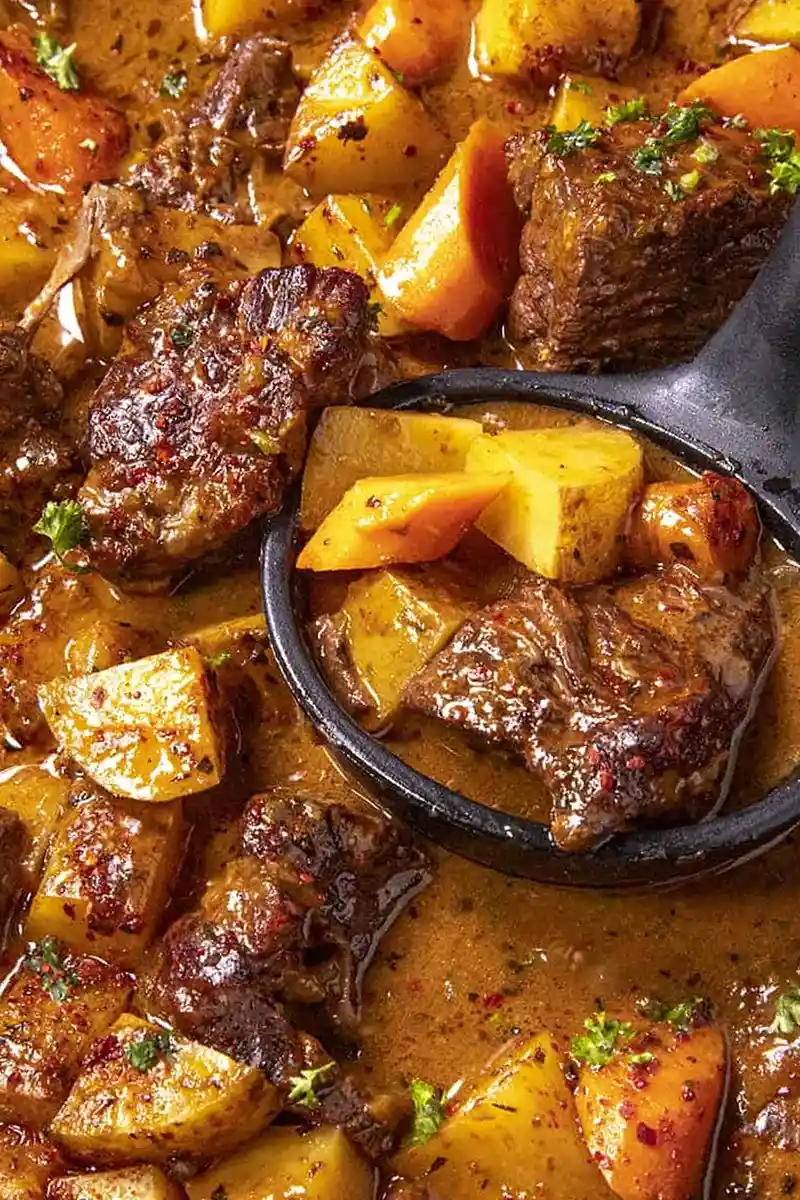
List of ingredients
- 3 pound beef chuck – cut into 1.5 inch chunks for consistent cooking.
- 1/4 cup flour – used for coating the beef to thicken the sauce.
- 1 tablespoon paprika – adds a subtle earthy depth and color.
- 1 teaspoon salt – adjust to your personal preference.
- 1 teaspoon black pepper – provides a mild heat.
- 4 tablespoons olive oil – divided for searing the meat and sautéing vegetables.
- 1 large white onion – chopped into medium pieces.
- 1 green bell pepper – chopped (substitute with jalapenos for higher heat).
- 1 stalk celery – chopped to add aromatic base.
- 5 garlic cloves – chopped finely.
- 3 tablespoons tomato paste – concentrates flavor and adds thickness.
- 2 cups beef stock (first portion) – replaces red wine for a rich, alcohol-free base.
- 2 cups beef stock (second portion) – ensures enough liquid for the long simmer.
- 1 tablespoon Worcestershire sauce – adds savory umami notes.
- 1 tablespoon Italian seasoning – a blend of dried herbs for complexity.
- 2 bay leaves – adds a herbal backbone to the broth.
- 1 pound yellow potatoes – cut into bite-sized pieces.
- 3 large carrots – cut into bite-sized pieces.
step-by-step instructions
- Coat the meat: In a large bowl, stir together the flour, paprika, salt, and pepper. Toss the beef chunks in the mixture until every side is evenly coated.
- Sear the beef: Heat 1 tablespoon of olive oil in a large Dutch oven over medium-high heat. Brown the beef in three separate batches, cooking for about 5 minutes per batch to avoid crowding the pan. Transfer each batch to a plate and add another tablespoon of oil before the next batch.
- Sauté aromatics: Add the final tablespoon of olive oil to the pot. Stir in the chopped onion, bell pepper, and celery, cooking for 5 minutes until the vegetables soften.
- Add concentrates: Stir in the chopped garlic and tomato paste, cooking for an additional minute to cook out the raw paste taste.
- Deglaze the pot: Pour in the beef stock and Worcestershire sauce. Use a wooden spoon to scrape all the browned bits (fond) from the bottom of the pot to incorporate the flavor.
- Combine and simmer: Return the browned beef and any juices from the plate to the pot. Stir in the Italian seasoning and bay leaves.
- Initial slow cook: Bring the liquid to a boil, then reduce heat to low, cover with a lid, and simmer for 2 hours.
- Add vegetables: Remove the lid and stir in the potatoes and carrots. Continue to simmer uncovered for 1 more hour, or until the vegetables are tender and the beef is fork-tender.
- Finish and rest: Remove from heat. While it can be eaten immediately, refrigerating the stew for 24 hours allows flavors to meld and deepen. Reheat gently before serving.
Optimizing the Meat Selection
Choosing Beef Chuck for Tenderness
Beef chuck is the ideal cut for this stew because it contains a high amount of connective tissue and collagen. During the slow simmering process, this collagen breaks down into gelatin, which creates a tender meat texture and naturally thickens the stew gravy.
Alternative Tough Cuts for Slow Cooking
If chuck is unavailable, look for other hard-working muscles like bottom round, top round, or brisket. These cuts are leaner but still benefit from the low-and-slow braising method, though they may require slightly more liquid to prevent drying out.
Ensuring Consistent Meat Cubes
Cutting the beef into uniform 1.5-inch chunks is critical for even cooking. If the pieces vary significantly in size, the smaller chunks may overcook and shred while the larger pieces remain tough.
Advanced Searing Techniques
Preventing Meat Steaming
Searing the beef in three separate batches prevents the pot from overcrowding. When too much meat is added at once, the temperature of the pan drops, and the meat releases moisture, causing it to steam in its own juices rather than brown.
The Role of the Flour Coating
The flour coating serves two purposes: it creates a larger surface area for browning and acts as a thickening agent. As the stew simmers, the flour particles integrate into the liquid, transforming it from a thin broth into a velvety sauce.
Developing the Fond
The brown bits left at the bottom of the pot after searing, known as the fond, contain concentrated flavor. Deglazing with beef stock ensures these caramelized proteins are dissolved and redistributed throughout the entire stew.
Vegetable Preparation and Timing
Using the Right Potato Variety
Yellow potatoes, such as Yukon Gold, are recommended because they hold their shape well during long cooking times. Starchier potatoes like Russets tend to break down more quickly, which can make the stew overly thick or grainy.
Preventing Vegetable Mushiness
Adding the carrots and potatoes during the final hour of cooking prevents them from disintegrating. Since the meat requires three hours total to soften, adding vegetables at the start would result in an overcooked, mushy consistency.
Customizing the Aromatic Base
The combination of onion, celery, and bell pepper creates a savory base. For a different flavor profile, you can substitute the green pepper with red pepper for a sweeter taste or add a pinch of celery seed for extra depth.
Managing Liquid and Consistency
Substituting Wine with Beef Stock
Replacing red wine with extra beef stock maintains the richness of the dish without introducing alcohol. This ensures the stew remains savory and hearty while keeping the flavor profile accessible for all diners.
Achieving a Thicker Gravy
If the stew is too thin after the final hour of simmering, you can create a slurry by mixing 2 tablespoons of flour with 2 tablespoons of cold water. Stir this mixture into the boiling stew and simmer for a few more minutes until the desired thickness is reached.
Balancing the Acidity
The tomato paste and Worcestershire sauce provide necessary acidity to cut through the richness of the beef. If the stew tastes too heavy, a small splash of apple cider vinegar or a squeeze of lemon juice at the end can brighten the overall flavor.
Cooking Method Variations
Slow Cooker Instructions
To use a slow cooker, follow the recipe through step six (searing meat and sautéing vegetables in a pan). Transfer the entire mixture to the slow cooker and cook on high for 3-4 hours or on low for 7-8 hours. Add the vegetables in the last 2 hours of cooking.
Pressure Cooker Adjustments
In a pressure cooker, sear the meat and sauté the vegetables using the sauté function. Add all liquids and seasonings, then cook on high pressure for 45-60 minutes. Perform a quick release, add the vegetables, and cook on high pressure for another 10-15 minutes.
Oven-Braising Method
You can transfer the pot to a preheated oven at 325°F (160°C) after step six. Cover and braise for 2 hours, then stir in the vegetables and braise uncovered for another hour. This provides a very consistent, encircling heat source.
Serving and Pairing Ideas
Serving Over Mashed Potatoes
Serving the stew over a bed of creamy mashed potatoes is a classic pairing. The potatoes absorb the rich gravy and add an extra layer of heartiness to the meal.
Pairing with Grains and Bread
White rice or quinoa are excellent alternatives for absorbing the sauce. Additionally, serving the stew with a side of warm, crusty sourdough or buttered biscuits helps in cleaning the bowl and adds a contrasting texture.
Adding Fresh Garnishes
Freshly chopped parsley or sliced green onions added just before serving provide a burst of color and a fresh, peppery contrast to the deep, slow-cooked flavors of the beef.
Storage and Reheating
Refrigeration and Flavor Development
Beef stew is one of the few dishes that improves after a day in the refrigerator. The cooling process allows the complex flavors of the herbs, meat, and vegetables to meld and intensify.
Freezing for Long-Term Storage
Store the stew in airtight containers or freezer bags for up to 3 months. Ensure the stew is completely cooled before freezing to prevent ice crystals from forming, which can affect the texture of the potatoes.
Best Reheating Practices
The best way to reheat beef stew is on the stovetop over medium-low heat. Stir occasionally and add a splash of beef stock or water if the gravy has thickened too much during storage.
Troubleshooting Common Issues
What to do if the meat is still tough?
If the beef is not fork-tender after the allotted time, continue simmering for another 30-60 minutes. Toughness is usually a sign that the collagen hasn’t fully broken down, which only happens with continued heat and time.
How to fix an over-salted stew?
If the stew tastes too salty, add more unsalted beef stock or a peeled, halved raw potato. The potato can absorb some of the excess salt during the final simmering stage; remember to remove it before serving.
Correcting a burnt bottom
If you notice the stew is sticking or burning at the bottom, do not scrape the burnt bits into the sauce. Carefully pour the contents into a clean pot, leaving the burnt residue behind, and continue simmering.
Frequently Asked Questions
Can I use a different kind of potato?
Yes, but avoid very starchy potatoes like Russets if you want the chunks to remain intact. Red potatoes are a great alternative as they are waxy and hold their shape well.
Do I have to sear the meat first?
While you can skip searing, it is highly recommended. Searing creates the Maillard reaction, which develops deep, savory flavors that cannot be achieved through simmering alone.
How do I stop the vegetables from becoming mushy?
The key is the timing of addition. Never add the root vegetables at the beginning of the three-hour cook time; always wait until the final hour of the process.
Can I use frozen beef stew meat?
Yes, provided it is fully thawed and patted dry with paper towels. If the meat is damp, it will steam instead of searing, which reduces the depth of flavor in the final sauce.
Print
Hearty Traditional Beef Stew
- Total Time: 3 hours 30 minutes
- Yield: 6 servings
- Diet: General
Description
This beef stew recipe is a classic dish of fork tender beef stewed with carrots and potatoes, so much like my mother used to make, pure comfort food.
Ingredients
- 3 pound beef chuck (cut into 1.5 inch chunks)
- ¼ cup flour
- 1 tablespoon paprika
- 1 teaspoon salt
- 1 teaspoon black pepper
- 4 tablespoons olive oil (divided)
- 1 large white onion (chopped)
- 1 green bell pepper (chopped)
- 1 stalk celery (chopped)
- 5 garlic cloves (chopped)
- 3 tablespoons tomato paste
- 2 cups beef stock (substitute for wine)
- 2 cups beef stock
- 1 tablespoon Worcestershire sauce
- 1 tablespoon Italian seasoning
- 2 bay leaves
- 1 pound yellow potatoes (cut into bite-sized pieces)
- 3 large carrots (cut into bite-sized pieces)
Instructions
- Coat: Mix together the flour, paprika, salt and pepper in a large bowl. Dip the chunks of beef into the mixture to lightly coat each side.
- Sear: Heat 1 tablespoon of olive oil in a Dutch oven or large pot. Sear the beef in 3 separate batches to brown each side of the meat, about 5 minutes per batch. Transfer the browned beef to a plate. Add 1 tablespoon of olive oil to the pot before each batch.
- Sauté: When all of the meat is seared and resting on the plate, add the last tablespoon of olive oil. Add the onion, peppers, and celery. Stir and cook for 5 minutes to soften.
- Aromatics: Add the garlic and tomato paste and cook 1 more minute, stirring.
- Deglaze: Add the beef stock and Worcestershire sauce. Stir and scrape up any browned bits from the bottom of the pot.
- Combine: Add the meat and any accumulated juices to the pot, along with the Italian seasonings and bay leaves.
- Simmer 1: Bring to a boil, then cover and simmer for 2 hours.
- Simmer 2: Remove the lid and add the potatoes and carrots. Simmer, uncovered, for 1 more hour, or until the vegetables are cooked through and the meat is fork tender.
- Finish: Remove from heat. You can serve the beef stew immediately, but it is best to refrigerate the pot for 24 hours. Simply reheat and serve.
Notes
For the best flavor, refrigerate the stew for 24 hours before serving. For slow cooker: brown meat and sauté vegetables first, then cook on high for 3-4 hours or low for 7-8 hours.
- Prep Time: 15 minutes
- Cook Time: 3 hours 15 minutes
- Category: Main Course
- Method: Stewing
- Cuisine: American, French
Nutrition
- Serving Size: 1 serving
- Calories: 632 kcal
- Sugar: 5 g
- Sodium: 862 mg
- Fat: 36 g
- Saturated Fat: 13 g
- Unsaturated Fat: 23 g
- Trans Fat: 2 g
- Carbohydrates: 17 g
- Fiber: 3 g
- Protein: 47 g
- Cholesterol: 156 mg