
This slow cooker beef stew provides a rich, comforting meal with minimal active effort. By searing the meat and slow-simmering the vegetables, you achieve a deep flavor and tender texture.
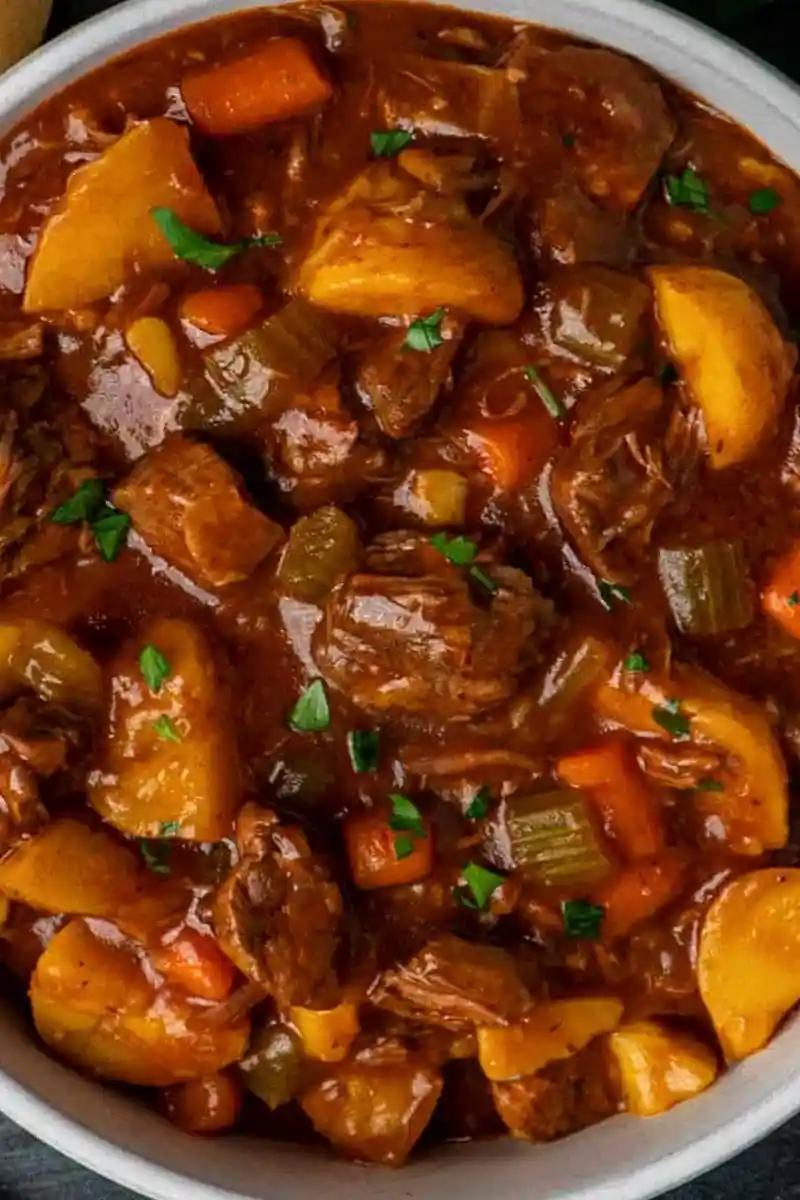
List of ingredients
- 2 ½ lbs chuck roast – cut into 1-inch chunks with large fat portions removed.
- 3 tbsp butter – used for searing the beef and sautéing aromatics.
- 1 ½ cup yellow onion – finely diced.
- 4 tsp garlic – minced.
- 4 cups beef broth – provides the liquid base for the stew.
- 1 ½ tbsp Worcestershire Sauce – adds umami and depth to the gravy.
- 5 carrots – cut into bite-sized pieces.
- 1 lb baby Yukon gold potatoes – washed and quartered.
- 6 oz tomato paste – provides acidity and thickens the sauce.
- 3 sticks celery – chopped.
- 1 tsp ground black pepper – for seasoning.
- 1 tsp salt – for seasoning.
- ½ tsp dried rosemary – adds an earthy herbal note.
- ½ tsp dried thyme – complements the beef and root vegetables.
- 2 bay leaves – added for aromatic depth.
- ¼ cup cold water – used to create the cornstarch slurry.
- 3 tbsp cornstarch – used as the final thickening agent.
step-by-step instructions
- Brown the Beef: Heat 3 tablespoons of butter in a large skillet over medium-high heat. Brown the beef in 3 separate batches for 45 seconds on each side to avoid overcrowding. Remove the meat and place it in the slow cooker.
- Sauté Aromatics: Add the diced onion to the same skillet and cook until softened, which usually takes 3-4 minutes. Add the minced garlic and continue to cook for another 30 seconds. Transfer the onion and garlic mixture to the slow cooker.
- Combine Ingredients: Add the beef broth, Worcestershire sauce, carrots, potatoes, tomato paste, celery, black pepper, salt, rosemary, and thyme. Stir everything until well combined. Place the bay leaves on top.
- Slow Cook: Cover the pot and cook on the low setting for 8 to 9 hours, or on the high setting for 4 to 5 hours.
- Thicken the Sauce: Whisk the cold water and cornstarch together until no lumps remain. Pour the slurry into the stew and stir. Continue to cook for 10 minutes or until the sauce reaches your desired thickness.
Optimizing Your Meat Selection
Choosing the Best Cut of Beef
Chuck roast is the ideal choice for this stew because it contains high amounts of connective tissue and marbling. During the long slow-cooking process, this collagen breaks down into gelatin, resulting in meat that is tender and succulent. Avoid lean cuts like sirloin, as they can become dry and tough when cooked for several hours.
Handling Fat and Trimming
While some fat is necessary for flavor, large chunks of external fat can make the stew overly greasy. Carefully trim away thick layers of hard white fat before cutting the beef into cubes. This ensures a cleaner sauce and a better ratio of meat to gravy in every spoonful.
Ensuring Uniform Cube Sizes
Cut the beef into consistent 1-inch chunks to ensure that every piece cooks at the same rate. If the pieces vary significantly in size, smaller chunks may overcook and disintegrate while larger pieces remain tough. Uniformity is key to achieving a professional texture across the entire batch.
Advanced Searing and Flavor Techniques
The Importance of the Maillard Reaction
Searing the meat in butter before adding it to the slow cooker creates a brown crust known as the Maillard reaction. This process develops complex, savory flavors that cannot be achieved through slow cooking alone. Skipping this step will result in a more muted flavor profile and a less appealing color.
Preventing Pan Overcrowding
When browning the beef, it is essential to work in small batches. Overcrowding the pan lowers the surface temperature, causing the meat to steam in its own juices rather than sear. Browning in three separate batches ensures that each piece of beef gets a proper golden-brown exterior.
Deglazing for Maximum Depth
After sautéing the onions and garlic, there will be brown bits, called fond, stuck to the bottom of the skillet. These bits are concentrated flavor crystals. Pour a small amount of beef broth into the hot pan and scrape them up with a wooden spoon before transferring everything to the slow cooker.
Vegetable Preparation and Customization
Selecting the Right Potatoes
Yukon Gold potatoes are recommended because they hold their shape well while maintaining a creamy interior. Russet potatoes may break down too much, making the stew cloudy, while red potatoes can be slightly too firm. Quartering the baby potatoes ensures they cook through without becoming mushy.
Adjusting Vegetable Texture
If you prefer your vegetables to have more bite, you can add the carrots and potatoes during the last 3-4 hours of cooking on low. This prevents them from over-softening during the full 9-hour cycle. This is particularly useful if you are using larger-cut vegetables that require less time than the beef.
Integrating Alternative Root Vegetables
For a different flavor profile, you can substitute some of the potatoes with parsnips or turnips. Butternut squash is another excellent addition, though it should be added later in the cooking process to avoid dissolving into the sauce. These additions increase the nutritional value and add natural sweetness to the stew.
Mastering the Thickening Process
Creating a Smooth Cornstarch Slurry
Always mix cornstarch with cold water before adding it to the hot stew. Adding dry cornstarch directly to the pot will create clumps that are nearly impossible to stir out. Whisking the slurry until smooth ensures that the thickening agent integrates perfectly into the liquid.
Alternative Thickening Methods
If you prefer not to use cornstarch, you can use a flour-based roux or a small amount of mashed potato. Mixing a tablespoon of flour with butter and cooking it briefly before adding it to the pot creates a richer, more opaque gravy. Pureeing a small portion of the cooked vegetables and stirring them back in also adds thickness.
Managing Liquid Ratios
Depending on your slow cooker model, some liquid may evaporate while others retain most of it. If the stew seems too watery after adding the slurry, let it cook on high for an additional 15-30 minutes without the lid. If it is too thick, stir in an extra half cup of beef broth until the desired consistency is reached.
Serving and Pairing Guide
Ideal Bread Accompaniments
A crusty French baguette or a toasted sourdough loaf is perfect for soaking up the thick gravy. Garlic bread provides a pungent contrast to the savory beef, while warm cornbread adds a touch of sweetness that complements the carrots and onions. Serving bread on the side makes the meal more filling.
Complementary Side Dishes
To balance the richness of the beef, serve the stew with a light green salad dressed in a vinaigrette. Roasted broccoli or sautéed green beans provide a fresh, crisp texture that contrasts with the softness of the stew. These sides add necessary acidity and brightness to the plate.
Fresh Garnish Ideas
Finish the dish with a sprinkle of freshly chopped parsley or chives. These herbs add a pop of color and a fresh, peppery taste that cuts through the density of the beef and potatoes. A small pinch of cracked black pepper on top also enhances the visual presentation.
Storage and Reheating Protocols
Refrigeration and Shelf Life
Allow the stew to cool completely before transferring it to an airtight container. Once cooled, it can be stored in the refrigerator for up to 3 days. Keep the container tightly sealed to prevent the stew from absorbing other odors in the fridge.
Freezing for Long-Term Use
This stew freezes exceptionally well for up to 3 months. Use freezer-safe bags or containers, leaving a small amount of headspace for expansion. When freezing, it is helpful to portion the stew into individual servings for easier reheating later.
Best Practices for Reheating
To reheat frozen stew, thaw it in the refrigerator overnight before heating. Use a pot on the stove over medium-low heat, stirring occasionally to prevent the bottom from burning. If using a microwave, heat in 60-second intervals, stirring in between to ensure the heat is distributed evenly throughout the thick sauce.
Cooking Troubleshooting and FAQ
Why is my beef still tough after cooking?
Tough beef is usually a result of using a lean cut of meat or not cooking it long enough on the low setting. Connective tissue requires time and consistent low heat to melt. If the meat is still tough, continue simmering it for another hour or switch to the low setting for a longer duration.
Can I use a different cut of meat?
Yes, rump roast or bottom round are suitable alternatives to chuck roast. However, these cuts are leaner and may require an additional hour of cooking time to reach the same level of tenderness. Ensure you don’t overcook them to the point where they become dry.
How do I stop the vegetables from getting mushy?
To avoid mushy vegetables, ensure you are cutting them into larger, uniform pieces. Avoid over-stirring the pot during the cooking process, as this can break down the softened vegetables. Adding them later in the cooking cycle is the most effective way to maintain texture.
What can I use instead of Worcestershire sauce?
You can substitute Worcestershire sauce with a combination of soy sauce and a drop of lemon juice or balsamic vinegar. This provides the necessary saltiness and acidity to mimic the original flavor. Coconut aminos are also a great alternative for those avoiding certain ingredients.
Can I cook this in a regular pot on the stove?
Yes, you can adapt this for the stove by simmering it on very low heat in a heavy-bottomed Dutch oven. You will need to check the liquid levels more frequently as evaporation happens faster on the stove than in a sealed slow cooker. The total cooking time will be shorter, usually around 3-4 hours.
Print
Hearty Slow Cooker Beef Stew
- Total Time: 4 hours 20 minutes
- Yield: 6 servings
- Diet: General
Description
Slow Cooker Beef Stew is reminiscent of Irish beef stew– it has humble ingredients like chuck roast paired and wholesome vegetables including onions, garlic, celery, carrots, and potatoes. The spice blend delivers a medley of savory flavor that really brings everything together.
Ingredients
- 2 ½ lbs chuck roast (cut into 1-inch chunks and large portions of fat removed)
- 3 tbsp butter
- 1 ½ cup yellow onion (diced)
- 4 tsp garlic (minced)
- 4 cups beef broth
- 1 ½ tbsp Worcestershire Sauce
- 5 carrots (cut into bite size pieces)
- 1 lb baby Yukon gold potatoes (washed and quartered)
- 6 oz tomato paste
- 3 sticks celery (chopped)
- 1 tsp ground black pepper
- 1 tsp salt
- ½ tsp dried rosemary
- ½ tsp dried thyme
- 2 bay leaves
- ¼ cup cold water
- 3 tbsp cornstarch
Instructions
- Step: Heat 3 tablespoons of butter in a large skillet over medium-high heat—Brown the beef in 3 separate batches for 45 seconds on each side. Remove the meat and place it in the slow cooker.
- Step: Add the onion to the skillet and cook until softened. It takes about 3-4 minutes. Then, add garlic and continue to cook for 30 seconds. Add onions and garlic to the slow cooker.
- Step: Next, add beef broth, Worcestershire sauce, carrots, potatoes, tomato paste, celery, black pepper, salt, rosemary, and thyme. Stir until well combined. Then, place bay leaves on top.
- Step: Cover and cook on low for 8 to 9 hours or high for 4 to 5 hours.
- Step: Whisk the cold water and cornstarch together until there are no lumps. Pour into the stew and mix. Continue to cook for 10 minutes or until the sauce begins to thicken.
Notes
Rump roasts and Bottom rounds are good options; recommend adding 1 hour to the cooking time for these cuts. Work in small batches when browning the meat to ensure a great sear. Use the low setting when possible for the most tender meat and better-developed flavors. Cool the stew completely before refrigerating.
- Prep Time: 20 minutes
- Cook Time: 4 hours
- Category: Soup
- Method: Slow Cooking
- Cuisine: American
Nutrition
- Serving Size: 1 serving
- Calories: 479 kcal
- Sugar: 7 g
- Sodium: 1431 mg
- Fat: 23 g
- Saturated Fat: 10 g
- Unsaturated Fat: 13 g
- Trans Fat: 1 g
- Carbohydrates: 28 g
- Fiber: 4 g
- Protein: 42 g
- Cholesterol: 131 mg