
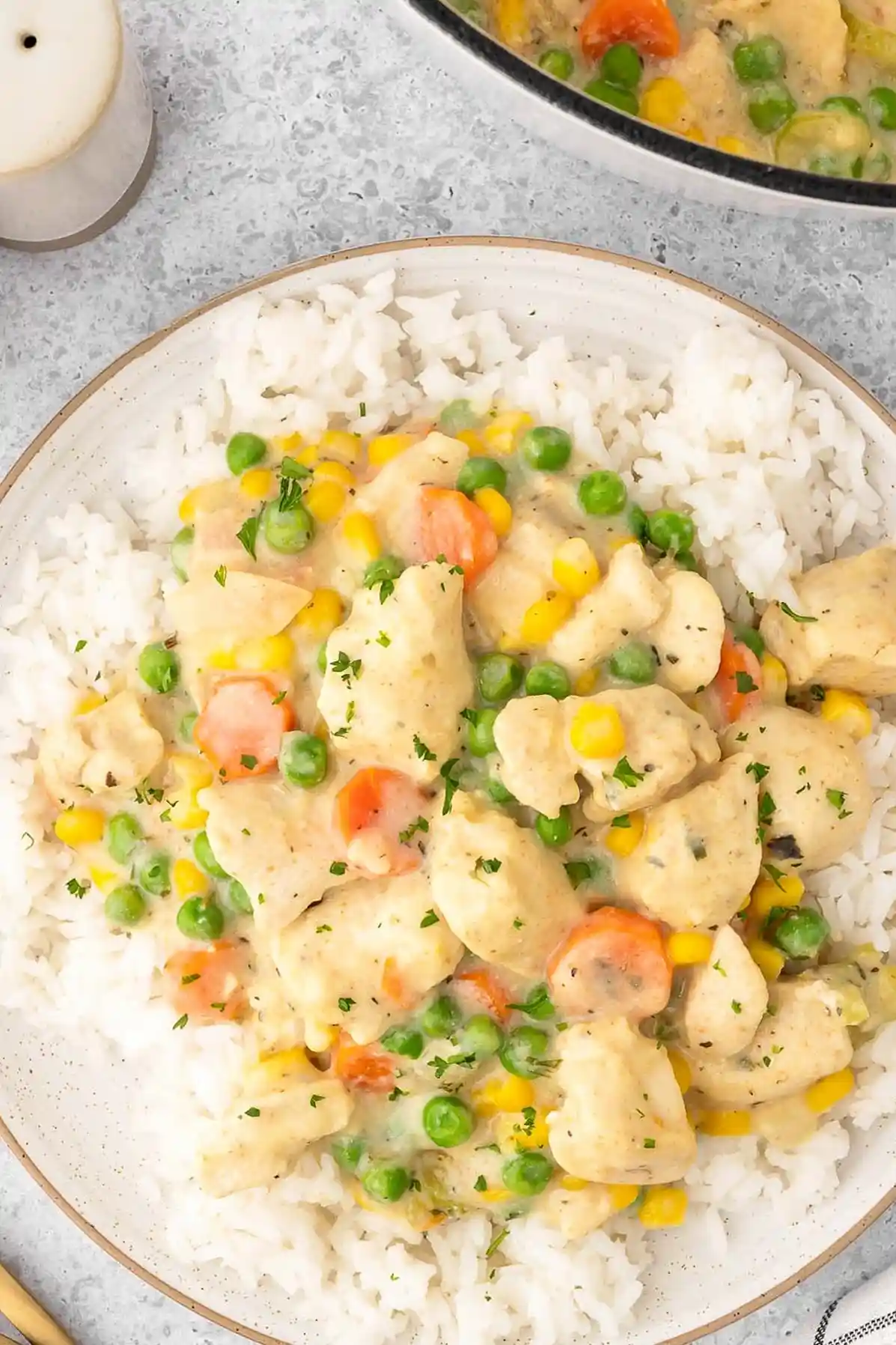
This high-protein meal offers the comfort of a classic pot pie without the heavy pastry crust. It is a streamlined one-pot recipe that combines lean protein and fresh vegetables in a creamy, savory sauce.
List of ingredients
- 1 tablespoon olive oil – used for browning the meat.
- 2 lbs chicken breasts – cut into 1/2 inch cubes for even cooking.
- 1/2 cup diced onion – provides a foundational aromatic base.
- 1 tablespoon minced garlic – approximately 3 cloves for depth.
- 2 cups sliced carrots – cut into small circles for texture.
- 3/4 cup diced celery – roughly 3 stalks for classic flavor.
- 1/2 teaspoon salt – to enhance overall savory notes.
- 1/4 teaspoon black pepper – for a subtle spicy kick.
- 1 teaspoon dried parsley – adds a mild herbal brightness.
- 1 teaspoon dried rosemary – provides a woody, pine-like aroma.
- 1/2 teaspoon dried thyme – adds an earthy, lemony quality.
- 1/2 teaspoon dried basil – gives a sweet, peppery finish.
- 1/3 cup whole wheat flour – acts as the thickening agent (substitute GF 1:1 or tapioca flour).
- 1 1/2 cups low sodium chicken broth – the liquid base for the sauce.
- 1 1/2 cups room temperature milk – use regular dairy or a nondairy alternative.
- 1 1/2 cups peas – adds color and sweetness.
- 1 1/2 cups corn – adds texture and natural sweetness.
step-by-step instructions
- Brown the Chicken: Heat olive oil in a large pan over medium-high heat. Add the cubed chicken and cook for 10 minutes until the meat is lightly browned.
- Sauté the Aromatics: Add the diced onion, minced garlic, sliced carrots, and diced celery to the pan. Sauté these vegetables for another 10 minutes until softened.
- Create the Base: Stir in the dried parsley, rosemary, thyme, basil, flour, and chicken broth. Cook for about 5 minutes, stirring well, until the mixture begins to bubble and thicken.
- Thicken the Sauce: Slowly pour in the room temperature milk while stirring constantly. Continue to cook as the sauce reaches a creamy consistency.
- Final Addition: Stir in the peas and corn until they are thoroughly coated and heated through.
- Serve: Portion the mixture into bowls and serve immediately, either on its own or over a bed of cooked rice.
Ingredient Substitutions and Alternatives
Use Boneless Chicken Thighs for More Moisture
While chicken breasts are lean and high in protein, boneless skinless thighs offer a richer flavor and more moisture. Thighs are less likely to dry out during the browning process. Ensure they are trimmed of excess fat and cubed to the same size as the breasts for consistent cooking.
Switch to Tapioca Flour for Gluten-Free Needs
If you are avoiding gluten, tapioca flour is an excellent substitute for whole wheat flour. It provides a smooth, thick consistency without the grittiness sometimes found in other gluten-free blends. Avoid using xanthan gum as a primary thickener, as it can create an unpleasant gummy texture in pot pie filling.
Incorporate Plant-Based Milk for Dairy-Free Diets
Unsweetened almond, soy, or oat milk can be used in place of regular dairy milk. These alternatives maintain the creamy appearance of the sauce without adding dairy. Ensure the milk is unsweetened to avoid altering the savory flavor profile of the dish.
Replace Fresh Veggies with a Mixed Frozen Blend
For faster preparation, you can use a frozen mixed vegetable bag containing peas, carrots, and corn. If doing this, omit the fresh carrots and celery from the sauté step. Stir the frozen blend in at the final stage of cooking to prevent the vegetables from overcooking.
Utilize Avocado Oil for a Higher Smoke Point
If you prefer not to use olive oil, avocado oil is a great alternative due to its high smoke point. Ghee or unsalted butter can also be used for a more traditional, buttery taste. Use a similar quantity to ensure the chicken browns without sticking to the pan.
Professional Cooking Techniques
Mastering the Chicken Browning Process
To get the best sear on the chicken, ensure the pan is hot before adding the oil. Do not overcrowd the pan, as this will cause the meat to steam rather than brown. Cooking the chicken in batches if necessary ensures a golden-brown exterior which adds deeper flavor to the final sauce.
Preventing Mushy Frozen Vegetables
Frozen peas and corn can release a lot of water if added too early. Thaw the vegetables ahead of time and drain them thoroughly in a colander. Adding them only at the very end of the process preserves their bright color and firm texture.
Developing a Stable Roux
The combination of fat from the oil and chicken with the flour creates a roux. Whisking the chicken broth in slowly prevents lumps from forming in the sauce. Continuous stirring during this phase ensures the flour is fully hydrated and the sauce is silky smooth.
Managing Sauce Consistency with Temperature
Adding milk at room temperature prevents the sauce from breaking or curdling. Cold milk can drop the pan temperature too quickly, which may lead to uneven thickening. If the sauce is too thin, allow it to simmer for another two to three minutes.
Optimizing Herb Infusion
Dried herbs release their oils more effectively when toasted slightly in fat. Adding the dried parsley, rosemary, thyme, and basil just before the broth allows them to bloom in the pan. This maximizes the aromatic profile of the dish compared to adding them at the end.
Serving and Pairing Suggestions
Pairing with Whole Grains
Serving this crustless pot pie over brown rice or quinoa adds extra fiber and heartiness. The grains absorb the creamy sauce, making the meal more filling. For a lighter option, use cauliflower rice to keep the carbohydrate count low.
Adding a Low-Carb Mash Base
Instead of rice, serve the chicken mixture over a bed of mashed cauliflower or garlic mashed potatoes. This mimics the experience of a traditional pot pie by adding a starchy or creamy base. Ensure the mash is seasoned simply with salt and pepper to not overpower the pot pie.
Creating a Crispy Oven Topping
If you miss the crunch of a crust, transfer the finished mixture to a baking dish. Sprinkle a layer of panko breadcrumbs or almond meal mixed with a little melted butter on top. Place the dish under the broiler for 3 to 5 minutes until the top is golden brown.
Enhancing the Dish with Fresh Garnishes
Finish the dish with a sprinkle of freshly chopped parsley or chives before serving. A squeeze of fresh lemon juice just before eating can cut through the richness of the cream sauce. This adds a bright, acidic note that balances the savory herbs.
Storage and Preservation Guide
Refrigeration for Weekly Meal Prep
Store leftovers in an airtight container in the refrigerator for up to four days. Because the sauce contains milk, ensure it is cooled slightly before sealing to prevent condensation. This recipe is an excellent option for healthy weekday lunches.
Freezing for Long-Term Storage
This pot pie can be frozen for up to three months in freezer-safe containers. Leave a small amount of space at the top of the container to allow for expansion during freezing. To maintain quality, avoid freezing the dish if you used a dairy-free milk that tends to separate.
Thawing Frozen Portions Safely
The safest way to thaw the pot pie is to move it from the freezer to the refrigerator 24 hours before eating. Alternatively, you can thaw it in the microwave on a defrost setting. Avoid leaving the frozen meal on the counter at room temperature to prevent bacterial growth.
Effective Reheating Methods
Stovetop Reheating for Best Texture
Place the leftovers in a small saucepan over medium-low heat. Add a splash of chicken broth or milk to loosen the sauce, as it will thicken further in the fridge. Stir gently and heat until simmering to restore the creamy consistency.
Quick Microwave Reheating
Transfer the portion to a microwave-safe bowl and cover it with a damp paper towel. Heat in 60-second intervals, stirring in between to ensure the chicken and vegetables are heated evenly. This method is fastest but may result in a slightly thicker sauce.
Oven Warming for Large Batches
If reheating a large amount, place the mixture in an oven-safe dish and cover it tightly with foil. Heat at 350 degrees Fahrenheit (175 degrees Celsius) for about 15 to 20 minutes. The foil prevents the sauce from evaporating and keeps the chicken tender.
Troubleshooting and Fixes
Fixing a Watery Sauce
If the filling is too thin, it likely needs more time to simmer or the vegetables were not drained. Continue to cook the mixture on medium heat, stirring frequently, to reduce the liquid. If it remains watery, whisk in a small slurry of one teaspoon of flour mixed with a tablespoon of water.
Adjusting an Overly Thick Sauce
If the sauce becomes too thick or paste-like, it may have simmered for too long. Stir in additional chicken broth or milk one tablespoon at a time until the desired consistency is reached. Keep the heat low while doing this to avoid overcooking the vegetables.
Correcting Under-Seasoned Filling
The saltiness of the dish depends heavily on the sodium content of your chicken broth. Taste the sauce after adding the milk and adjust with salt and black pepper. If the flavors feel flat, a small pinch of extra dried thyme can enhance the savory depth.
Avoiding Burnt Garlic and Onions
Garlic burns much faster than onions and carrots. If you find your garlic is browning too quickly, add it during the last two minutes of the vegetable sauté phase. Using a non-stick pan also helps distribute heat more evenly to prevent hot spots.
Frequently Asked Questions
Can I make this recipe in a slow cooker?
This specific recipe is designed for the stovetop to properly brown the meat and create a roux. While you can cook chicken and vegetables in a slow cooker, the thickening process with flour and milk is best handled in a pan to avoid a grainy texture.
How can I increase the protein content further?
To boost protein, you can increase the amount of chicken breasts or serve the dish over quinoa instead of rice. Some users also stir in a tablespoon of nutritional yeast for an extra protein hit and a cheesy flavor profile.
Can I use pre-cooked or rotisserie chicken?
Yes, you can use pre-cooked chicken to save time. In this case, omit the first browning step, sauté the vegetables, create the sauce, and then stir in the cooked chicken along with the peas and corn at the end.
What is the best type of pan for this meal?
A large, deep non-stick skillet or a Dutch oven is ideal for this recipe. These pans allow for efficient browning of the chicken and provide enough room to stir the sauce and vegetables without splashing.
Print
High Protein Crustless Chicken Pot Pie
- Total Time: 35 minutes
- Yield: 4 servings
- Diet: High Protein
Description
This Crustless Chicken Pot Pie Recipe is so easy to make! Loaded with tender chicken and veggies – this is the perfect one pot meal!
Ingredients
- 1 tablespoon olive oil
- 2 lbs chicken breasts (cubed in ½ inch squares)
- ½ cup diced onion
- 1 tablespoon minced garlic
- 2 cups sliced carrots
- ¾ cup diced celery
- ½ teaspoon salt
- ¼ teaspoon black pepper
- 1 teaspoon dried parsley
- 1 teaspoon dried rosemary
- ½ teaspoon dried thyme
- ½ teaspoon dried basil
- 1/3 cup whole wheat flour
- 1 ½ cups low sodium chicken broth
- 1 ½ cup room temperature milk
- 1 ½ cup peas
- 1 ½ cup corn
Instructions
- Step: In a large pan, heat olive oil over medium high heat. Add cubed chicken to the pot and cook for 10 minutes until lightly browned.
- Step: Once the chicken has cooked, add onion, garlic, carrots and celery. Sauté for 10 minutes.
- Step: Add dried spices, flour and chicken broth to the pan. Stir well. Cook for 5 minutes or until the mixture starts to bubble and thicken.
- Step: Once bubbling, slowly add in room temperature milk, stirring constantly as the mixture continues to thicken.
- Step: Stir in peas and corn.
- Step: Serve as is or over cooked rice.
Notes
Sauté the fresh vegetables to ensure they cook through. To prevent frozen veggies from becoming mushy, thaw and drain them well before adding at the end. Whisk in the broth slowly to incorporate it into the roux and bring the filling to a boil before adding milk.
- Prep Time: 10 minutes
- Cook Time: 25 minutes
- Category: Main Course
- Method: Stovetop
- Cuisine: American
Nutrition
- Serving Size: 1.5 cups
- Calories: 506 kcal
- Sugar: 12 g
- Sodium: 555 mg
- Fat: 11 g
- Saturated Fat: 2 g
- Unsaturated Fat: 7 g
- Trans Fat: 0.03 g
- Carbohydrates: 43 g
- Fiber: 8 g
- Protein: 59 g
- Cholesterol: 150 mg