
This recipe provides a fast and efficient way to prepare a comforting chicken noodle soup in under an hour. It uses basic pantry staples to create a hearty meal that is perfect for cold weather or recovery.
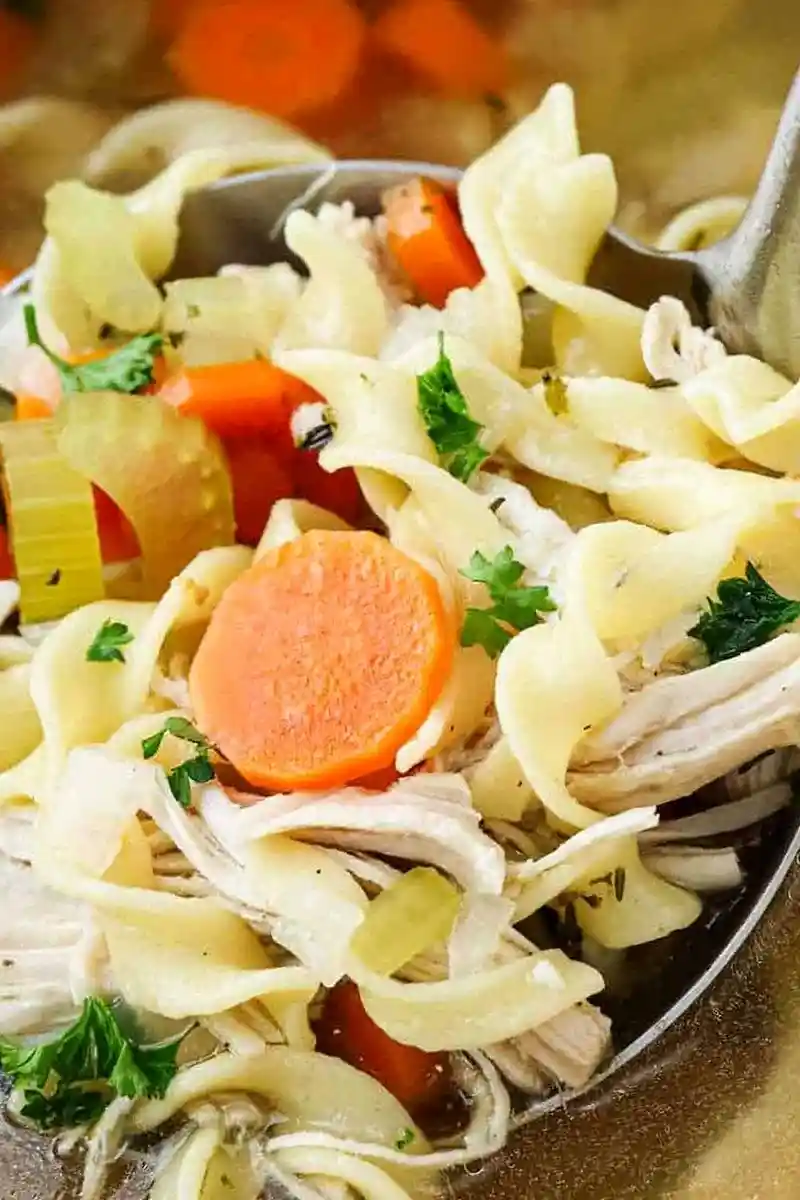
List of ingredients
- 2 boneless skinless chicken breasts – provides the primary lean protein.
- 8 cups chicken broth – the flavorful liquid base for the soup.
- 4 celery stalks (chopped) – adds a classic aromatic crunch.
- 4 whole carrots (peeled and chopped) – adds sweetness and color.
- 1/2 onion (diced) – provides a foundational savory flavor.
- 1/4 teaspoon dried thyme leaves – adds an earthy, herbal note.
- 1 teaspoon minced garlic – enhances the depth of the broth.
- 1/2 teaspoon salt – balances and enhances all flavors.
- 1/2 teaspoon pepper – adds a mild spicy warmth.
- 2 Bay Leaves – infuses the soup with a subtle floral aroma.
- 2 cups Egg noodles – the traditional thick pasta component.
- 2 cups water – used to adjust the consistency of the broth.
step-by-step instructions
- Combine base ingredients: Add 2 boneless skinless chicken breasts, 8 cups chicken broth, 4 chopped celery stalks, 4 peeled and chopped carrots, and 1/2 diced onion to a large stock pot or Dutch oven.
- Initial boil: Bring the mixture to a boil over medium-high heat.
- Simmer chicken: Once boiling, reduce the heat to low, cover the pot, and cook for 20-30 minutes until the chicken is fully cooked and reaches an internal temperature of 165°F.
- Prepare chicken: Remove the chicken breasts from the pot and shred them using two forks.
- Return chicken: Place the shredded chicken back into the stock pot.
- Season broth: Stir in 1/4 teaspoon dried thyme leaves, 1 teaspoon minced garlic, 1/2 teaspoon salt, 1/2 teaspoon pepper, 2 bay leaves, and 2 cups water.
- Re-boil: Increase the heat and bring the soup back to a boil.
- Add pasta: Stir in 2 cups of egg noodles.
- Final cook: Cook over medium-high heat for 8-10 minutes, stirring occasionally, until the noodles are tender.
- Clean up: Remove and discard the 2 bay leaves.
- Serve: Serve immediately while warm.
Pro Tips for Faster Preparation
Use a Food Processor for Uniform Dicing
A food processor with a pulse function can significantly reduce the time spent chopping carrots, celery, and onions. Process the vegetables in small batches to avoid pureeing them into a paste. This ensures the pieces remain distinct and cook evenly throughout the process.
Prep and Freeze Vegetable Mixes
You can dice a large quantity of carrots, celery, and onions at one time and store them in freezer-safe bags. Divide the vegetables into pre-measured portions for this specific recipe. When you are ready to cook, simply dump the frozen mix directly into the pot to save prep time.
Utilize Pre-cooked Chicken
To save the 30 minutes spent poaching the chicken, use pre-cooked rotisserie chicken or leftover grilled breasts. Simply skip the first few simmering steps and add the shredded meat during the seasoning phase. This reduces the total cooking time to the time it takes to boil the noodles.
Ingredient Substitutions and Customizations
Swap Chicken Breasts for Chicken Thighs
Using boneless skinless chicken thighs instead of breasts adds more flavor and a richer texture to the soup. Thighs are less likely to dry out during the simmering process. Ensure they are trimmed of excess fat to keep the broth clear.
Replace Egg Noodles with Gluten-Free Alternatives
For those avoiding gluten, substitute egg noodles with brown rice pasta or chickpea noodles. Be mindful that gluten-free pastas often have different cooking times. Check the package instructions and add them slightly later to prevent them from becoming too soft.
Use Diced Potatoes or Rice instead of Pasta
Diced gold or red potatoes can be added during the initial simmer for a heartier, rustic feel. Alternatively, stir in pre-cooked white or brown rice at the end. These options are excellent for those who prefer a grain-based soup over pasta.
Try Different Dried Herbs for Variety
If you lack thyme, rosemary or oregano are excellent alternatives that pair well with chicken. Basil provides a slightly sweeter, more aromatic profile. Use the same measurement of 1/4 teaspoon to maintain the balance of flavors.
Substitute Fresh Garlic with Garlic Powder
When fresh minced garlic is unavailable, garlic powder is a convenient substitute. Use 1/4 teaspoon of garlic powder for every 1 teaspoon of fresh minced garlic. Stir it in with the other dried spices for an even distribution of flavor.
Use Baby Carrots for Faster Prep
Baby carrots eliminate the need for peeling and reduce chopping time. However, since baby carrots are often thicker than sliced whole carrots, slice them into rounds. This ensures they cook at the same rate as the celery.
Creative Variations for Enhanced Flavor
Create a Creamy Texture with Heavy Cream
For a richer, creamy chicken noodle soup, stir in one cup of heavy cream or whole milk during the final 10 minutes of cooking. Keep the heat on low to prevent the cream from curdling. This transforms the clear broth into a velvety sauce.
Boost Nutrition with Fresh Spinach or Kale
Adding two cups of fresh baby spinach or chopped kale increases the nutritional value of the meal. Stir these greens into the soup during the last 2 minutes of cooking. The residual heat will wilt the leaves without overcooking them.
Add Fresh Lemon Juice for Brightness
A squeeze of half a fresh lemon added just before serving cuts through the richness of the broth. The acidity brightens the overall flavor profile and highlights the herbal notes of the thyme. Avoid boiling the lemon juice to keep the flavor fresh.
Incorporate Extra Root Vegetables
Adding diced parsnips or turnips along with the carrots adds a complex, earthy depth to the soup. These vegetables should be added at the same time as the carrots and celery. They provide extra bulk and a variety of textures.
Proper Storage and Reheating Methods
Store Leftovers in Airtight Containers
Place leftover soup in airtight glass or plastic containers once it has cooled to room temperature. Store them in the refrigerator for up to 3 to 4 days. Using individual portion containers makes it easier to take the soup for lunch.
Freeze the Soup Base Without Noodles
To freeze this soup, omit the noodles during the initial cooking process. Noodles absorb liquid and break down when frozen, which leads to a mushy texture upon reheating. Freeze the chicken and vegetable broth, then add fresh noodles when you reheat the dish.
Reheat Gently on the Stovetop
Reheating on the stove over medium-low heat is the best way to maintain the quality of the ingredients. Add a small splash of water or extra broth if the soup has thickened in the fridge. Stir gently to avoid breaking the noodles.
Prevent Noodles from Getting Mushy
If you plan to eat the soup over several days, cook the noodles separately and store them in a different container. Add a portion of noodles to each bowl and pour the hot soup over them. This prevents the pasta from soaking up all the broth during storage.
Recommended Side Dishes
Serve with Warm Dinner Rolls
Soft, buttery dinner rolls are an ideal accompaniment for dipping into the savory broth. Warm them in the oven for a few minutes before serving. The contrast between the soft bread and the liquid soup is highly satisfying.
Pair with Saltine Crackers
Classic saltine crackers add a salty crunch that complements the smooth texture of the noodles. You can crumble them directly into the soup or serve them on the side. They are a traditional pairing that enhances the savory profile of the dish.
Complement with Garlic Toast
Toasted baguette slices rubbed with garlic and butter provide a robust flavor contrast. Bake them at 375°F until golden brown and crisp. This adds a toasted element that balances the softness of the boiled vegetables.
Troubleshooting Common Issues
Adjusting the Broth Concentration
If the soup becomes too thick after the noodles cook, stir in an additional 1/2 cup of water or chicken broth. This restores the desired soup-to-solid ratio. Always adjust the consistency right before serving.
Fixing Overcooked Noodles
If the noodles become too soft, there is no way to reverse the process, but you can balance the texture. Adding a few fresh, crisp vegetables or a squeeze of lemon can distract from the softness. In the future, cook the noodles for 1-2 minutes less than the recipe suggests.
Balancing Saltiness in the Broth
If the broth tastes too salty due to the store-bought chicken stock, add a peeled, halved potato and simmer it for 10 minutes. The potato will absorb some of the excess salt. Alternatively, stir in a small amount of unsalted water to dilute the concentration.
Frequently Asked Questions
Do I need to cook the chicken before adding it?
In this specific recipe, the chicken is cooked directly in the broth, which poaches the meat and keeps it tender. If you prefer, you can use pre-cooked chicken, but simmering it from raw allows the chicken to flavor the broth more deeply.
Can I cook the noodles separately?
Yes, cooking the noodles in a separate pot of salted water is a great option. This is especially useful if you are preparing the soup in advance or plan to freeze it. Just combine the cooked noodles with the hot broth in individual bowls.
Is it possible to make this in a slow cooker?
This recipe can be adapted for a slow cooker by adding all ingredients except the noodles and water. Cook on low for 6-8 hours or high for 3-4 hours, then shred the chicken and add the noodles for the final 20 minutes of cooking.
How long does the soup last in the fridge?
Homemade chicken noodle soup typically stays fresh in the refrigerator for 3 to 4 days. Ensure the container is airtight to prevent the soup from absorbing other odors in the fridge. Always reheat it to an internal temperature of 165°F before eating.
Print
Quick and Easy Homemade Chicken Noodle Soup
- Total Time: 50 minutes
- Yield: 4 servings
- Diet: General
Description
Your entire family will love this easy homemade chicken noodle soup recipe!
Ingredients
- 2 boneless skinless chicken breasts
- 8 cups chicken broth
- 4 celery stalks (chopped)
- 4 whole carrots (peeled and chopped)
- 1/2 onion (diced)
- 1/4 teaspoon dried thyme leaves
- 1 teaspoon minced garlic
- 1/2 teaspoon salt
- 1/2 teaspoon pepper
- 2 Bay Leaves
- 2 cups Egg noodles
- 2 cup water
Instructions
- Step: Add 2 boneless skinless chicken breasts, 8 cups chicken broth, 4 chopped celery stalks, 4 peeled and chopped carrots, and ½ diced onion to a large stock pot or Dutch oven.
- Step: Bring the mixture to a boil over medium-high heat.
- Step: Once boiling, reduce the heat to low, cover, and cook for 20-30 minutes until the chicken is fully cooked and reaches an internal temperature of 165°F.
- Step: Remove the chicken from the pot and shred it with two forks.
- Step: Return the shredded chicken to the stock pot.
- Step: Stir in ¼ teaspoon dried thyme leaves, 1 teaspoon minced garlic, ½ teaspoon salt, ½ teaspoon pepper, 2 bay leaves, and 2 cups water.
- Step: Increase the heat and bring the soup back to a boil.
- Step: Stir in 2 cups egg noodles.
- Step: Cook over medium-high heat for 8-10 minutes, stirring occasionally, until the noodles are tender.
- Step: Remove and discard the 2 bay leaves.
- Step: Serve immediately while warm and enjoy.
Notes
Use a food processor to dice vegetables for efficiency. You can substitute chicken breasts with thighs or rotisserie chicken. For a creamy version, stir in heavy cream or whole milk during the last 5-10 minutes of cooking.
- Prep Time: 10 minutes
- Cook Time: 40 minutes
- Category: Soup
- Method: Stovetop
- Cuisine: American
Nutrition
- Serving Size: 1 serving
- Calories: 199 kcal
- Sugar: 6 g
- Sodium: 2156 mg
- Fat: 3 g
- Saturated Fat: 1 g
- Unsaturated Fat: 2 g
- Trans Fat: 0.02 g
- Carbohydrates: 23 g
- Fiber: 3 g
- Protein: 19 g
- Cholesterol: 62 mg