
This hearty beef ragu is a comforting Italian-style meal that simplifies dinner using a slow cooker. The meat becomes incredibly tender and shreds easily into a rich tomato sauce.
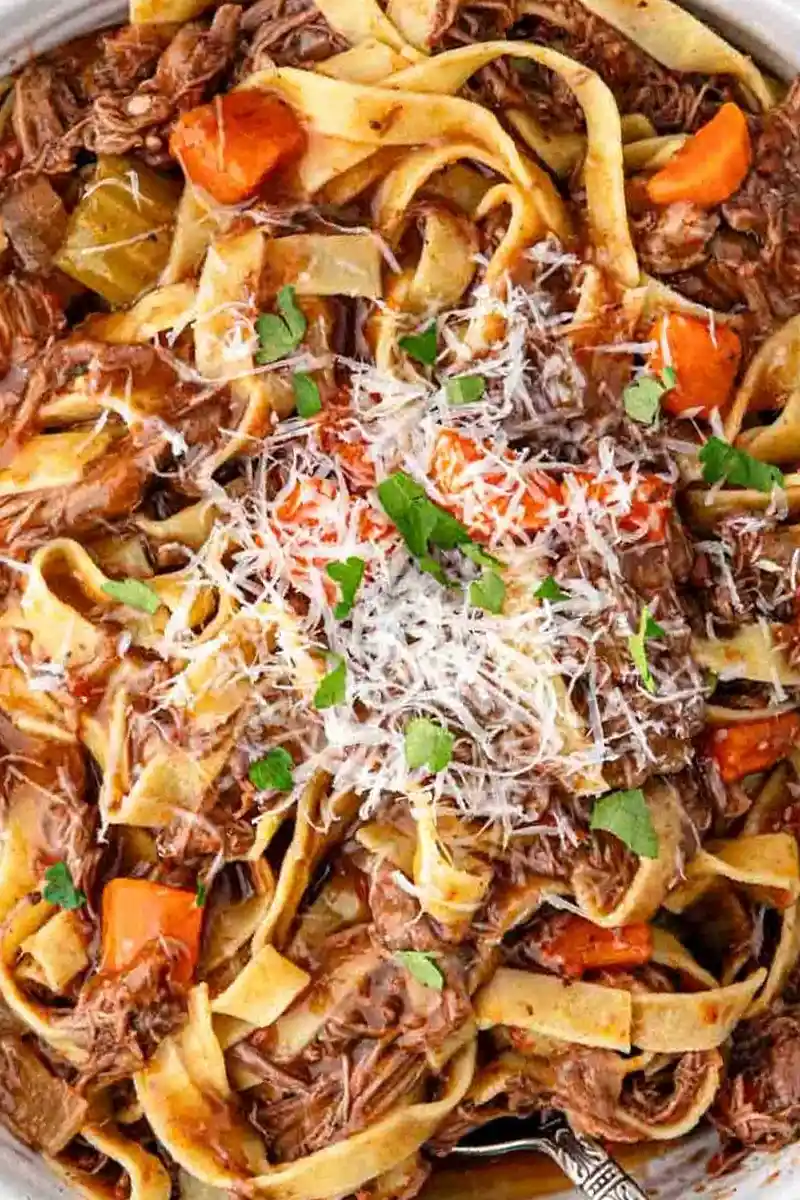
List of ingredients
- 2 pounds chuck roast – a marbled cut that tenderizes well.
- 1 teaspoon dried oregano – adds an earthy, herbal note.
- 1 teaspoon dried basil – provides a classic Italian aroma.
- 1/2 teaspoon dried thyme leaves – adds a subtle woodsy flavor.
- 1 tablespoon minced garlic – provides a sharp, savory base.
- 1 large onion, diced – adds sweetness and depth to the sauce.
- 2 medium carrots, peeled and diced – adds natural sweetness and texture.
- 2 celery stalks, chopped – contributes a salty, aromatic quality.
- 1 can crushed tomatoes (28 ounces) – the primary base for the rich sauce.
- 1 1/2 cups beef broth – provides moisture and enhances the meat flavor.
- Salt and pepper, to taste – essential for balancing all other flavors.
- 8 ounces pasta (such as tagliatelle, pappardelle, or fettuccine) – cooked according to the package directions.
step-by-step instructions
- Season the meat: Rub the 2 lbs of chuck roast thoroughly with salt, pepper, 1 tsp oregano, 1 tsp basil, and 1/2 tsp thyme on all sides.
- Layer vegetables: Place 1 Tbsp minced garlic, 1 diced onion, 2 diced carrots, and 2 chopped celery stalks at the bottom of the crock pot to create a flavor bed.
- Position the roast: Place the seasoned chuck roast directly on top of the vegetable layer.
- Add liquids: Pour 1 1/2 cups of beef broth around the meat and spoon the 28 oz can of crushed tomatoes over the top of the roast.
- Slow cook: Cover the pot and cook on the low setting for 8 hours or on the high setting for 4 to 5 hours until the beef is fork-tender.
- Shred the beef: Carefully remove the roast from the pot and shred it using two forks, removing any large pieces of excess fat.
- Combine: Return the shredded beef to the slow cooker and stir in 8 oz of cooked pasta until well combined.
- Final touch: Taste the sauce and adjust salt or pepper if needed, then serve while hot.
Selecting the Best Beef for Slow Cooking
Why Chuck Roast is the Ideal Choice
Chuck roast comes from the shoulder area of the cow and contains a high amount of connective tissue and marbling. During the long, slow cooking process, the collagen breaks down into gelatin. This results in meat that is exceptionally tender and a sauce that has a naturally silky consistency.
Using Brisket as a Substitute
Beef brisket is another excellent option for a ragu because it is a tough cut that benefits from moist heat. While it has a different grain than chuck roast, it shreds beautifully after several hours. Ensure you trim excess exterior fat to keep the sauce from becoming too oily.
Working with Round Roast
Round roast is a leaner option compared to chuck or brisket. Because it has less fat, it can dry out more quickly if overcooked. If using this cut, ensure the meat is fully submerged in the broth and tomatoes to maintain moisture throughout the cooking cycle.
Customizing Your Ragu Sauce
Using Tomato Paste for Depth
For a thicker, more concentrated tomato flavor, stir in two tablespoons of tomato paste before starting the slow cooker. This adds a rich, umami quality that balances the acidity of the crushed tomatoes. It also helps the sauce cling better to the pasta noodles.
Integrating Fresh Herbs
While dried herbs are convenient, adding fresh parsley or basil at the very end enhances the brightness of the dish. Stir in chopped fresh herbs just before serving to keep their color vibrant. Fresh rosemary can also be added during the cooking process for a more robust aroma.
Substituting Beef Stock for Broth
Using a high-quality beef stock instead of broth typically provides a more intense meat flavor. Stock is made from bones and connective tissue, offering a denser profile than broth. This is a great way to elevate the richness of the ragu without adding extra ingredients.
Adjusting the Vegetable Mix
The combination of onion, carrot, and celery is a classic mirepoix. You can add diced mushrooms to increase the earthy flavor and add a meatier texture to the sauce. Finely diced bell peppers can also be added for a slight sweetness and extra color.
Pasta Selection and Preparation
Choosing Wide Noodles for Heavy Sauces
Ragu is a chunky sauce, which makes wide noodles like pappardelle or tagliatelle the best pairing. These wide surfaces provide more area for the shredded beef and thick sauce to adhere to. This ensures you get a balanced bite of meat and pasta in every forkful.
Cooking Pasta Al Dente
Always cook your pasta for 1 to 2 minutes less than the package instructions suggest. Since the pasta is stirred into the hot ragu, it will continue to cook from the residual heat. Cooking it al dente prevents the noodles from becoming mushy or overcooked in the final dish.
Preventing Pasta from Sticking
After draining the cooked pasta, toss it with a small amount of olive oil if you are not adding it to the sauce immediately. This prevents the noodles from clumping together. Once added to the ragu, the sauce will provide all the necessary lubrication.
Pro Tips for Maximum Flavor
Seasoning Both Sides of the Meat
Rubbing the salt and dried herbs onto both the top and bottom of the roast ensures consistent flavor. This prevents the bottom of the meat, which sits on the vegetables, from tasting bland. Thorough seasoning creates a savory crust that enhances the overall profile of the sauce.
Removing Excess Fat During Shredding
When you remove the beef to shred it, you will notice some larger clumps of rendered fat. Use your forks to discard these pieces before returning the meat to the pot. This keeps the sauce clean and prevents a layer of oil from forming on the surface.
Thickening a Thin Sauce
If the sauce is too watery after cooking, create a cornstarch slurry by mixing equal parts cornstarch and cold water. Stir this mixture into the slow cooker and cook on high for another 15 to 20 minutes. This will create a glossy, thick glaze that coats the meat perfectly.
Optimizing Slow Cooker Settings
Whenever possible, use the low setting for a longer duration rather than the high setting. Slow cooking at a lower temperature allows the connective tissues to melt more gradually. This results in a more tender shred and a more developed flavor profile.
Serving and Pairing Ideas
Adding a Garnish of Parmesan Cheese
Freshly grated Parmesan or Pecorino Romano cheese adds a salty, nutty contrast to the rich beef. Sprinkle the cheese directly onto the plated pasta just before serving. The heat from the ragu will slightly melt the cheese, creating a creamy finish.
Pairing with Homemade Garlic Bread
A side of toasted garlic bread is perfect for scooping up any remaining sauce from the plate. Use a baguette or Italian loaf brushed with garlic butter and toasted until golden brown. The crunch of the bread complements the softness of the shredded beef.
Including a Side of Green Vegetables
To balance the richness of the meat and pasta, serve the dish with steamed broccoli or sautéed spinach. The bitterness of green vegetables cuts through the heavy fats of the ragu. A simple side salad with a lemon vinaigrette also works well to cleanse the palate.
Storage and Preservation
Refrigeration Guidelines
Store leftover beef ragu in an airtight container in the refrigerator for up to three days. Ensure the container is cooled slightly before sealing to prevent excessive condensation. The flavors often improve the next day as the spices continue to meld.
Freezing the Ragu for Later
The beef and sauce mixture freezes exceptionally well for several months. For the best quality, freeze the ragu separately from the pasta. This prevents the pasta from becoming soggy and overcooked during the freezing and thawing process.
Proper Thawing Procedures
Thaw frozen ragu in the refrigerator overnight to ensure even temperature distribution. Avoid thawing meat dishes on the counter to prevent bacterial growth. Once thawed, the sauce can be reheated on the stove or in a slow cooker.
Reheating Instructions
Stovetop Reheating Method
Place the ragu in a Dutch oven or saucepan over medium-low heat. Add a small splash of beef broth or water to loosen the sauce, as it tends to thicken in the fridge. Stir occasionally until the sauce is bubbling and heated through.
Using the Slow Cooker for Reheating
If you have a large amount of leftovers, place them back into the slow cooker on the low setting for 2 to 3 hours. This gentle heat restores the tenderness of the beef without scorching the bottom of the sauce. Stir occasionally to ensure even heating.
Microwave Reheating Tips
Heat the ragu in a microwave-safe bowl, covering it with a lid or damp paper towel. Heat in short 1-minute intervals, stirring in between each session. This prevents hot spots and ensures the beef is warmed evenly throughout.
Common Troubleshooting
What to Do if the Meat is Tough
If the beef does not shred easily, it likely needs more time to cook. Return it to the slow cooker for another hour on high or two hours on low. The collagen needs to reach a specific temperature to fully break down into gelatin.
Fixing an Overly Acidic Sauce
If the crushed tomatoes make the sauce taste too acidic, add a pinch of sugar or a small amount of grated carrot. The natural sugars neutralize the acidity of the tomatoes. Stir in a small amount of butter at the end to mellow out the flavor.
Managing a Pot That is Too Full
If your slow cooker is overflowing, transfer some of the liquid and vegetables to a separate pot. Simmer the excess on the stove to reduce it, then stir it back into the slow cooker once the meat is shredded. Never fill a slow cooker past the maximum fill line for safety.
Frequently Asked Questions
Can I use a different meat instead of beef?
Yes, you can use lamb shoulder or pork-free alternatives like veal. Lamb provides a stronger, gamier flavor that works well with these herbs. Adjust the cooking time based on the specific cut of meat used.
How long does the cooked ragu last?
When stored in an airtight container in the refrigerator, the ragu stays fresh for 3 to 4 days. If frozen, it can be kept for 3 to 6 months without losing significant flavor.
Can I add spinach or kale to the sauce?
Yes, stirring in fresh spinach or chopped kale during the last 10 minutes of cooking is a great way to add nutrients. The residual heat will wilt the greens without overcooking them, adding a nice color contrast to the dish.
Is this dish suitable for meal prep?
This is an excellent meal prep recipe because the sauce tastes better as it sits. Portion the ragu and cooked pasta into separate containers to maintain the texture of the noodles until you are ready to eat.
Print
Slow Cooker Beef Ragu
- Total Time: 8 hours 30 minutes
- Yield: 8 servings
- Diet: General
Description
Crock Pot Beef Ragu Recipe has everything you need for a great dinner. This dish is loaded with lots of beef, tomatoes, pasta and more for the best meal.
Ingredients
- 2 pounds chuck roast
- 1 teaspoon dried oregano
- 1 teaspoon dried basil
- 1/2 teaspoon dried thyme leaves
- 1 tablespoon minced garlic
- 1 large onion, diced
- 2 medium carrots, peeled and diced
- 2 celery stalks, chopped
- 1 can (28 ounces) crushed tomatoes
- 1 1/2 cups beef broth
- salt and pepper, to taste
- 8 ounces pasta (such as tagliatelle, pappardelle, or fettuccine), cooked
Instructions
- Step 1: Season 2 lbs chuck roast with salt, pepper, 1 tsp oregano, 1 tsp basil, and ½ tsp thyme.
- Step 2: In a crock pot, add 1 Tbsp minced garlic, 1 diced onion, 2 diced carrots, and 2 chopped celery stalks.
- Step 3: Place the seasoned roast on top.
- Step 4: Pour in 1½ cups beef broth and add 1 (28 oz) can crushed tomatoes over the roast.
- Step 5: Cover and cook on low for 8 hours or high for 4–5 hours until tender.
- Step 6: Remove the beef, shred it, and return it to the crock pot.
- Step 7: Stir in 8 oz cooked pasta and mix well.
- Step 8: Adjust seasoning if needed and serve warm.
Notes
Chuck roast is ideal for tenderness. If the sauce is too thin, you can thicken it with a cornstarch slurry. Cook pasta al dente to prevent it from becoming mushy when mixed into the ragu.
- Prep Time: 15 minutes
- Cook Time: 8 hours 15 minutes
- Category: Main Course
- Method: Slow Cooking
- Cuisine: Italian
Nutrition
- Serving Size: 1 serving
- Calories: 345 kcal
- Sugar: 5 g
- Sodium: 341 mg
- Fat: 14 g
- Saturated Fat: 6 g
- Unsaturated Fat: 8 g
- Trans Fat: 1 g
- Carbohydrates: 29 g
- Fiber: 3 g
- Protein: 27 g
- Cholesterol: 78 mg