
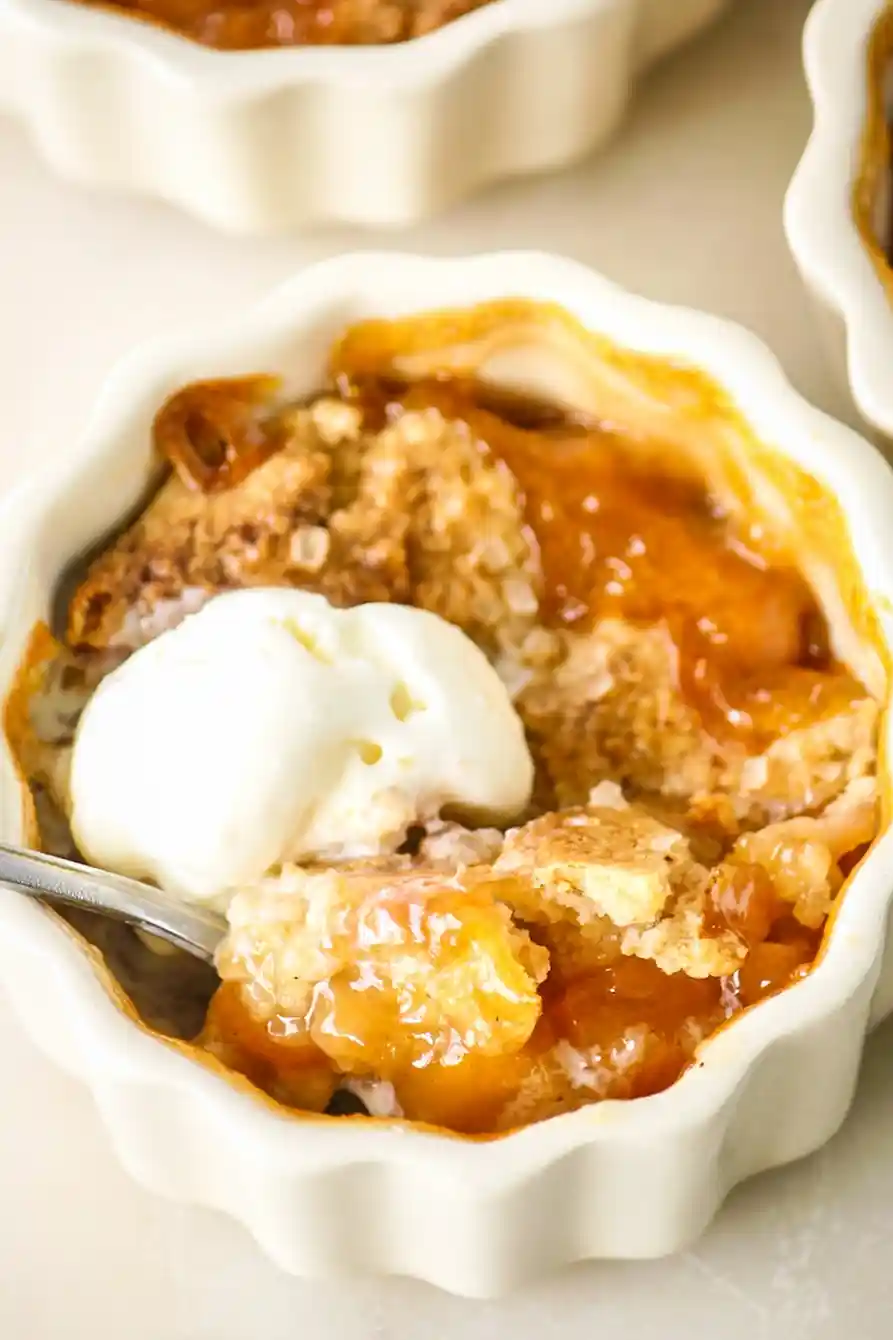
These individual peach cobblers feature a jammy fruit base and a tender, biscuit-style topping. They are perfectly portioned for single servings and bake up with a golden-brown finish.
List of ingredients
- 4 medium peaches, ripe but not super soft – sliced into bite-sized pieces.
- 2 tbsps soft brown sugar – provides a caramel flavor; white sugar is a suitable alternative.
- 1 tsp cornflour/cornstarch – used to thicken the peach juices.
- Pinch of cinnamon – adds warmth to the fruit filling.
- 1/3 cup all-purpose flour (40 gms) – the base for the biscuit topping.
- 1/4 tsp baking powder – ensures the topping rises and stays light.
- 2 tbsps caster sugar – for sweetness and texture in the dough.
- Pinch of salt – only necessary if using unsalted butter.
- 1 tbsp chilled butter, cut into pieces (15 gms) – creates a flaky, tender crust.
- 1 tbsp chilled cream – adds richness; milk can be used as a substitute.
- 1 tbsp cream – used for brushing the top for browning.
- 2 tsps granulated sugar – sprinkled on top for added crunch.
step-by-step instructions
- Prepare Oven and Dishes: Preheat your oven to 175 C. Have three ramekins (3.5 inches wide and 2 inches high) ready on a baking tray; do not grease them. If using a single 5 or 6 inch round baking dish instead, adjust the baking time accordingly.
- Prepare the Peaches: Peel the peaches if desired. Run a sharp knife around the center, twist and pull the halves apart, remove the stone, and slice the fruit into bite-sized pieces.
- Season the Fruit: In a bowl, combine the sliced peaches with brown sugar, cornflour, and cinnamon. Stir until the fruit is evenly coated, then divide the mixture among the three ramekins, filling them about two-thirds full. Let them sit briefly to allow the juices to release.
- Mix Dry Topping Ingredients: In a separate bowl, combine the flour, baking powder, caster sugar, and salt. Stir these ingredients together until well combined.
- Cut in the Butter: Add the chilled butter pieces to the flour mixture. Use your fingertips to rub the butter into the flour until the texture resembles coarse breadcrumbs.
- Form the Dough: Stir in the chilled cream until the mixture forms a soft dough. Avoid over-mixing; if the dough feels too dry, add a small amount of additional cream.
- Assemble the Cobbler: Pinch off small pieces of dough, lightly flatten them, and place them over the peaches. Ensure the dough is distributed evenly and is not too thick to allow for consistent cooking.
- Apply Finish: Brush the tops of the dough bits with the extra tablespoon of cream and sprinkle with granulated sugar.
- Initial Bake: Bake at 175 C for 20 minutes until the topping begins to turn a light brown color.
- Final Bake: Increase the oven temperature to 190 C and bake for another 15 to 20 minutes. The juices should bubble up to the top and the topping should be golden-brown.
- Cool and Serve: Remove from the oven and let the cobblers rest at room temperature for 30 minutes. This allows the juices to sink and thicken. Serve warm with a scoop of vanilla ice cream.
Optimizing Peach Selection and Preparation
Selecting the Ideal Ripeness
Choose peaches that give slightly when pressed but are not mushy. Overripe peaches release too much moisture, which can make the biscuit topping soggy. Firm-ripe fruit maintains its shape during the high-heat baking process.
Effective Peeling Techniques
To peel peaches easily, use the blanching method. Cut a small X in the bottom of each peach, plunge them into boiling water for 30 seconds, and immediately move them to an ice bath. The skins will slip off effortlessly without removing the fruit flesh.
Consistency in Fruit Slicing
Aim for uniform, bite-sized pieces to ensure even cooking. Slices that are too large may not soften completely, while pieces that are too small can break down into a jam-like consistency too quickly.
Mastering the Biscuit Topping
Maintaining Cold Butter Temperatures
Keep the butter chilled until the moment it is incorporated into the flour. Cold butter creates small pockets of steam during baking, which results in a flaky, tender texture rather than a dense, cookie-like crust.
The Rubbing-In Method
Use only your fingertips to incorporate the butter into the dry ingredients. The goal is to create coarse crumbs; over-working the butter into a smooth paste will eliminate the desired flakiness of the cobbler topping.
Managing Dough Hydration
Add the cream gradually to the flour mixture. Stop mixing as soon as the dough clumps together. Over-mixing develops gluten, which can make the topping tough instead of tender.
Baking and Temperature Precision
Ramekin Thermal Properties
Ceramic ramekins retain heat longer than glass or metal. This helps the peaches bubble and thicken, but it also means they stay hot for a long time. Always place them on a baking tray to stabilize them and make them easier to move.
The Purpose of Temperature Shifts
Starting at 175 C allows the fruit to heat through and the dough to set without burning. Increasing the heat to 190 C at the end caramelizes the sugars in the topping and forces the juices to bubble, creating the classic cobbler look.
Identifying the Perfect Doneness
The topping should be a deep golden brown, and the fruit juices should be visibly bubbling at the edges. If the topping is brown but the juices aren’t bubbling, give it another 5 minutes at the higher temperature.
Customizations and Flavor Variations
Adding Nutty Undertones
Replace one tablespoon of all-purpose flour with finely ground almond flour. This adds a subtle nuttiness that complements the sweetness of the peaches and improves the richness of the crust.
Alternative Sweeteners for Filling
While brown sugar is recommended for its caramel notes, maple syrup can be used as a replacement. Use two tablespoons of maple syrup and reduce the cream in the topping by a teaspoon to balance the extra moisture.
Incorporating Other Fruits
You can create a mixed-fruit cobbler by replacing half of the peaches with blackberries or blueberries. Ensure the other fruit is sliced to a similar size as the peaches to maintain consistent baking times.
Serving and Presentation Ideas
Optimal Ice Cream Pairings
Classic vanilla bean ice cream provides a cold contrast to the hot cobbler. For a more complex flavor, try salted caramel ice cream or a dollop of lightly sweetened mascarpone cheese.
Fresh Garnish Options
Add a thin slice of fresh peach or a small mint leaf on top of the ice cream for a professional presentation. A light dusting of powdered sugar over the edges of the ramekin also adds a clean, finished look.
Plating for Groups
Serve the ramekins on small wooden boards or coasters to protect your table from the heat. Providing a small side spoon for each guest allows them to scoop from the bottom to get a mix of fruit and crust.
Storage and Reheating Advice
Refrigeration Guidelines
Store leftover cobblers in the refrigerator in airtight containers for up to 4 days. Keep the topping covered to prevent it from drying out in the cold air.
Oven Reheating Method
To restore the crispness of the topping, reheat the cobbler in an oven at 175 C for about 10 minutes. This is the best method for maintaining the texture of the biscuit crust.
Microwave Reheating Tips
If using a microwave, heat on medium power for 45-60 seconds. Note that the topping will soften significantly when microwaved, losing its original crunch.
Troubleshooting Common Issues
Fixing a Soggy Topping
A soggy crust usually occurs if the peaches are too watery or the dough is too thin. To prevent this, ensure you use the full teaspoon of cornstarch and do not over-add cream to the dough.
Preventing Overflowing Juices
If the juices bubble over the sides of the ramekins, it is likely because the ramekins were filled too high. Leave at least one-third of the ramekin empty to accommodate the rise of the fruit and dough.
Addressing Burnt Topping Edges
If the edges of the topping brown too quickly, tent the ramekins loosely with aluminum foil. This protects the surface while allowing the center of the cobbler to finish cooking.
Frequently Asked Questions
Can I use frozen peaches?
Yes, you can use frozen peaches. Thaw them completely and drain any excess liquid before mixing them with the sugar and cornstarch to prevent the filling from becoming too watery.
What is the best substitute for cream?
Whole milk or a thick plant-based alternative like coconut cream can be used. If using milk, the topping may be slightly less rich but will still be tender.
Why did my cobbler juices stay thin?
This usually happens if the cobbler is served immediately. Allowing the dish to rest for 30 minutes is critical, as the cornstarch needs time to set as the temperature drops.
Print
Mini Peach Cobbler
- Total Time: 55 minutes
- Yield: 3 mini cobblers
- Diet: Vegetarian
Description
Individual cobblers with jammy peaches and a tender biscuity topping
Ingredients
- 4 medium peaches, ripe but not super soft
- 2 tbsps soft brown sugar
- 1 tsp cornflour/cornstarch
- Pinch of cinnamon
- 1/3 cup all-purpose flour (40 gms)
- 1/4 tsp baking powder
- 2 tbsps caster sugar
- Pinch of salt
- 1 tbsp chilled butter, cut into pieces (15 gms)
- 1 tbsp chilled cream
- 1 tbsp cream (for finish)
- 2 tsps granulated sugar (for finish)
Instructions
- Step 1: Preheat the oven to 175 C. Keep three ramekins (3.5 inches wide and 2 inches high) ready, but don’t grease them.
- Step 2: Peel the peaches, remove the stone, and slice the peaches into bite-sized pieces.
- Step 3: Add the chopped pieces to a bowl with the brown sugar, cornflour and cinnamon. Stir well to evenly coat the peaches then immediately divide among the three ramekins.
- Step 4: In another bowl, combine the flour, baking powder, sugar and salt. Rub in chilled butter with fingertips until the mixture resembles coarse breadcrumbs, then stir in the cream to bring it together into a soft dough.
- Step 5: Pinch bits off this dough, lightly flatten them, and place all over the peaches, making sure the dough is evenly divided among the ramekins.
- Step 6: Brush the tops with the extra cream and sprinkle with granulated sugar.
- Step 7: Place ramekins on a baking tray and bake for 20 minutes at 175 C. Then increase the temperature to 190 C and bake for another 15 to 20 minutes until the juices are bubbling and the topping is golden-brown. Let rest for 30 minutes.
Notes
This cobbler is best eaten fresh, but can be stored in the fridge for 3 to 4 days and reheated as needed. Top with vanilla ice cream while still warm.
- Prep Time: 15 minutes
- Cook Time: 40 minutes
- Category: Dessert
- Method: Baking
- Cuisine: American
Nutrition
- Serving Size: 1 mini cobbler
- Calories: 235 kcal
- Sugar: 18 g
- Sodium: 115 mg
- Fat: 8 g
- Saturated Fat: 5 g
- Unsaturated Fat: 3 g
- Trans Fat: 0 g
- Carbohydrates: 34 g
- Fiber: 3 g
- Protein: 4 g
- Cholesterol: 28 mg