
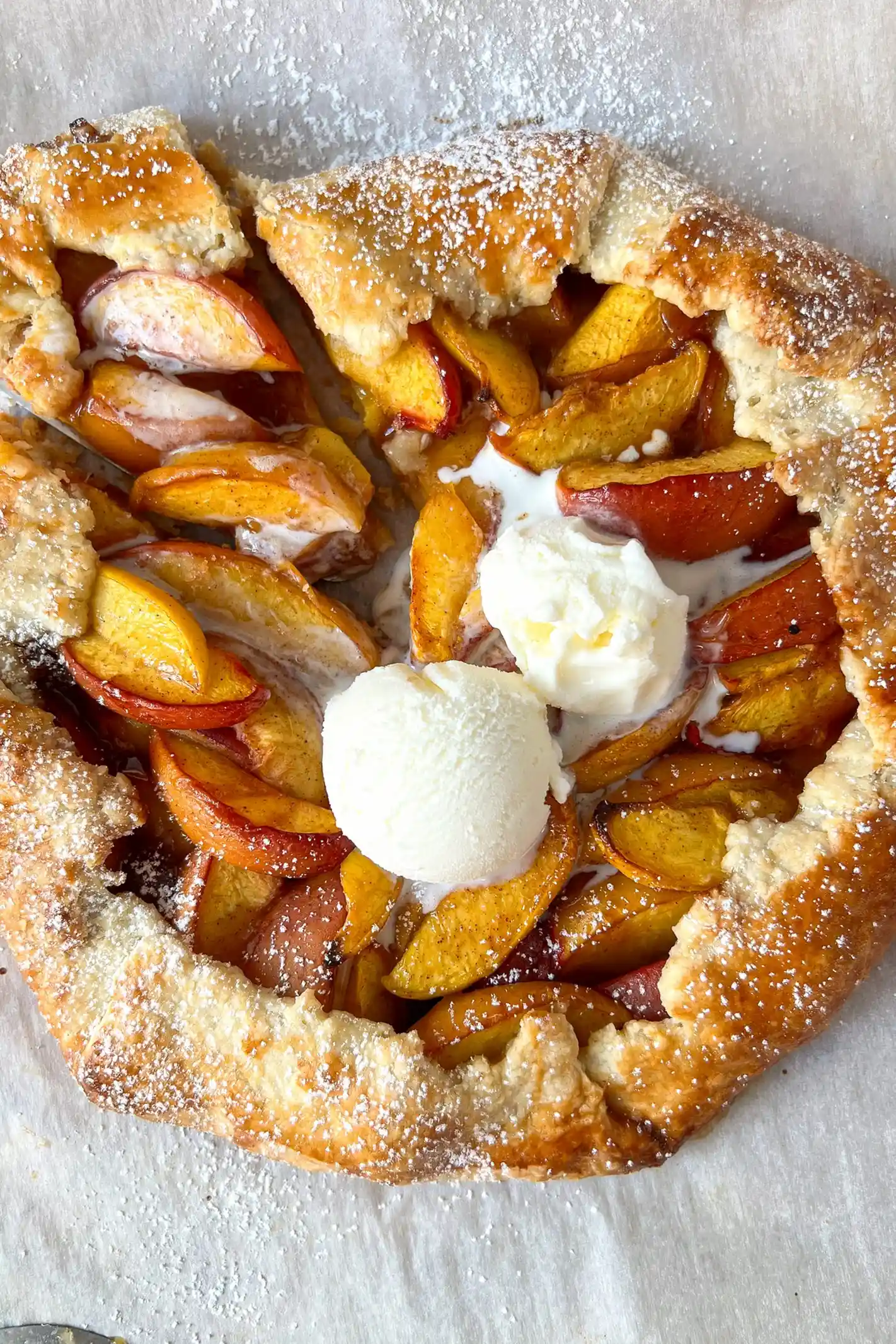
This rustic peach galette is a simple summer dessert featuring a buttery crust and spiced fresh peaches. It is an easier alternative to a traditional pie because it requires no pie dish and celebrates a casual, open-faced presentation.
List of ingredients
- 1 ¼ cup all purpose flour – plus extra for dusting the work surface
- 2 tbsp sugar – for sweetness in the crust
- 1/2 tsp salt – to balance the flavors
- 1/2 cup cold, unsalted butter – cut into small cubes
- 3-4 tbsp ice cold water – to bind the dough
- 1 egg – for the egg wash glaze
- 1 tbsp milk – combined with egg for a golden finish
- 3 cups fresh peaches – sliced into ½ inch wedges
- 3 tbsp packed brown sugar – for a rich, caramel-like sweetness
- 1 tbsp fresh lime juice – adds brightness and acidity
- 1 tsp pure vanilla extract – enhances the fruit flavor
- 1/4 tsp cinnamon – provides warm spice
- 1/8 tsp ground ginger – adds a subtle zing
- 2 tsp cornstarch – thickens the fruit juices
- pinch of salt – to enhance all the ingredients
step-by-step instructions
- Prepare the Dough: Whisk the flour, sugar, and salt together in a large mixing bowl. Use a pastry cutter to cut the cold butter cubes into the flour mixture until it resembles coarse crumbs.
- Bind the Flour: Add 3 tablespoons of ice water and mix with a spoon or spatula. If the dough is too dry, add more water one tablespoon at a time. Use your hands to shape the dough into a ball.
- Chill the Pastry: On a floured surface, flatten the dough into a thick disk. Wrap it tightly in plastic wrap and refrigerate for at least 1 hour, or up to 3 days.
- Mix the Filling: In a large bowl, stir together brown sugar, lime juice, vanilla, cinnamon, ginger, cornstarch, and salt. Gently toss in the sliced peaches until evenly coated.
- Roll the Dough: Line a baking pan with parchment paper. Roll the chilled dough on a floured surface into a 12-inch circle. Transfer the circle carefully onto the prepared baking pan.
- Assemble the Galette: Using a slotted spoon, place the peach filling in the center, leaving excess liquid in the bowl. Spread peaches evenly, leaving a 2-inch border around the edges.
- Fold and Glaze: Fold the edges of the dough over the filling, overlapping the pastry and pressing the seams to seal. Whisk the egg and milk together, then brush the mixture onto the pastry edges.
- Final Chill and Bake: Preheat the oven to 400 degrees Fahrenheit. Place the assembled galette in the refrigerator for 20 minutes to maintain its shape.
- Bake and Cool: Bake on the middle rack for 35-40 minutes until the edges are golden brown and the filling bubbles. Let it cool on the baking sheet for 10 minutes before slicing.
Mastering the Pastry Crust
Keep Your Butter Very Cold
The secret to a flaky crust is keeping the butter in solid chunks until it hits the oven. When cold butter melts rapidly during baking, it creates steam pockets that lift the layers of flour. Use butter straight from the fridge and ice-cold water to prevent premature melting.
Avoid Overworking the Dough
Mix the flour and butter only until coarse crumbs form, and stop adding water as soon as the dough holds together. Over-mixing develops too much gluten, which results in a tough, bread-like crust. Handle the dough gently to ensure a tender, melt-in-your-mouth texture.
The Importance of Chilling the Dough
Resting the dough in the refrigerator allows the gluten to relax and the fats to re-solidify. This step prevents the pastry from shrinking excessively in the oven. If the dough feels too soft when you begin rolling, return it to the fridge for another 15 minutes.
Using a Food Processor for Efficiency
If you do not have a pastry cutter, a food processor is an excellent alternative. Use the pulsing function to incorporate the butter into the flour in short bursts. This method is faster and keeps the butter colder than using your hands.
Selecting and Preparing the Peaches
Choosing Ripe Summer Peaches
Select peaches that are fragrant and give slightly when pressed gently near the stem. Avoid fruit that is too mushy, as it will release too much moisture and make the crust soggy. Firm but ripe peaches hold their shape better during the baking process.
Deciding Between Peeling or Leaving Skins
Leaving the skins on the peaches adds a rustic look and extra nutrients to the dessert. The skins soften during baking and provide a nice color contrast. However, if you prefer a smoother texture, peel the peaches using a vegetable peeler or a paring knife.
Slicing for Uniform Cooking
Slice the peaches into consistent 1/2 inch wedges to ensure they cook evenly. Slices that are too thin may turn into jam, while those that are too thick may remain crunchy. Consistent sizing allows the heat to penetrate each piece at the same rate.
Managing Excess Fruit Moisture
Peaches can release a significant amount of juice once mixed with sugar and lime. Use a slotted spoon to transfer the fruit to the dough, leaving the syrup behind in the bowl. This prevents the bottom of the galette from becoming waterlogged.
Filling and Flavor Enhancements
The Role of Cornstarch in the Filling
Cornstarch acts as a thickening agent that binds the fruit juices into a glossy glaze. Without it, the juice would run over the sides and soak into the pastry. Ensure the cornstarch is well-mixed with the dry spices before adding the fruit.
Balancing Sweetness with Lime Juice
The acidity of fresh lime juice cuts through the sweetness of the brown sugar and peaches. This balance prevents the dessert from being cloying and brightens the overall flavor profile. You can substitute lemon juice if lime is unavailable.
Adding Warmth with Ginger and Cinnamon
A small amount of cinnamon and ground ginger adds a layer of complexity to the peaches. Cinnamon provides a classic warmth, while ginger adds a subtle peppery note. These spices complement the natural sweetness of the summer fruit.
Substituting Brown Sugar for Granulated Sugar
Brown sugar is preferred over white sugar because of its molasses content, which adds a deeper, caramelized flavor. This richness pairs perfectly with the buttery pastry and the tartness of the lime. For a lighter taste, you can use a mix of both.
Baking and Assembly Tips
Preventing the Crust from Shrinking
Refrigerating the assembled galette for 20 minutes before it enters the oven is a crucial step. This stabilizes the fats and ensures the folded edges stay in place during the initial heat blast. It helps the galette maintain its rustic circular shape.
Achieving a Golden Finish with Egg Wash
The combination of egg and milk creates a protein-rich glaze that browns beautifully under high heat. Brush the wash only on the pastry edges to avoid getting it on the fruit. This results in a professional, shiny, golden-brown crust.
Optimal Oven Positioning
Bake the galette on the middle rack of the oven to ensure even heat distribution. Positioning it too low may burn the bottom, while positioning it too high may brown the edges before the fruit is bubbly. Ensure there is plenty of airflow around the baking sheet.
Using Parchment Paper for Easy Release
Parchment paper prevents the pastry from sticking to the baking sheet and makes cleanup effortless. It also allows you to slide the galette easily into the oven. Avoid using waxed paper, as it can melt or smoke at 400 degrees Fahrenheit.
Storage and Reheating Guidelines
Storing Leftovers in the Refrigerator
Cover leftover slices with plastic wrap or store them in an airtight container. The galette will stay fresh in the refrigerator for up to 4 days. Keep it away from strong-smelling foods to prevent the buttery crust from absorbing other odors.
Freezing the Raw Pastry Dough
If you want to prepare the dessert in advance, the raw dough can be frozen for up to 3 months. Wrap the disk tightly in plastic wrap and then place it in a freezer-safe bag. Defrost the dough slowly in the refrigerator overnight before rolling it out.
Reheating for a Crisp Crust
To restore the crispness of the crust, reheat individual slices in the oven or a toaster oven at 350 degrees Fahrenheit. Avoid using the microwave, as it will make the pastry soggy and rubbery. Heat for 5-10 minutes until the fruit is warm.
Maximum Shelf Life for Sliced Galette
While the galette can last 4 days, the crust is best within the first 48 hours. After this, the moisture from the peaches may begin to migrate into the pastry. Storing the slices separately with parchment paper between them can help maintain texture.
Common Galette Troubleshooting
Fixing a Soggy Bottom Crust
If you find the bottom of your galette is too moist, try pre-baking the crust for 5 minutes before adding the filling. Alternatively, ensure you are using a slotted spoon to remove as much excess liquid as possible. Increasing the cornstarch slightly can also help bind more juice.
Dealing with Over-browned Edges
If the pastry edges are browning too quickly while the center is still pale, cover the edges with a ring of aluminum foil. This shields the crust from direct heat while allowing the fruit to continue bubbling. Check the galette every 5 minutes once the foil is applied.
Correcting a Dough that is Too Dry
If the dough remains crumbly and won’t form a ball, add ice water one tablespoon at a time. Mix gently after each addition to avoid overworking the flour. The dough should be moist enough to hold together but not sticky to the touch.
Preventing Fruit from Leaking
Ensure you leave a full 2-inch border of pastry around the edges of the fruit. If the filling is placed too close to the edge, it will leak out during the folding process. Gently press the overlapping seams of the dough to create a secure barrier.
Creative Serving Ideas
Pairing with Vanilla Bean Ice Cream
Serving a warm slice of galette with a scoop of cold vanilla bean ice cream creates a delicious temperature contrast. The ice cream melts slightly into the warm peaches, creating a creamy sauce. This is the most popular way to enjoy this summer dessert.
Using Freshly Whipped Cream
For a lighter option, top each slice with a dollop of homemade whipped cream. Add a pinch of vanilla extract or a drop of almond essence to the cream for extra flavor. The lightness of the cream balances the richness of the buttery crust.
Adding a Dusting of Powdered Sugar
Sift a light layer of powdered sugar over the golden crust just before serving. This adds a touch of sweetness and a professional, polished look to the rustic tart. It is especially effective if you are serving the galette at a party.
Serving with Cold Milk or Tea
Pair your peach galette with a cold glass of milk or a hot cup of herbal tea. The neutrality of milk complements the sweetness of the peaches. A light tea, such as chamomile or Earl Grey, enhances the aromatic qualities of the fruit.
Frequently Asked Questions
Can I use frozen peaches?
Yes, you can use frozen peaches, but they must be completely defrosted first. Use paper towels to blot away any excess liquid after thawing to prevent the crust from becoming soggy. Treat them exactly like fresh peaches in the filling mixture.
Do I need a pastry cutter?
A pastry cutter is helpful, but not required. You can achieve the same results by using two forks or two butter knives to cut the butter into the flour. Alternatively, a food processor can be used to pulse the ingredients together.
How long can the dough stay in the fridge?
The prepared pastry dough can be kept in the refrigerator for up to 3 days. Ensure it is wrapped tightly in plastic wrap to prevent it from drying out or absorbing odors. If you need to store it longer, move it to the freezer.
Can I make this vegan?
You can make this recipe plant-based by substituting the butter with cold vegan butter sticks and the egg wash with a mixture of maple syrup and soy milk. Ensure the vegan butter is high-quality and firm to maintain the flakiness of the crust.
Print
Rustic Summer Peach Galette
- Total Time: 2 hours 20 minutes
- Yield: 8 servings
- Diet: General
Description
Peach galette is an easy and delicious summer dessert.
Ingredients
- 1 ¼ cup all purpose flour (plus more for the surface)
- 2 tbsp sugar
- 1/2 tsp salt
- 1/2 cup cold, unsalted butter cut into cubes
- 3–4 tbsp ice cold water
- 1 egg
- 1 tbsp milk
- 3 cups sliced fresh peaches, sliced into ½ inch wedges
- 3 tbsp packed brown sugar
- 1 tbsp fresh lime juice
- 1 tsp pure vanilla extract
- 1/4 tsp cinnamon
- 1/8 tsp ground ginger
- 2 tsp cornstarch
- pinch of salt
Instructions
- Step 1: Whisk together the flour, sugar and salt in a large mixing bowl.
- Step 2: Add the butter and use a pastry cutter to cut the butter into the flour mixture, until you get coarse crumbs.
- Step 3: Add 3 tablespoons of ice water and use a spoon or a spatula to mix everything together. If you find your mixture too dry, add more water, one tablespoon at a time.
- Step 4: Use your hands to shape the dough into a ball.
- Step 5: Place the dough onto a lightly floured surface and use your hands to flatten it into a thick disk.
- Step 6: Wrap it up in plastic wrap and place the dough in the fridge for a minimum of 1 hour, and up to 3 days.
- Step 7: In a large mixing bowl stir together the brown sugar, lime, vanilla, cinnamon, ginger, cornstarch and salt, until combined.
- Step 8: Add the peaches and toss gently to combine.
- Step 9: Prepare your baking pan by lining it with parchment paper.
- Step 10: Remove the dough from the refrigerator and, on a lightly floured surface, roll it carefully into a 12 inch circle.
- Step 11: Transfer your dough onto the prepared baking pan.
- Step 12: Using a slotted spoon place the peach filling onto the center of the dough; you want to leave the excess liquid behind in the bowl.
- Step 13: Spread out the peaches with the back of your spoon, leaving a 2 inch space around the edge of the pastry.
- Step 14: Start folding the edges of the dough over the filling, overlapping it, and pressing gently on the seams to seal them.
- Step 15: Prepare your egg wash and brush it onto the top of your pastry.
- Step 16: Preheat your oven to 400 degrees Fahrenheit.
- Step 17: While your oven is preheating refrigerate your galette for 20 minutes.
- Step 18: Bake for 35-40 minutes in the middle rack of your oven until the edges are golden brown and the peach filling is bubbly.
- Step 19: Remove from the oven and allow to cool on the baking sheet for 10 minutes before slicing and serving.
Notes
If you don’t have a pastry cutter, cut the butter into the flour with two forks, two butter knives or use a food processor. You can make the dough and peach mixture ahead of time and refrigerate for up to 3 days. The pastry dough can be frozen for 3 months. Peaches can be peeled if preferred. Leftovers store in refrigerator up to 4 days.
- Prep Time: 20 minutes
- Cook Time: 40 minutes
- Category: Dessert
- Method: Baking
- Cuisine: American
Nutrition
- Serving Size: 1 slice
- Calories: 250 kcal
- Sugar: 13 g
- Sodium: 262 mg
- Fat: 13 g
- Saturated Fat: 8 g
- Unsaturated Fat: 4 g
- Trans Fat: 0.5 g
- Carbohydrates: 30 g
- Fiber: 2 g
- Protein: 4 g
- Cholesterol: 53 mg